
There are GOATs and then there is the GOAT of GOATs. TSN brings you GOAT of GOATs presented by Desjardins Business. Sixteen legendary athletes – eight men and eight women – square off in a bracket to determine who is the best of the best, the greatest of the greatest.
TSN personalities will present the case for each athlete, but it’s up to you to have your say. Viewers will vote on each matchup until two competitors are sent to the finals, with a winner crowned on each side of the bracket. Voting will consist of a split between viewers and TSN staff.
Today’s matchup: Usain Bolt versus Muhammad Ali
--
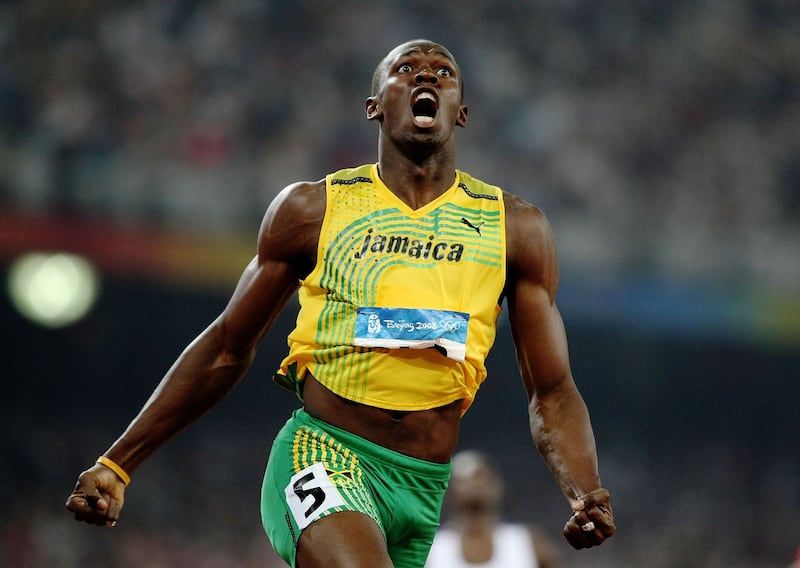
Usain Bolt
Comic-book superheroes aren’t real, but Usain Bolt made us reconsider the thought.
A real-life Barry Allen, the Jamaican speedster struck a blow for those who believe in nominative determinism as he tore up the record books and changed the way we looked at sprinting, becoming the fastest man alive.
Born in the town of Sherwood Content, Bolt began to rack up honours on the junior circuit in the early 2000s at championship meets throughout the Caribbean and abroad. Word spread, ahem, quickly about the lanky, football-obsessed Bolt’s potential in track-and-field circles. By the time he turned pro in 2004, expectations, both public and personal, were high.
His first Olympics, in Athens in 2004 at the age of 18, were a humbling experience for Bolt, eliminated before the 200 m final. It marked a first in a series of setbacks – injuries and accidents – that kept his early pro days in neutral. Undeterred, the tenacious Bolt finally broke through in 2006, earning his first two medals at major events late in the year.
After a pair of silver medals at the 2007 World Championships in Osaka, Bolt entered 2008 with a newfound confidence. He signalled his intent for the Olympics that spring by setting new record in the 100 m. By the time the Beijing Games rolled around in August, he was the favourite in both the 100 m and 200 m. He would not disappoint.
In the 100 m, Bolt smashed his own world record to win gold in 9.69. Turning his focus to the 200 m, Bolt claimed another all-time best. Winning gold in a record 19:30, Bolt became the first man since Carl Lewis at Los Angeles 1984 to win both the 100 m and 200 m. More impressively, he became the first person to break the world records in both at the same Olympics.
What Bolt did in Beijing would be enough for a career, but one of his hallmarks was his consistency. He was hardly done. By the time the London Olympics rolled around in 2012, Bolt had five more gold medals at the World Championships under his belt. In England, Bolt would up his game. He repeated as gold medalist in both the 100 m and 200 m and added a third gold, this time as part of Jamaica’s 4 x 100 relay team.
Six more World Championship golds later, Bolt would return to the Olympics for one final time at Rio de Janeiro 2016. It was time for a final performance for the ages. Now 30, Bolt made it three straight golds in the 100 m and 200 m, as well as another 4 x 100 relay gold. His tally in Brazil brought his gold medal total to eight, breaking the all-time mark by an athlete in sprinting events.
Retiring in 2017, Bolt finished his career with 23 gold medals at major competitions and was a six-time IAAF World Athlete of the Year. To this day, he still holds the world records in both the 100 m (9.58) and 200 m (19:19). Remarkably, just as he did in Beijing the summer before, Bolt set both records at the same World Championships in Berlin in 2009.
Speed is measured in seconds, but Bolt’s greatness endures over generations.
--
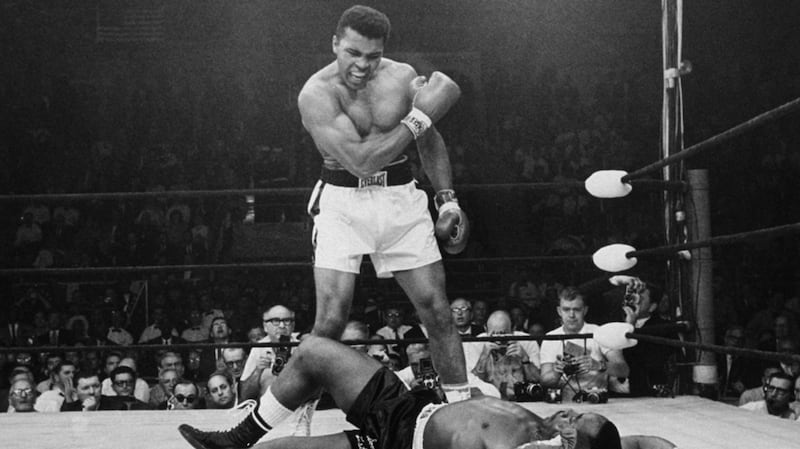
Muhammad Ali
If you’re going to call yourself “The Greatest,” you better be able to back that up. Fortunately for Muhammad Ali, he was.
Calling Ali only a boxer would be a disservice to his immense cultural footprint. A global icon, Ali transcended the sport he was the face of for more than two decades and became an enduring figure of resistance. But none of that would have been possible if Ali wasn’t an absolute dynamo in the ring.
Born Cassius Clay in 1942 in Louisville, Ky., before changing his name upon his conversion to Islam in 1964, Ali turned pro in 1960. Only months before his debut in October of that year, Ali claimed gold in the light-heavyweight division at the 1960 Rome Olympics. Ali ended his amateur career at 100-8.
Ali quickly rose up the ranks of the heavyweight division, coupling his in-ring performances with infamous trash talk. Frequently belittling his opponents in the press, Ali made his fights into events with his bravado. By 1963, Ali was 19-0 and earned his first title shot.
On Feb. 25, 1964, Ali met Sonny Liston in Miami after weeks of back-and-forths in the media. The bout was a hard-hitting affair with both men taking significant damage. But it was Liston who blinked first. The champ couldn’t answer the bell for the seventh round and Ali was declared the victor by TKO, winning the world heavyweight championship at 22.
As champion, Ali would string off nine straight wins, including over Liston in a rematch, Floyd Patterson and Toronto’s George Chuvalo at Maple Leaf Gardens. On Mar. 22, 1967, Ali defeated Zora Folley by seventh-round knockout at Madison Square Garden. The fight would be his final one for more than three years.
Refusing to be drafted into the U.S. Armed Forces for the Vietnam War, Ali was stripped of his boxing license in all 50 states, his titles and even lost his passport. His career was effectively halted.
Granted a license in Georgia in 1970, Ali made his return, no longer a champion. He made short work of Jerry Quarry before a gruelling 15-round win over Oscar Bonavena weeks later at MSG. That win would set up “The Fight of the Century” on Mar. 8, 1971, against the new champion, “Smokin’” Joe Frazier.
The lead-up to the fight was filled with pointed barbs from both men, with neither shying away from cutting insults. Now 29, the fight saw Ali implement what would eventually be called the “rope-a-dope” strategy for the first time, leaning against the ropes as he took what Frazier had to offer in hopes of tiring him out. It proved mostly effective, but Frazier emerged victorious via unanimous decision. Ali had lost his first professional fight in his 32nd bout.
Following the loss, Ali rang off 10 wins in a row, including in rematches with Patterson and Chuvalo in Vancouver, before taking a second loss to Ken Norton in 1973 in a split decision. He would win the immediate rematch, also by split decision months later. In early 1974, Ali and Frazier met again in a highly anticipated rematch with Ali the victor this time by unanimous decision.
The victory over Frazier set up “The Rumble in the Jungle,” a fight with undefeated world champion George Foreman in Kinsasha, Zaire. Entering the fight as a heavy underdog, Ali was a massive fan favourite in the stadium. Once again turning to the rope-a-dope, Ali visibly angered and frustrated Foreman, eventually exhausting him. Depleted, Foreman fell victim to a flurry of punches in the eighth round and Ali was once again the world champion.
A year after regaining the titles, Ali and Frazier met for a third time, this time in The Philippines in “The Thrilla in Manila.” The third bout between the forever rivals came in nearly 100-degree weather. The fight was a slog, with both men trading heavy blow after heavy blow. Ali took the initiative late and began raining down hard punches. With Frazier’s vision compromised, his corner threw in the towel ahead of the 15th round.
Ali would go on to fight after the third Frazier bout, but it became clear that it was his career’s true finale. A 36-year-old Ali dropped his titles in 1978 to the unimpressive Leon Spinks before regaining them months later. The win would be Ali’s last, finishing his career with consecutive losses to Larry Holmes, in a one-sided thrashing, and Trevor Berbick in 1980 and 1981. Ali walked away from the sport with a record of 56-5.
Still, Ali’s lows were dwarfed by his highs. The man with the silver tongue and lead fists made every fight a spectacle. When he told you he was “The Greatest,” you couldn’t help but believe him.