
There are GOATs and then there is the GOAT of GOATs. TSN brings you GOAT of GOATs presented by Desjardins Business. Sixteen legendary athletes – eight men and eight women – square off in a bracket to determine who is the best of the best, the greatest of the greatest.
TSN personalities will present the case for each athlete, but it’s up to you to have your say. Viewers will vote on each matchup until two competitors are sent to the finals, with a winner crowned on each side of the bracket. Voting will consist of a split between viewers and TSN staff.
Today’s matchup: Wayne Gretzky versus Tom Brady
--
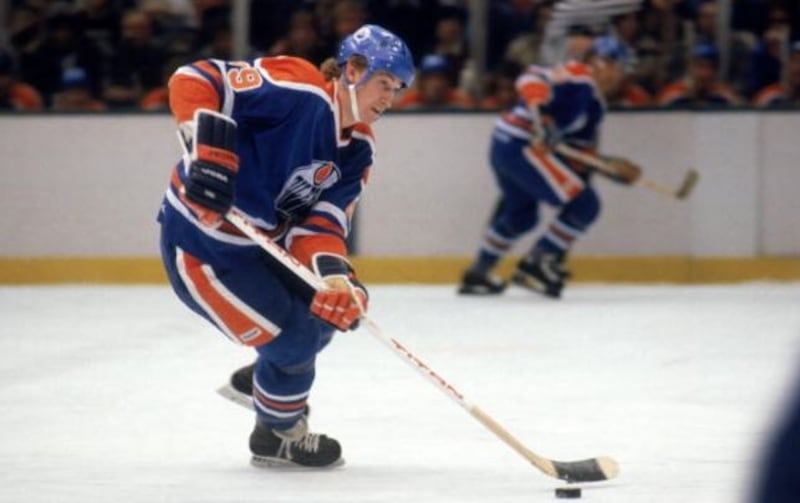
Wayne Gretzky
Few athletes are synonymous with their sport the way Wayne Gretzky was with his.
For 21 professional seasons, Gretzky meant hockey to a generation, serving as the face of an expanding game breaking ground in new markets. Nobody made the sport look easier with an unparallelled mix of speed, skill and tenacity. Every Gretzky shift was a chance to see something dazzling.
Born in Brantford, Ont., Gretzky’s tantalizing potential was evident early with a 182-point performance for the Sault Ste. Marie Greyhounds in 1977-1978, setting an Ontario Hockey League rookie record in the process.
Turning pro the following year, Gretzky scored 46 goals and added 64 assists in his lone season in the World Hockey Association. Traded from the Indianapolis Racers to the Edmonton Oilers early into that season, Gretzky would accompany the Oilers to the NHL in 1979.
Gretzky would almost instantly take the mantle of the game’s top star, following in the footsteps of Gordie Howe, Jean Believeau and Maurice Richard before him.
In his first NHL season, Gretzky tied for the league lead with 137 points on the way to winning the Hart Trophy as the NHL’s most valuable player to his team. It was Gretzky’s first trophy, but far from his last.
Gretzky would go on to win the next seven Hart Trophies (nine in total), embarking on an unprecedented run of, well, greatness. From 1982 to 1986, Gretzky scored no fewer than 196 points in a season, eclipsing the 200-point mark four times. In 1986, Gretzky would set the single-season point mark with an absurd 215.
His success wasn’t limited to individual accolades. Beginning in 1984, the Oilers would win four Stanley Cups in five seasons. Gretzky would lead the playoffs in scoring in all four Cup-winning campaigns, taking home the Conn Smythe Trophy as playoff MVP in both 1985 and 1988. Gretzky’s 48-point output in the ’85 playoffs still stands as an all-time record.
To gauge Gretzky’s impact on the sport, look no further than the reaction to the blockbuster trade that sent him to the Los Angeles Kings in the summer of 1988. For a certain vintage of Canadian, the deal will always be known simply as “The Trade.” People still remember where they were when the news broke.
In leaving for Los Angeles, Gretzky helped turn the game into a truly continent-wide concern. During his first season with the Kings, Gretzky played in a 21-team league. Playing in his final NHL season a decade later, there were 27. Without Gretzky and his impact, it’s hard to envision the type of expansion the league underwent.
Gretzky also answered the call for his country. He suited up for Canada at the World Juniors, an IIHF World Championship, a World Cup of Hockey and the 1998 Nagano Olympics. His greatest international exploits came during the Canada Cup, where Gretzky helped lead Canada to titles in 1984, 1987 and 1991.
Named tournament MVP, the 1987 Canada Cup was host to what was, perhaps, Gretzky’s most famous moment in a Canada sweater. In the deciding Game 3 of the final against the Soviet Union after back-to-back overtime thrillers, Canada battled back from a 3-0 deficit and led 5-4 until midway through the third when the Soviets tied it. The game’s ending lives on in Canada’s hockey lore.
With a little over 90 seconds left in the final frame at Hamilton, Ont.’s Copps Coliseum, the line of Gretzky, Mario Lemieux and Dale Hawerchuk won a face-off in their own zone and broke out with defenceman Larry Murphy. Leading an odd-man rush against defenceman Igor Stelnov, Gretzky used Murphy, who was skating on net, as a decoy and dropped a pass for the trailing Lemieux. A Lemieux wrister would beat Sergei Mylnikov glove-side to give Canada a 6-5 victory.
By the time he finally hung up his skates in 1999, Gretzky could fill up a record book on his own. A 15-time All-Star, Gretzky finished his career with 894 goals and a record 1,963 assists. His 2,857 career points are unassailable record. Nobody has come close to his 10 Art Ross Trophies.
Perhaps nobody in sports had a more fitting nickname. “The Great One” was just that.
--
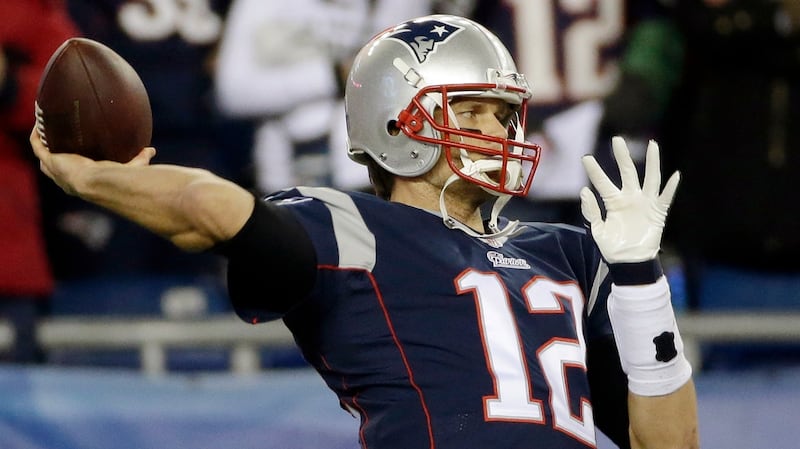
Tom Brady
How did an 18th-round pick of the Montreal Expos become the greatest quarterback in National Football League history?
To answer that question, you must go back to Sept. 23, 2001.
Late in the fourth quarter of a Week 3 game against the New York Jets, New England Patriots quarterback Drew Bledsoe was flattened by a hard hit from linebacker Mo Lewis near the sideline. Bledsoe incurred a terrible chest injury that ended his season and nearly his life. With his veteran pivot out of commission, head coach Bill Belichick turned to his backup – a 1999 sixth-round pick out of Michigan, who happened to have previously been drafted by the Expos.
That game was the second of Tom Brady’s career. He would go on to start 333 more of them, setting an all-time NFL record. Brady didn’t just take Bledsoe’s job. He became an icon.
Beginning with that 2001 season, Brady would lead the Patriots to six Super Bowl titles over 20 seasons, winning Super Bowl Most Valuable Player on four occasions. During that time, Brady would be named to 14 Pro Bowls and three All-Pro first teams. In 2007, 2010 and 2016, Brady won the NFL MVP award.
No one game embodied Brady’s unrivaled tenacity like Super Bowl LI in 2017. With 2:12 remaining in the third quarter, the Patriots were being obliterated by the Atlanta Falcons to the tune of 28-3. Almost inconceivably, Brady and his offence would mount the most improbable comeback in NFL history.
Scoring 23 unanswered points, including two touchdown passes from Brady, the Patriots would have the chance to tie the game with under a minute remaining in the fourth quarter to force overtime. Brady found Danny Amendola for a two-point conversion with 59 seconds left to even things at 28-28. In OT, a James White touchdown gave the Pats a 34-28 victory in what was the wildest championship game in league history.
After two decades with the Pats, Brady sought a new challenge amid a fracturing relationship with Belichick. The San Mateo, Calif. native did something few would have foreseen and joined another team, signing with the Tampa Bay Buccaneers. He would go on to suit up for three more seasons with the team.
Gambling with his legacy, Brady’s bet on himself paid off in a big way. In his second season with the Bucs, Brady would lead the team to a 31-9 rout over the Kansas City Chiefs in Super Bowl LV, becoming the first team in NFL history to win a title in their home stadium. Throwing for 201 yards and three TDs on 21-for-29 passing, Brady claimed yet another Super Bowl MVP and his record seventh ring.
Retiring after the 2022 season, Brady left the game with a slew of records. His 7,753 completions, 89,219 yards passing and 649 TDs are all most all-time. Perhaps even more impressive, though, are his record 46 fourth-quarter comebacks and 58 game-winning drives.
Not bad for a kid the Expos took a flyer on in 1995.