
There are GOATs and then there is the GOAT of GOATs. TSN brings you GOAT of GOATs presented by Desjardins Business. Sixteen legendary athletes – eight men and eight women – square off in a bracket to determine who is the best of the best, the greatest of the greatest.
TSN personalities will present the case for each athlete, but it’s up to you to have your say. Viewers will vote on each matchup until two competitors are sent to the finals, with a winner crowned on each side of the bracket. Voting will consist of a split between viewers and TSN staff.
Today’s matchup: Michael Jordan versus Novak Djokovic
--
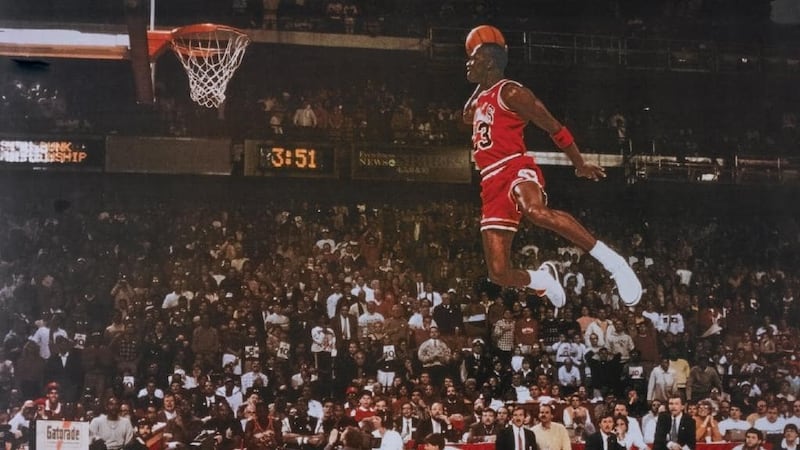
Michael Jordan
He made us believe a man could fly.
Michael Jordan is almost synonymous with the game of basketball, becoming a pop culture icon and sneaker impresario.
Born in New York City and raised in Wilmington, NC, Jordan first leapt onto the scene at North Carolina. In 1982, he was ACC Freshman of the Year en route to capturing an NCAA title with Dean Smith’s Tar Heels. Two years later, Jordan was the third-overall pick of the 1984 NBA Draft by the Chicago Bulls. In case you were wondering, Hakeem Olajuwon and Sam Bowie were the two players drafted ahead of him.
Jordan took the Bulls, a franchise that had never won a championship, and turned them into a juggernaut. A human highlight-reel, Jordan’s athleticism was jaw-dropping, as was his ability to withstand contact as he drove to the net. With Scottie Pippen as his wingman, the Bulls won NBA titles in 1991, 1992 and 1993, introducing the term “threepeat” into the vernacular. Over his first nine NBA seasons, Jordan was an All-Star in all of them, claiming three NBA Most Valuable Player awards along with Rookie of the Year and Defensive Player of the Year honours.
Shockingly, Jordan announced his retirement in the fall of 1993, citing the murder of his father, Jeffrey Jordan, months earlier as the catalyst for losing his desire to continue playing. But Jordan was not ending his athletic pursuits. He would sign a deal with the Chicago White Sox in early 1994 and spend a season with the Double-A Birmingham Barons.
After a year of pro baseball, his love for basketball returned. In March of 1995, a two-word press release was issued by the NBA. It simply read: “I’m back.”
Jordan picked up right where he left off with the Bulls. The team would go on to notch a second threepeat, winning titles in 1996, 1997 and 1998. That second title, a six-game series win over the Utah Jazz, would be highlighted by what was, perhaps, Jordan’s most famous game. Game 5 of the 1997 NBA Finals is now known as “The Flu Game.” Felled by food poisoning, Jordan scored 38 points in 44 minutes, including a three-pointer with 25 seconds remaining in the fourth to take the lead and deliver a 90-88 win to take a 3-2 advantage in the series.
Jordan would retire for a second time after the 1998 season, but just like before, he wasn’t done yet. In early 2000, Jordan was introduced as part-owner and president of the Washington Wizards. Yet the itch was still there and, in the fall of 2001, Jordan would return once more, this time as a member of the Wizards at the age of 38.
While he might not have been the Michael Jordan of old, “His Airness” was still there. Even as some of his athleticism waned, his signature fadeaway didn’t. Jordan played two more seasons for the Wizards, making the All-Star team on both occasions, and posted 20-plus point-per-game stat lines in both campaigns. Form might be temporary, but class is permanent.
Jordan’s third retirement was final. He finished his career appearing in 1,072 games across 15 seasons, averaging 30.1 points a game, an NBA record, on .497 shooting, 6.2 boards, 5.3 assists and 2.3 steals over 38.3 minutes a night. His 10 scoring titles tie Wilt Chamberlain for most in league history.His exploits weren’t exclusive to the NBA. Jordan represented the United States on a number of occasions, claiming gold medals at both the 1984 Los Angeles Olympics and the 1992 Barcelona Olympics as part of “The Dream Team.” Jordan was inducted into the Naismith Pro Basketball Hall of Fame in 2009.
--
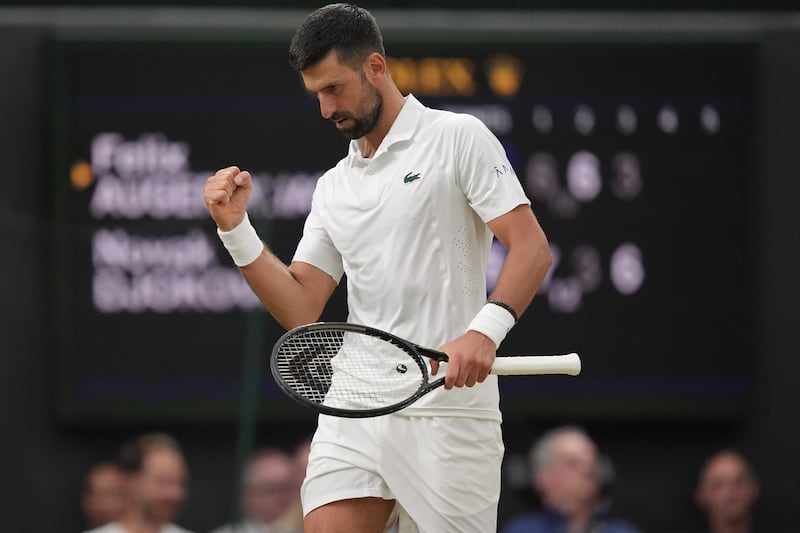
Novak Djokovic
Coming of age in an era where elite men’s tennis might have been at its most competitive in decades, Novak Djokovic found a way to rise above the rest.
The Belgrade-born Djokovic counted all-time greats Roger Federer, Rafael Nadal and Andy Murray among his contemporaries and still managed to set records.
Turning pro in 2003 and making his Grand Slam debut in 2005, Djokovic first opened eyes with an upset of No. 9 Fernando Gonzalez at Roland Garros in 2006. In Paris, he would reach his first Grand Slam quarter-final where he would ultimately be forced to retire in his first-ever meeting with Nadal. It would not be his last Grand Slam quarters.
Winning his first ATP tournament in the summer of 2006 at the Dutch Open, Djokovic would go on to claim titles by the boatload. He won his first major title at the 2008 Australian Open, becoming the youngest man to reach the semifinals at every Grand Slam during the Open Era. Djokovic and winning became synonymous.
Now 39 and still active, Djokovic has won 102 career titles. His 40 Masters crowns are an all-time record, as are his 24 Grand Slam titles. Djokovic has won three French Open titles, four US Opens, seven Wimbledons and 10 Aussie Opens, another record.
Djokovic won three Grand Slams in one year on four occasions (2011, 2015, 2021 and 2023). In 2015 into 2016, Djokovic won each Grand Slam consecutively. Nobody has played more than Djokovic’s 458 Grand Slam matches.
His exploits carried on into the Olympics. Claiming a bronze medal at Beijing 2008, Djokovic won gold in Paris in 2024. Taking on Carlos Alcaraz, tennis’s next great star, in the final, Djokovic won 7–6(3), 7–6(2) in a gruelling, three-hour marathon at Roland Garros.
Nobody in men’s tennis spent more weeks as the No. 1 player in the world than Djokovic at an eye-watering 428 weeks. In fact, Djokovic holds the record for most weeks spent at Nos. 1 through 8. A record seven-time winner of the ATP Finals, the year-end tournament, Djokovic has ended eight years at the No. 1 player in the world, another feat accomplished by nobody else.
Against his greatest rivals, Djokovic came out on top more often than not. Head-to-head against Federer, Djokovic went 27-23, including 4-1 in Grand Slam finals. He held a 31-29 edge over Nadal. His record against Murray was even more lopsided, winning 25 of 36 meetings.
When the best were at their best, nobody was better.