
There are GOATs and then there is the GOAT of GOATs. TSN brings you GOAT of GOATs presented by Desjardins Business. Sixteen legendary athletes – eight men and eight women – square off in a bracket to determine who is the best of the best, the greatest of the greatest.
TSN personalities will present the case for each athlete, but it’s up to you to have your say. Viewers will vote on each matchup until two competitors are sent to the finals, with a winner crowned on each side of the bracket. Voting will consist of a split between viewers and TSN staff.
Today’s matchup: Serena Williams versus Annika Sorenstam
--
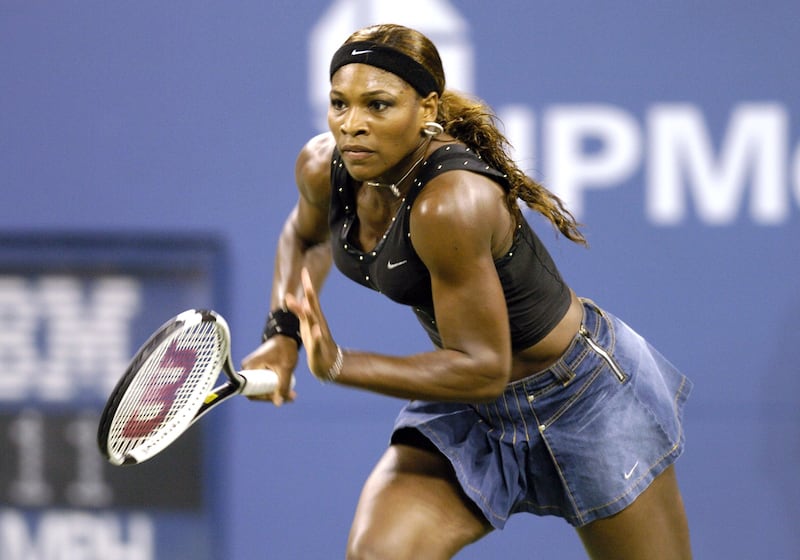
Serena Williams
Serena Williams’s case to be the greatest of all-time can be plainly laid out by her extensive list of accomplishments. The counting numbers are all there. She might be the most dominant person to ever pick up a racquet.
Buried in those numbers, though, is, perhaps, what makes her case the strongest. It’s not her 23 Grand Slam titles. It’s not her 186-week stretch as the No. 1 player in the world. In fact, it’s something that’s not in those numbers that tells the tale – Serena is peerless.
Born in Saginaw, Mich., Williams rose to prominence alongside older sister, Venus. As child prodigies, the two made good on their limitless potential in a way that few before them have. At 14, Williams made her professional debut in Quebec City at the Bell Challenge in 1995.
It wasn’t before long that the WTA Tour had to take notice. In February of 1999, Williams defeated Amelie Mauresmo to win her first-ever tournament. A month later, she won her first WTA 1000 title, beating Steffi Graf in the final of the Evert Cup. Later that month, she and Venus made history when they faced off in the final of the Miami Open, becoming the first sisters to meet in a final. Venus claimed the title.
At that year’s US Open, Williams truly arrived. She knocked off Kim Clijsters, Conchita Martinez, Monica Seles and defending champion Lindsay Davenport en route to the final where she defeated World No. 1 Martina Hingis for her first Grand Slam crown. With Serena and Venus claiming the doubles title, Williams became just the fifth-ever woman to win a singles and doubles title at the same Grand Slam.
Her first Grand Slam title was followed by 22 more. Her most impressive run of dominance at tennis’s big four tournaments started with a win at Roland Garros in 2002. She would go on to win Wimbledon, the US Open and the 2003 Australian Open to complete “The Serena Slam,” becoming the first woman to win four consecutive Grand Slams. To illustrate just how singular a talent Williams is, she would do the same thing again, reeling off four straight Grand Slams from the 2014 US Open to Wimbledon 2015.
Williams’s 2012 and 2013 also saw massive milestones. At the 2012 Olympic Summer Games, Williams defeated Maria Sharapova, 6-0 and 6-1, in the gold-medal match to join Graf as the only women to have won every Grand Slam and a singles gold Olympic medal. Of course, Williams also won three doubles Olympic golds alongside Venus. Then in 2013, Williams posted maybe her most impressive season ever, going 78-4 and winning 11 titles that year.
What makes that stretch even more remarkable is that it came right after missed 12 months of action from 2010 to 2011 with a pulmonary embolism that almost killed her. Leaving the game at No. 1, she returned at No. 175 in the world. Within a year, she was back atop the rankings.
As of this writing, Williams is still technically active at 45 years of age. After retiring following the 2022 US Open, Williams made her return to action alongside Burlington, Ont.’s Vicky Mboko in Doubles at the Queen’s Club Championship. She would go on to compete in four more doubles tournaments and in the singles draw at Wimbledon.
For her career to date, Williams has won seven Australian Open titles, seven Wimbledon titles, six US Open championships and three titles at Roland Garros. No one has won more than her 23 WTA 1000 titles. Williams has 73 singles titles and spent 319 weeks at No. 1 in the world.
But it’s what isn’t next to Williams’s name in the record books that really tells the tale – a rival. Magic Johnson had Larry Bird. Lionel Messi had Cristiano Ronaldo. Chris Evert had Martina Navratilova. For Serena Williams, no one could stand across the court from her.
Every one of her contemporaries could not equal Williams. She certainly lost matches, but not one of her peers could better her. Justine Henin was 4-3 against Williams in Grand Slams, but Serena was 8-6 overall. Venus Williams managed 12 victories against her sister, the most of any individual opponent, but she also lost 19 times. Serena was 11-5 against Venus at Grand Slams and 9-3 in finals. Hingis, Jennifer Capriati and Victoria Azarenka all had losing records against Williams, as well.
The “rivalry” against Sharapova was hardly that. Sharapova beat Williams two out of the first three times they ever met, including the 2004 Wimbledon Final. She would never beat her again. Williams would win their next 19 meetings. In fact, Sharapova could only manage three winning sets against Williams from 2005 to 2019.
Combining finesse, athleticism and sheer tenacity, Serena Williams did everything better than everybody else. Perhaps her only true peer capable of besting her is time itself.
--
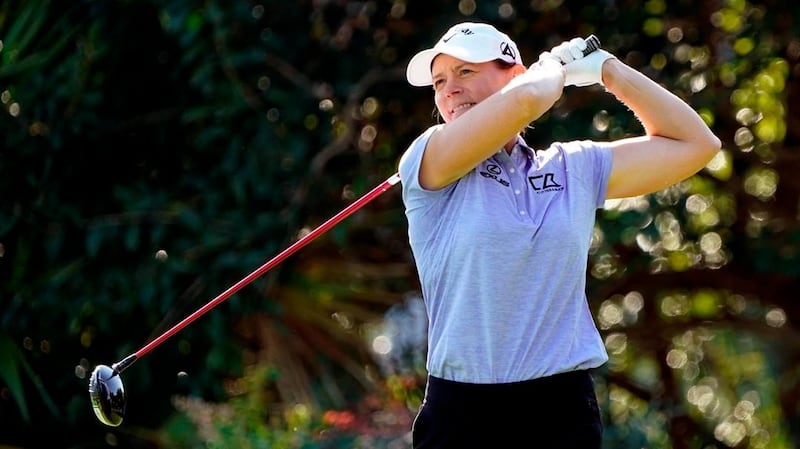
Annika Sorenstam
Like the other golfer in the GOAT of GOATs bracket, Annika Sorenstam left them wanting more. But unlike Tiger Woods, Sorenstam never had anybody lamenting for what could have been. She ended her career on her own terms, even if there might have been gas left in the tank.
A native of the Stockholm area, Sorenstam starred as an amateur in her native Sweden, but quickly became an international phenomenon when she relocated to the United States to play collegiately at Arizona. Sorenstam took the NCAA by storm. In 1991, she became the first non-American and first freshman to win the NCAA individual title. The following year, Sorenstam would finish as runner-up at the U.S. Women’s Amateur.
Turning pro in 1992, Sorenstam spent 1993 on the European Tour where she won the Ladies European Tour Rookie of the Year award. Her early success translated across the Atlantic when she won the LPGA Rookie of the Year award in 1994. Sorenstam’s first season saw her claim her first runner-up finish, at the Women’s British Open, and earn a spot on the Solheim Cup team for Europe.
If her rookie season demonstrated her potential, her sophomore campaign realized it. Sorenstam quickly transitioned from one of the best young golfers to one of the best golfers period with no qualifier needed. She shot a 68 in the final round of the U.S. Women’s Open to overcome Meg Mallon and claim her first career title. For the first of eight times, Sorenstam would top the LPGA money list. She would also become just the second player in tour history to win Player of the Year the season after winning Rookie of the Year. Sorenstam also won the Vare Trophy as the player with the season’s lowest scoring average.
After repeating as U.S. Women’s Open winner in 1996, she would go on to have a monster 1997 season. Sorenstam won seven events that year, winning another Vare Trophy. In 1998, she made it three in a row, but this time she became the first player to ever finish the season with a sub-70 average. By the end of the decade, Sorenstam’s 18 tour victories were more than any other golfer’s.
By Sorenstam’s standards, her 2000 season was unremarkable, winning only five events! She made up for it with a dominant 2001, claiming eight titles, including a string of four in a row. If that weren’t enough, 2002 saw Sorenstam win 11 events. She joined Mickey Wright as the only player in tour history to reach that number.
The 2003 season saw yet another first for Sorenstam. She played in the Bank of America Colonial, becoming the first woman since Babe Zaharias in 1945 to play in a PGA Tour event. While she failed to make the cut, she followed that tournament up with LPGA Championship and Women’s British Open victories later in the season to complete the Career Grand Slam. Sorenstam became just the sixth woman to do so. Over her career, she also won the Canadian Women’s Open and the Evian Masters.
In 2004, Sorenstam won her fourth consecutive Player of the Year award. In doing so, she equalled Kathy Whitworth at a record seven wins. Sharing the honour wasn’t enough for Sorenstam, so she went ahead and won an eighth – and fifth straight – in 2005.
At the age of 37 in 2008, Sorenstam announced she would be wrapping up her career at the end of the season. While still very much capable of contending on a weekly basis, Sorenstam’s love for the game began to fail her. It was time for something different.
“I got to the top, sat there for a while and it was nice, but all of a sudden you realize there are other mountains out there,” Sorenstam said of the decision. “For me, I wanted to climb those and the only way to figure that out is to get down this one and start over.”
Wrapping up her career after 15 pro seasons, Sorenstam notched 72 LPGA wins, 10 major titles and nearly 100 victories when including European Tour stops. Her 2004 shooting average of 68.696 remains an all-time low. She was inducted into both the World Golf Hall of Fame and the LPGA Hall of Fame in 2003. In 2019, she joined the PGA of America Hall of Fame.
Nearly 13 years after she ended her career, Sorenstam proved that form might be temporary, but class is permanent. At 50, Sorenstam came out of retirement to play in the U.S. Senior Women’s Open in 2021. She thrashed the competition. Shooting three of her four rounds under 70, including a final round 68, Sorenstam romped to an eight-stroke victory.
Like any good entertainer, Sorenstam left them wanting more.