
There are GOATs and then there is the GOAT of GOATs. TSN brings you GOAT of GOATs presented by Desjardins Business. Sixteen legendary athletes – eight men and eight women – square off in a bracket to determine who is the best of the best, the greatest of the greatest.
TSN personalities will present the case for each athlete, but it’s up to you to have your say. Viewers will vote on each matchup until two competitors are sent to the finals, with a winner crowned on each side of the bracket. Voting will consist of a split between viewers and TSN staff.
Today’s matchup: Christine Sinclair versus Jennifer Jones
--

Christine Sinclair
There’s nobody more synonymous with the game of soccer in Canada than Christine Sinclair.
The face of the meteoric rise of a previously unheralded program, Sinclair brought legitimacy to the sport in Canada and became the greatest footballer the nation ever produced. Beyond what she meant inside this country, Sinclair was the deadliest goal scorer the international game has ever seen.
A native of Burnaby, BC, Sinclair’s prodigious talent was on display early. Making her senior debut at only 16 in the 2000 Algarve Cup, Sinclair announced her presence quickly. Sinclair scored three times in Canada’s four matches, including a brace in a fifth-place victory over Denmark.
Attending Portland where she would suit up for the Pilots for four seasons, Sinclair mounted an assault on the NCAA record books. In 2004, Sinclair recorded a 39-goal season, shattering the Division I record, as the Pilots claimed a national title. In the championship match against UCLA, Sinclair would score twice in a 4-0 rout. She would take home individual hardware that season, as well, winning the M.A.C. Hermann Trophy for a second consecutive season, becoming just the third woman to win collegiate soccer’s top honour in two straight years. By the time Sinclair wrapped up her senior season, she had notched 110 goals, the second-most in NCAA history.
In her highly anticipated first World Cup, Sinclair showed what she was capable of once again. In 2003, Canada appeared in its third straight tournament but had yet to win a game there. Early on, it appeared that 2023 might be different. Just four minutes into Canada’s opener with Germany, Sinclair found the back of the net. While Germany would go on to win the match 4-1, Canada would emerge from the group stage for the first time ever with wins over Argentina and Japan. Sinclair scored in the latter victory.
After a 1-0 win over China to reach the semis, Canada would ultimately fall 2-1 to Sweden in the final four. Canada would lose again, 3-1, to the host United States in the third-place match. Sinclair scored her third of the tournament in that match, finishing her first World Cup on three goals.
Sinclair would go on to play in five more World Cups. While she never got closer to a Final than she did in that first tournament, Sinclair would keep on scoring. She notched three goals in 2007, one in 2011, two in 2015 and another in 2019. The goal in 2019 put her in elite company, joining Marta, Cristiano Ronaldo and Lionel Messi as the only players to score at five World Cups. She is only one of four women to play in at least six tournaments.
Sinclair, perhaps, saved her best moments in a Canada shirt for the Olympics. In 2008 in Beijing, Sinclair would make her Olympics debut and score twice as Canada, in its first-ever tournament, reached the quarters, losing to eventual gold medallists, the United States. The defeat came in added time.
The semifinal at London 2012 was heartbreaking for Canada, but it was Sinclair’s finest hour for the national side. In one of the greatest football matches ever played at any level, Canada would fall 4-3 in added time to their eternal rival.
Sinclair scored all three of Canada’s goals at Old Trafford, giving Canada a lead each time. Just as Canada appeared to be on course for a famous victory, a controversially awarded indirect free kick with 10 minutes remaining was awarded to the USWNT, leading to an equalizing penalty. Ahead of penalties, Alex Morgan scored the U.S. in extra-time stoppage to earn the win.
Sinclair finished the Olympics with a tournament-high six goals. She wouldn’t go home empty-handed, either. Canada defeated France in the bronze-medal match to earn the program’s first Olympic medal.
Canada would repeat as bronze medallists at Rio de Janeiro 2016 with Sinclair scoring three more times. She bagged the winning goal over the host Brazilians in the third-place match, a 2-1 victory. Five years later, the best was to come.
Before Canada could reach the 2020 Olympics, they had to qualify. In a game against Saint Kitts and Nevis that January, Canada led 1-0 before Sinclair made it 2-0. With Canada leading 3-0 in the 23rd minute, Adriana Leon crossed to an unmarked Sinclair in front of the net to slot home. The goal was her 185th in Canada shirt and the new record for international goals.
At the pandemic-delayed Tokyo Olympics in 2021, Canada finished as runners-up to Great Britain in the group stage, with Sinclair scoring in the tournament-opening 1-1 draw with Japan. Qualifying for the knockouts, Canada slipped by Brazil on penalties after a scoreless quarter-final. Familiar foes, the USWNT awaited in the semis and this time, Canada got the 1-0 win on a Jessie Fleming penalty.
In the gold-medal game, Canada fell behind just after the half-hour mark to Sweden on a goal from Stina Blackstenius. Fleming would tie things up from the spot in the 68th. Sinclair’s match ended in the 86th minute. After neither side could break the deadlock after the 90 and added time, it was time for penalties where Julia Grosso lifted Canada to its biggest victory ever in the sport, earning the gold medal.
A disappointing 2023 World Cup would serve as the coda to Sinclair’s Canada career. It would mark the first World Cup in which she didn’t score. That fall, she announced her international retirement. Canada scheduled four friendlies in which Sinclair would say goodbye. She suited up for a final time on Dec. 5 at Vancouver’s BC Place. Leaving to a standing ovation in the 58th minute, Sinclair ended her career with a Canadian record 331 caps and an international record 190 goals.
When it came to bulging the twine, nobody did it better.
--
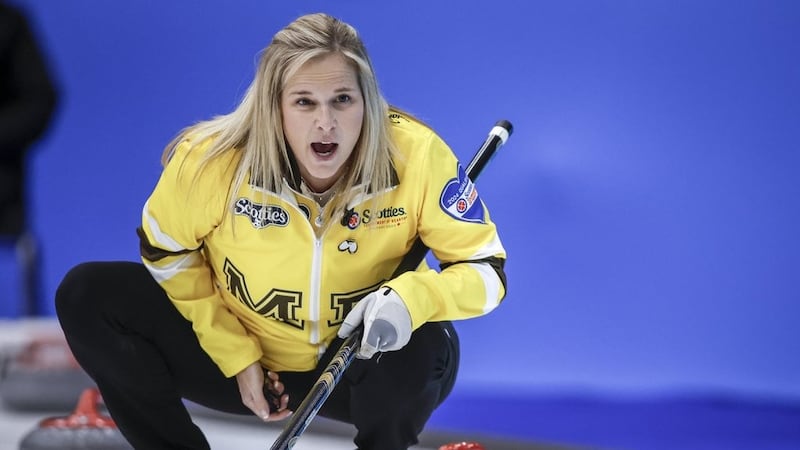
Jennifer Jones
In a curling factory like Canada, it requires something truly special to stand out. Yearly competition from local bonspiels to provincial championships to the Scotties Tournament of Hearts is never not fierce. Your mettle is tested at every turn. If you’re good enough to survive that cauldron, you’re great.
Jennifer Jones was more than great. She is the greatest curler the country has ever produced. Competing at the senior level for nearly 30 years, Jones’s poise and ability to come through in the clutch are unmatched.
Developing her love for the sport at a young age, the Winnipeg native reached the Canadian Junior Curling Championships as a third in 1991. Following that experience, Jones formed her own rink and got right back to the national championships twice, claiming a title in 1994. Jones as skip worked and she would continue to play the role.
Representing St. Vital Curling Club in 2002, Jones captured her first provincial title and made her debut at the Scotties, held that year in Brandon, Manitoba. She finished her first round robin at 8-3, tied for second. In the 3-4 Page playoff, Jones’s rink fell to Ontario’s Sherry Middaugh, 7-6, with Ontario scoring its winner in the 10th end.
With a new team in 2005, Jones’s rink overcame a grueling Manitoba Hearts to return to the Scotties in St. John’s. Finishing atop the round robin, she won passage to her first final with an 8-7 win over British Columbia. The final, against Ontario, became the stuff of legend.
Down 6-4, Jones had the hammer in the 10th. With a stone on the button, Jones attempted to come in off of another stone well on the outside to take out that Ontario stone. Jones and Manitoba executed the shot with perfection. Manitoba scored four to win Jones her first Scotties, 8-6. Now recognized as one of the greatest shots in Canadian curling history, it’s simply known as “The Shot.”
Jones would become a regular at the Scotties. In 2008, her rink finally broke through at the World Women’s Curling Championship. Held in Vernon, BC, Jones rode a couple of improbable comebacks to the final. There, she defeated China by a score of 7-4.
Jones and Manitoba would go on to win the next two Scotties and appear at five more before her next international triumph. Entering the 2013 Olympic Trials in her hometown, Jones and her rink were the No. 1 team in the world. A heavy favourite to represent Canada at the 2014 Sochi Olympics, Jones and crew did not disappoint. Dropping a single game during the round robin, the team earned a direct berth into the final. Taking on old rival Sherry Middaugh, Jones claimed a comfortable 8-4 win to book a ticket to Russia.
On a mission at the Olympics, the Jones rink cruised through the round robin. Winning all nine of its games, Canada outscored its opponents 72-40. Jones and her rink’s margin of victory was an average of 3.6 points. Defeating the United Kingdom in the semis, Jones took out Sweden in the final to claim the gold medal. The gold was Canada’s second by a women’s rink after Sandra Schmirler in 2002 and its fifth overall medal.
With her legacy already set, Jones would go on to win two more Scotties, in 2015 and 2018. Her six Scotties titles equal the late, great Colleen Jones (no relation) for the all-time record. Nobody has won more than her 177 games at 18 Scotties appearances.
Jones would claim her second world title in 2018. The World Women’s Curling Championship was held in North Bay, Ont. that spring and Jones’s rink was a buzzsaw in the round robin, going 12-0, and leading all rinks with 55 ends won.
Earning a bye into the semis, the Jones rink scored two in the 10th end to earn a comeback win over the United States to advance to the final. There, they needed late magic again. After Sweden scored two in the 10th to force an extra end, Canada claimed a 7-6 victory as Jones was once again the world’s best.
Her feats weren’t finished with a second worlds title. In 2021, Jones returned to the Olympic Trials. After a second-place finish in the round robin, she defeated Krista McCarville’s rink to earn a berth in the final. Taking on the previously undefeated Tracy Fleury, Jones’s rink scored in the 10th to tie the game and send it to an extra end where she would claim a 6-5 victory to return to the Olympics.
At Beijing 2022, Jones’s rink couldn’t manage a repeat performance from Sochi 2014. Finishing the round robin at 5-4, Canada missed out on the playoffs on a tiebreaker. While there was no medal coming home with Jones, the fact that she was in South Korea was remarkable itself. At 47, Jones was Canada’s oldest athlete at those Games.
Jones couldn’t play forever. A year after claiming a Canadian Mixed Doubles Championship with husband Brett Laing, Jones concluded her career in 2024.
“It’s been a massive part of my love and my life forever and I’m going to miss it,” Jones said at the time. “Curling changed me. It helped me become the woman that I am and I’ve never lost that gratitude.”
Just as Jones is grateful to curling, curling was grateful for her greatness.