
There are GOATs and then there is the GOAT of GOATs. TSN brings you GOAT of GOATs presented by Desjardins Business. Sixteen legendary athletes – eight men and eight women – square off in a bracket to determine who is the best of the best, the greatest of the greatest.
TSN personalities will present the case for each athlete, but it’s up to you to have your say. Viewers will vote on each matchup until two competitors are sent to the finals, with a winner crowned on each side of the bracket. Voting will consist of a split between viewers and TSN staff.
Today’s matchup: Tiger Woods versus Lionel Messi
--
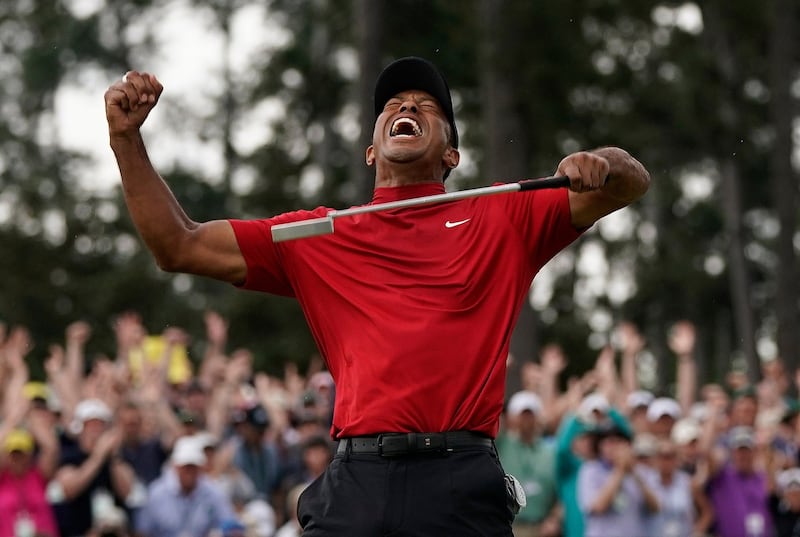
Tiger Woods
“Phenomenon” is thrown around a lot in sports, but there are no better words to describe Eldrick “Tiger” Woods.
Woods captured the imagination of people who weren’t even fans of golf and turned every event he played in into must-see TV. There might be no other athlete in the history of televised sports to convert non-fans into viewers the way Woods did in his prime. Tiger was golf.
A native of Cypress, Calif., Woods was a phenom from a young age. At the age of three, he appeared on The Mike Douglas Show alongside Bob Hope. He won the U.S. Junior Amateur at 15, becoming the tournament’s youngest champion at the time. Woods would win it the following two years in a row for a good measure as the first-ever three-time champion. If that weren’t enough, he would bag three straight U.S. Amateur titles.
By the time Woods got to Stanford, expectations were sky high. He did little to tamper them when he won the individual NCAA title in 1996. It was time to go pro.
Turning professional in the summer of 1996, Woods announced his arrival the following spring. Woods won the 1997 Masters at the age of 21, becoming the youngest man to claim the title. His 12-stroke margin of victory was the largest in the history of the tournament. By June, he was the No. 1 player in the World Rankings and the fastest man to reach the top.
If the early years of Woods’ career proved he was capable of greatness, it was in 2000 when he cemented his status as a generational superstar.
That year alone, Woods won nine of the 20 tournaments he entered, including a string of six consecutive. He won all three national opens – the US Open, The Open and the Canadian Open – to join Lee Trevino as the only man to achieve the feat. When he won another Masters in 2001, it marked his fourth straight major to complete “The Tiger Slam” and become the only golfer in history to do so. His scoring average during 2000 was 68.17, the lowest on record.
As the years rolled on, Woods would continue to rack up wins, but injuries and personal issues began to take a significant toll. A series of leg injuries afflicted Woods from 2007 to 2012, forcing him to miss extended time. By the mid-2010s, Woods dealt with debilitating back injuries that required multiple surgeries. He would incur significant injuries during a 2021 car accident. These ailments effectively ended Woods’s career as a regular Tour participant.
Still, Woods remained capable of showing glimpses of what made him an icon. At the 2019 Masters, the old Tiger made an appearance. Woods held off challenges from Dustin Johnson, Xander Schauffele and Brooks Koepka to win the tournament by a single stroke for his fifth Green Jacket, first Masters in 14 years and first major in 11 years.
Whether or not Woods will ever return remains to be seen. Now 50, Woods would undoubtedly still love to play in majors, but regular Tour participation is almost certainly impossible. What he left with us, though, is the stuff of legend.
Woods’s 82 PGA Tour wins are tied for most all-time with Sam Snead. His 15 majors (five Masters, four PGA Championships, three Opens and three US Opens) are second only to Jack Nicklaus’ 18. From 1998 to 2005, Woods made 142 straight cuts, another all-time record.
While there still might be a pervading sense of what could have been when it comes to Woods, his body of work remains unimpeachable.
--
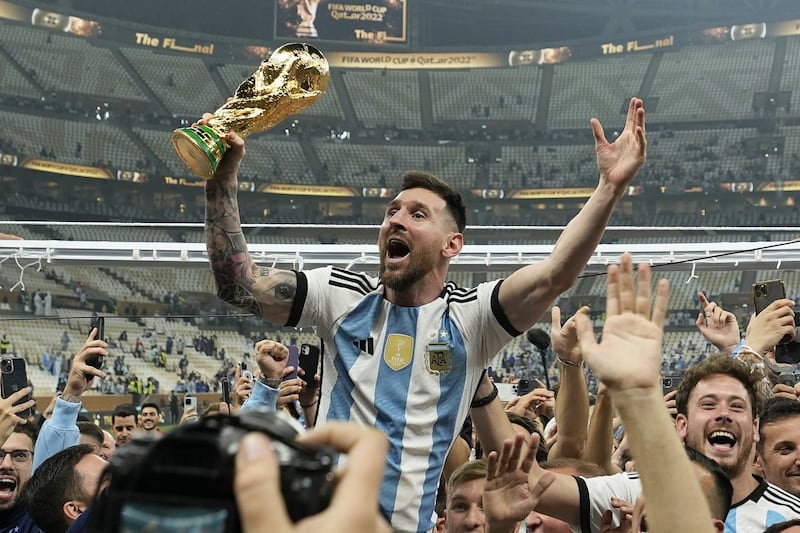
Lionel Messi
Lionel Messi’s diminutive stature has always belied his prodigious talent.
Standing at only 5-foot-7, it might be easy to overlook the Argentina talisman upon first blush. But all it takes is watching him for a few scant minutes on the pitch for that to never happen again.
Now in the twilight of his career, the 39-year-old Messi stands alone when it comes to accolades in men’s football, both individual and with his teams. A major trophy that Messi hasn’t claimed simply doesn’t exist. Since bursting onto the scene as a teenager, it became clear that the Rosario native was destined for greatness and it was a destiny he met with open arms.
After starring as a youth with Newell’s Old Boys, Messi moved to Spain in 2001, joining Barcelona’s famed La Masia academy. Quickly displaying his quality in the youth setup, Messi would make his senior debut at 16. By 2005-06, Messi was fully integrated into the first team at 18.
Messi would go on to spend 17 seasons at Camp Nou, etching his name among the best to ever don the famous Barca shirt. The key cog to a formidable trio alongside all-time legends Xavi Hernandez and Andres Iniesta, Messi earned the No. 10 shirt in 2008. Under Pep Guardiola, the team won the treble in 2009, becoming the first Spanish club to do so, capturing the La Liga title, the Copa del Rey and the Champions League.
In 2014, Messi was joined by Luis Suarez and Neymar Jr. under new manager Luis Enrique. The three-pronged attack became Europe’s most deadly. That year, Messi became La Liga’s all-time leading scorer, and the “MSN” attack produced 122 goals before bettering that mark the following season with 131.
Leaving for Paris Saint-Germain in 2021 in an acrimonious departure, Messi ended his Barcelona tenure with 474 goals and 191 assists in 519 league matches. He won 10 league titles, seven Copas del Rey and four Champions League crowns. His goals and assists totals remain the benchmarks in La Liga.
Messi would go on to a pair of Ligue 1 titles at PSG before his arrival in Major League Soccer and another league crown with Inter Miami in 2025.
His club credentials were never in doubt, but the same couldn’t be said of his play for the Albiceleste. Prior to 2021, Messi’s highs for Argentina were a trip to the 2014 World Cup Final and three losses in the Copa America Final.
For almost his entire career, Messi was compared to Diego Maradona. All that was missing was the trophies. But Messi’s greatness was undeniable. In the past five years as a national team player, Messi erased all disappointment and heralded a new golden age of Argentina football.
In 2021, Messi and Argentina defeated Brazil in Rio de Janeiro, 1-0, in the Copa America Final to give Messi his first senior national honour and the Albiceleste its first Copa since 1993. Messi led the tournament in goals and was named player of the tournament. They would repeat as champions three years later with a 1-0 defeat of Colombia in added time.
Messi would save his greatest moments in an Argentina shirt for the World Cup. At Qatar 2022, Argentina would end the years of heartbreak. Shaking off an opening match loss to Saudi Arabia, Lionel Scaloni’s team wouldn’t look back, storming their way to another final where they would take on a juggernaut France team.
In an absolute thriller that finished 3-3 after added time, Messi went blow-for-blow with former PSG teammate Kylian Mbappé with each Messi netting a brace and Mbappé scoring all three goals for Les Bleus. In penalties, Argentina emerged as 4-2 victors. Messi was named Man of the Match and also claimed the Golden Ball as player of the tournament for the second time in his career, following five MOTM performances.
Messi and Argentina almost managed to repeat the feat in 2026, but the Albiceleste fell to Spain, 1-0, after added time in the World Cup Final. The tournament, though, was another performance for the ages from Messi at almost 39. In eight games, Messi scored eight more goals and added four assists. He ended his World Cup career with 21 goals and 12 assists in 34 career games.
Following the World Cup, Messi announced his international retirement. It was both totally expected and still came as a shock. You truly felt like he would play forever. He appeared in one final Argentina match, a 3-0 win over Benin in Buenos Aires in October. Messi rounded out the scoring from the spot to finish his national career with 99 goals and 44 assists in 143 appearances.
How many more times the world gets to watch Messi dazzle on a pitch is unknown. The day he hangs up his cleats for good will come sooner than later. Until that day, though, we still have time to appreciate the greatest footballer in history.