Richard Norman spends a lot of time thinking about the future – the future of curling to be exact.
Norman, Curling Canada’s director of community futures and innovations, is using his extensive research on the intersection of race, colonialism and sport in curling to find paths toward making the winter sport more inclusive.
“The way I describe it to people mostly is I’m trying to plan for what comes next, not necessarily for what we see today,” Norman explained to TSN.ca in a recent interview. “It is really about asking and looking at things different.
“How do you look at the world around you and how it may impact your sport and plan for different future possibilities?”

Norman’s project is set to hit bookshelves on Sept. 8 with the release of (re)Pebbling: A Story of Blackness and Curling.
You can pre-order the book, HERE.
The graphic novel, written by Norman with illustrations from Jon Olbey and Shelby Gagnon, takes a deep dive into the lack of diversity at the grassroots level of curling in Canada, the uncomfortableness racialized newcomers may face when entering a curling club for the first time, and how the sport’s future can change for the better.
Olbey is a Toronto-based illustrator, born and raised in Alberta, while Gagnon is an Anishinaabe/Cree artist from Aroland First Nation.
Norman uses personal past experiences as well as theory from his 2020 University of Waterloo dissertation to paint a picture of how race can be a tricky subject to discuss when it comes to curling.
He likens the “terrain” in his novel to setting out a “10-course meal for everybody, and they can take away what they want.”
“I’m not saying that everyone has this experience or the same kind of tension,” said Norman. “I’m just saying these are the possibilities that are out there.”
Norman, who is also an adjunct assistant professor at U of W, says the curling community is largely “self-aware” when it comes to the demographics of the sport.
“Just walking in the door, you kind of know. This is a certain culture that draws on a predominantly white audience, and so this is what we have,” he said. “So, it’s not that they’re unaware of that. It’s just a question of what you do with it.”
The novel, which took more than three years to complete, features actual anecdotes from his doctoral research, helping bring to light various issues and points of view from inside the curling club.
One is how a single moment or interaction, whether it to be a glance or comment that’s interpreted a certain way, can deter a new non-white curler from coming back a second time.
“I do believe that there’s lots of extensive training we can do, anti-oppression, anti-Black racism, all these different kinds of things, but it’s really how do you treat somebody who you don’t know in that one moment and trying to make sure that they have a safety and comfort level that invites them into a space rather than sort of create that initial confrontation and barrier,” explained Norman. “I think that is the critical problem, and this is not unique to curling.”
Inviting new communities
Running a successful curling club in 2026 is no easy feat. Most clubs employee a limited number of paid staff alongside volunteers. With expenses used on such things as electricity and equipment to maintain the ice, there may not be a lot of resources left over for other initiatives.
A lack of investment from the federal government in the entire sports system can put curling clubs in a challenging spot when trying to attract new members from different communities.
“We have said that sport is inclusive, that everybody deserves the right to play, and we haven’t invested the resources, the tools and capacity building across the whole sports system to do that properly,” said Norman.
Norman believes “the game is not the problem” when trying to sell curling. It’s social, fun and can be played by people of all ages.
Fostering a positive relationship with new communities is the critical step in changing the look of a curling club, instead of just relying on the game itself to bring people in.
“The problem with sport is that we all believe that our particular sport is the best and we are super precious about that sport. So, the idea is that we’re going go and connect with this community and they should come and curl,” said Norman. “Well, what if you actually flip that conversation and it’s like, ‘I want to know what’s going on in your community and how I can support you.’ And then if we build something that’s lasting, maybe you come and curl and try the other side. But I think that’s the problem with sort of dominant culture is that we assume that everybody just wants to be part of this. And that’s where I think the trappings of sport really show up.”
Like other sports, curling is comprised of many traditions. The Scottish game is known for its gentlemanly play in addition to everything from post-game drinks with opponents to bagpipes.
Norman points out the traditions that make curling unique don’t need to be eradicated. Instead, longtime curlers need to be open-minded to other expressions that may work better for new players looking to join.
Professional basketball in countries like Croatia and Philippines looks a lot different than it does in North America, explains Norman, and that concept could work in curling as well. Playing music and being vociferous might be the preferred method of curling for some as opposed to the traditional style of play.
“It’s like we need to develop novel, innovative ways that everybody can experience it in the ways that they want that sort of express what they are and how they’re seen in the world, rather than trying to confine it and make sure there’s only one model and one way of doing things,” said Norman. “That will serve not just curling, but the rest of sport.”
How it started
Norman’s first notable experience with curling came 15 years ago when he was invited to a Pro-Am bonspiel by a friend.
“I was walking in as green as green could be to the point I didn’t know what a draw was,” Norman joked.
Anna Sloan, who was a former member of Scottish legend Eve Muirhead’s team, was Norman’s skip for the event. Other major names were there too, including Kevin Martin, Rachel Homan and Ryan Fry.
Norman remembers how social and “down to earth” all the high-level athletes were and how fun curling was to play. He also recalls that he was the only Black player on the ice.
“I was thinking, this is strange because here we have a socially welcoming sport. It’s highly connected, sitting around with the opposing team after the game and sharing a drink and talking, getting to know people. I had a great time there, and yet there doesn’t seem to be the representation,” said Norman, who has a background in strategic foresight. “So, that just carried into, well, let’s try figure out why that’s the case.”
From there Norman was inspired to write his University of Waterloo dissertation on the intersection of race, colonialism and sport in curling, which eventually led to his role at Curling Canada. He was the keynote speaker at Curling Canada’s Changing the Face of Curling symposium in 2022.
Curling’s future
Jayden King made history at last year’s Montana’s Brier in St. John’s, Nfld., by becoming the first Black skip to compete at the Brier.
The 24-year-old and his young rink from Tillsonburg, Ont., held their own against some of the best in the business and made the playoffs, going head-to-head against hometown favourite Brad Gushue, who was playing in the last Brier of his career.
Norman says King is a great ambassador for the sport, but notes his presence also highlights the work still needed to be done in curling given it took until 2026 to break this barrier.
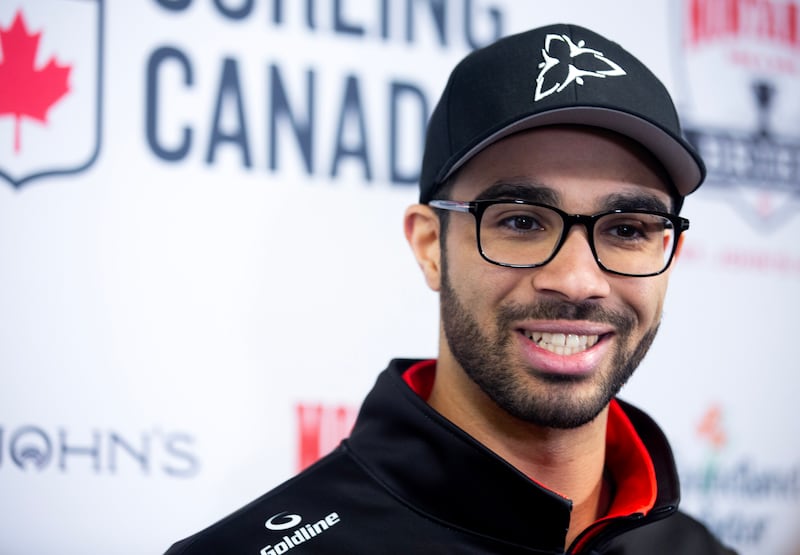
“I think more representation is always going to spark something in some people. Is that the full answer? Is that going to solve the problem within the sport? No. And I don’t think putting that kind of pressure on someone like Jayden one way or the other is really what we need,” explained Norman.
“It is more to sort of say, if this is something that we want, let’s be honest, we aren’t there yet. So, what do we do to make sure that we can get to that future that we all imagine? Where seeing 20 Jayden Kings is not something that is like, ‘Oh, that’s neat.’ It’s just what it is. That, I think, is what the future needs to look like, and that’s what we need to do to prepare to get there, and how do we design for that.”
As for the possibility of a truly inclusive and accessible future for curling, Norman is hopeful but said the entire curling community needs to get there together instead of putting the burden on marginalized groups to solve the problem.
“That’s why I’m optimistic because when on the inside and even on the outside, people want this and now we have to figure out better ways to make that happen,” said Norman. “So, is the future bright? I don’t know. It feels pretty dark in lots of different ways, but I do think that things like this book provide a different way for everyone to engage and then have a different conversation and that different conversation puts us on a trajectory that we haven’t been on before.”
Published by University of Regina Press, the graphic novel also features a forward form Kim Davis, the NHL’s senior executive vice president, social impact, growth initiatives and legislative affairs.