Just because a team is hot one month doesn’t mean that will be the case the next, and that’s certainly what we saw across Major League Baseball during the month of June.
There were some big winners and losers last month -- the Philadelphia Phillies reclaimed their powerhouse status as the Miami Marlins played their way into playoff contention, while the New York Mets continued their early-season spiral and the Atlanta Braves and New York Yankees saw a dip in offensive production. Not to mention, we saw some astounding numbers put up by individual players -- have a month, Pete Crow-Armstrong and Kyle Schwarber!
And, with baseball entering a month jam-packed with the draft, Home Run Derby, All-Star Game and impending trade deadline, what we saw over the past four weeks has helped shape some of the storylines (and matchups) to keep an eye on as the calendar flips to July.
We asked ESPN MLB experts Jorge Castillo, Bradford Doolittle, Alden Gonzalez, Buster Olney, Jeff Passan, Jesse Rogers and David Schoenfield to break down the best and worst of June -- and what they’re looking forward to (and keeping an eye on) in the month ahead.
Who (or what) is your biggest winner of the month?
Castillo: The Phillies entered June with a 30-29 record and 9½ games behind the thriving Braves in the National League East, just over a month removed from manager Rob Thomson getting fired. Fast-forward another month and that gap between Philly and Atlanta has shrunk to 2½ games. This is still a top-heavy roster with weaknesses to address, but the stars are starring.
Kyle Schwarber was the first major leaguer to 30 home runs this season. Bryce Harper owns an elite .908 OPS. Brandon Marsh is enjoying a breakout All-Star season. Cristopher Sanchez is still a Cy Young candidate. Zack Wheeler has authored a remarkable comeback from thoracic outlet syndrome. Jhoan Duran is lights out in the ninth inning. Add it up and the Phillies went 18-9 in June under interim manager Don Mattingly. Suddenly, a third straight NL East title is very real.
Gonzalez: Let’s show some love to the team with June’s best record -- the Marlins. They didn’t just dominate the month by winning 20 of 26; they also boasted the lowest ERA in the majors and put up a respectable .798 OPS, good for tied for fourth. We’ve passed the midway point of the season, and the Marlins -- the team with the sport’s lowest payroll and second-lowest attendance -- are tied with the St. Louis Cardinals for the third wild-card spot. Any team hoping to acquire Sandy Alcantara before the trade deadline might have to pump the brakes at this point. With Alcantara, the excellent Max Meyer and a healthy Eury Perez, the Marlins have a formidable rotation trio. With Otto Lopez and Xavier Edwards, they have an excellent middle infield. And with Kyle Stowers getting hot in June, perhaps they have a legitimate power threat, too. But what makes the Marlins fun is that they seem much greater than the sum of their parts.
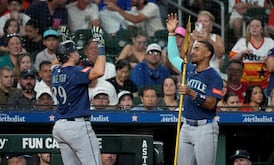
Schoenfield: RIP, Houston Astros? Not just yet. The Astros had fallen to as many as 11 games under .500 in May and were six games out in the American League West on June 2 -- and everyone declared the end of the Houston dynasty. Then came a month of games mostly against the AL Central and the Astros have gone 16-10 in June. No, not a dominant month -- and they’ve been outscored 129-122 -- but in the AL West, that was good enough to climb right back into the division race. Are the Astros good? Not really. But Hunter Brown is back, Tatsuya Imai has punched out 21 batters over his past two starts, Yordan Alvarez has been the best hitter in baseball and a .500 team might win the division.
Who (or what) is your biggest loser of the month?
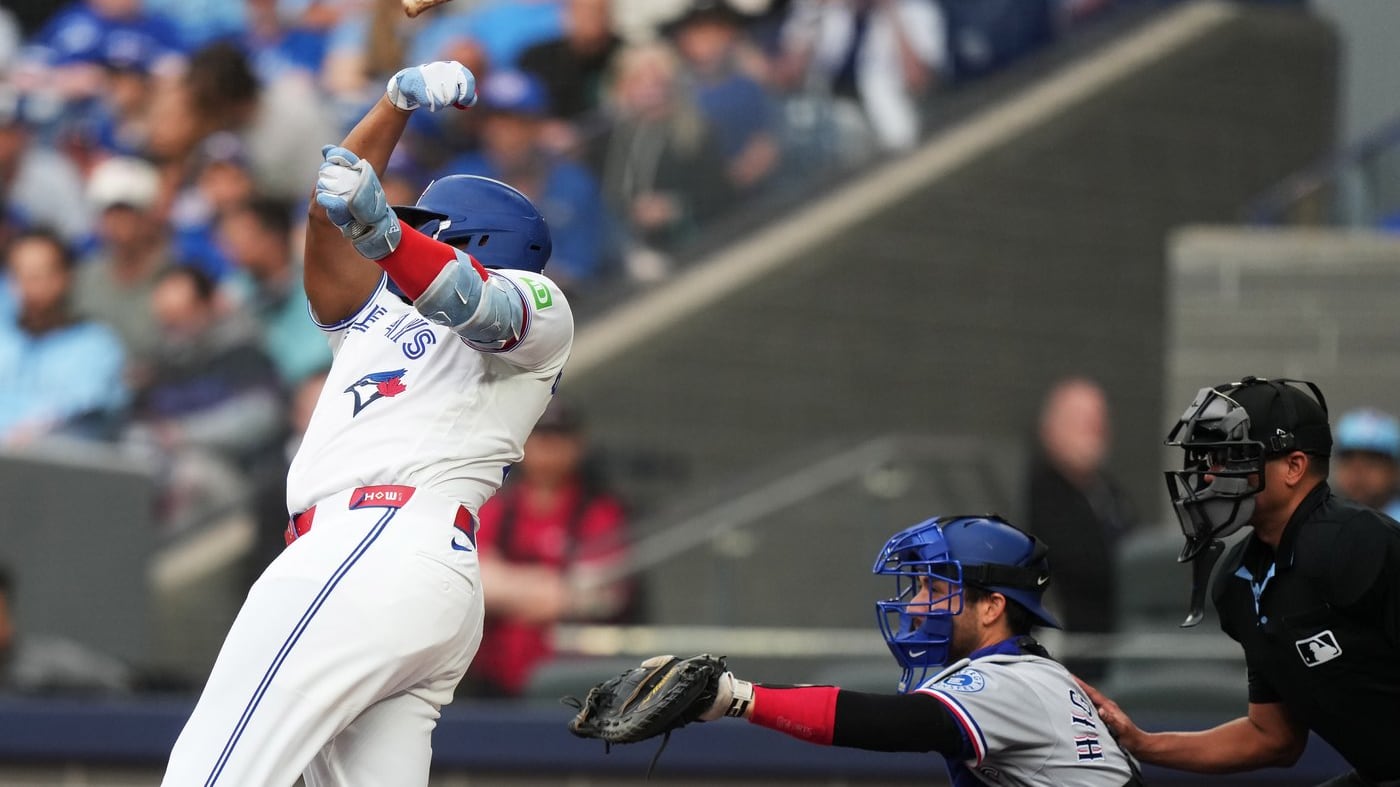
Passan: Given ample opportunity to reassert themselves as a threat in an AL with scant few, the Toronto Blue Jays posted the worst record in the league in June. While Vladimir Guerrero Jr.’s power outage is the Jays’ primary concern, their starting rotation -- supposedly a strength -- allowed 24 home runs in 109 innings last month. Since dipping under .500 in early April, the Blue Jays haven’t been back over that mark. Twice they’ve gotten to even, only to follow with four straight losses the first time and six consecutive the second time.
Lurking somewhere within these Jays is the version of themselves that pushed the Los Angeles Dodgers to the precipice in Game 7 of the World Series. For the first half -- and particularly June -- that incarnation remained in hibernation.
Rogers: JJ Bleday and the Cincinnati Reds. Bleday was the player of the month in May but has crashed and burned at the plate in June, hitting just .161 -- third worst among all qualified hitters. At least he’s taking a few walks this month, but his .611 OPS in June is a far cry from the 1.018 mark he produced last month. As his fortunes have gone, so have the Reds, who were above .500 at the end of May -- though in last place in the division. They’re still in last but under .500 and with a run differential worse than the lowly Mets. Ouch.
Doolittle: The Braves offense. Through the end of May, Atlanta had rolled up 5.3 runs per game, third in the majors behind the Washington Nationals and Dodgers. In June, the Braves have cratered to 3.4 runs per game, worst in baseball. Some of the problem has been injury, both in terms of action missed and dips in production (Drake Baldwin and Ronald Acuña Jr.). Some of it has been severe drop-offs from some of the stopgap veterans who were so productive early (Mike Yastrzemski, Dominic Smith, Jorge Mateo). Some of it has been plain old negative regression (Michael Harris II and Matt Olson, though the latter’s dip was minor).
The bottom line is this is a completely different Braves offense than it was a month ago. The question going forward: How much of Atlanta’s early dynamism was a product of pixie dust that has since dissipated in the winds of a long season?
What is your most astounding stat of June?
Doolittle: MLB’s walk rate of 8.5%. Most of the league-level indicators aligned with what we’ve come to expect as the weather warms. More flyballs leave the yard, goosing the run-scoring levels. Average on balls in play tends to go up. What was unclear about this ABS debut season is how the early spike in walk rates would evolve, and the answer is that they have fallen with each month. The rate in June was close to last year’s overall rate (8.4%) and lower than recent seasons such as 2021 and 2023. It’s only one month, but right now, despite the profound change in how balls and strikes are called, the bottom-line impact on walk rates doesn’t appear to be significant, if it exists at all.
Schoenfield: The Seattle Mariners went 13 consecutive games without scoring more than three runs, hitting a feeble .188/.272/.279 over that stretch. When the streak finally ended Sunday, relievers Michael Rucker and Josh Simpson coughed up a 4-1 lead in the eighth inning, leaving everyone to wonder why manager Dan Wilson had Rucker and Simpson in the game in the first place.
Anyway, the second-longest three-runs-or-fewer streak this season is nine games (by the Boston Red Sox), the longest last year was 10 games, the longest in 2024 was 10 games ... you have to go back to a 16-game streak by the Marlins in 2022 to find a longer one. The Mariners, by the way, are hitting .208 against left-handed pitching so far this season. Ignoring the shortened 2020 season, the only team since 1920 with a lower average against southpaws was the 1968 Yankees, who hit .204. It feels like the Mariners should be running away with a weak division, but their ineptitude against lefties means the AL West is wide open.
Passan: The Marlins went 20-6. The same Marlins who carry the lowest CBT payroll in baseball. The same Marlins who quite literally don’t have a single player under contract for the 2027 season. The same Marlins who finished June with a middle-of-the-pack offense. Miami’s pitching carried the day, with the second-best ERA by its starters and fourth-best from its relievers. While nobody expects the Marlins to add heavily at the trade deadline, their success could keep them from offloading -- and if they do the kinda-going-for-it thing, the reinforcements could come from within, whether it’s the return of slugging Liam Hicks or the arrival of fast-moving outfield prospect Cam Cannarella.
What is one thing you are watching in July?
Rogers: How hard do the Milwaukee Brewers push at the trade deadline? Top prospect Jesus Made is likely off-limits -- there won’t be a Leo De Vries-for-Mason Miller deal here -- but should anyone else be? Milwaukee has knocked on that playoff door enough. It’s time to bust through it. Who knows what the future brings. Heck, a potential salary cap might hurt the Brewers’ current advantages. Fast-rising prospect Andrew Fischer should be on the table and just about anyone else -- especially if we’re talking about a healthy Tarik Skubal on the market. If not him, the Brewers should consider the best bat and/or arm out there and nab a difference-maker for the postseason.
Castillo: Whether the Detroit Tigers will play their way into keeping Skubal. They are 12 games under .500. If they don’t play significantly better, president of baseball operations Scott Harris, knowing Skubal will be too expensive to re-sign this winter, will likely look to trade the ace. The team’s job is to convince him that trading the two-time-reigning Cy Young Award winner isn’t the right move for the franchise.
The good news is the AL is lousy. The Tigers, despite having the third-worst record in the league, are just 6½ games behind the Mariners for the final wild-card spot. Two years after going 31-13 down the stretch to clinch an improbable postseason berth, the Tigers could find themselves in the thick of the race with a strong July. If that doesn’t happen, Harris will be taking calls from just about every contender on his star player.
Olney: Do the Red Sox cash out or double down? Their four-game sweep of the Yankees has fueled hope in the organization that Boston could climb back into the stagnant AL wild-card race, with what might be the league’s best pitching staff. But with Roman Anthony out indefinitely, the Red Sox would need to upgrade their roster by adding one or two hitters if they want to do more than merely stay in contention and make the playoffs. If they decide to deal at the deadline, they’ll have a wealth of pitching to offer around -- Sonny Gray (who would have to approve any trade), Aroldis Chapman and Garrett Whitlock. The X factor in this situation is the tenuous status of chief baseball officer Craig Breslow, who may be in jeopardy of losing his job -- especially if the Red Sox fade out of contention. Will that fuel his aggressiveness? Would ownership co-sign on expensive pre-deadline acquisitions? We’ll see.
Passan: When the Chicago White Sox won the draft lottery in December, there was near-unanimous agreement they would use the No. 1 overall pick on UCLA shortstop Roch Cholowsky. And while the consensus is still that that will be the case, Chicago continues to weigh its options. Texas high school shortstop Grady Emerson is the next-best bet. Georgia Tech catcher Vahn Lackey, who along with Cholowsky and Emerson comprises the clear top three on most draft boards, is another possibility. And the White Sox could cut a deal with another player -- UCSB right-hander Jackson Flora? -- below the $11.35 million slot value and use the savings to float a hard-to-sign player or two to a later pick.
Considering the White Sox’s ascendance this year, adding a fast-moving player to their already-good young core makes sense. Though they have given themselves a suite of good options, they might not know until draft day on July 11 which suits them best.
Gonzalez: A.J. Preller’s cellphone. The San Diego Padres are in win-now mode, but they are just barely in contention because their offense is the worst in the sport. Yes, a lineup featuring Manny Machado, Fernando Tatis Jr., Jackson Merrill and Xander Bogaerts has scored fewer runs than any team in the major leagues. All four of them have been bad, and the depth around them is nowhere near enough to make up the difference. Yes, Preller could stand to add a front-line starter, but the need in the rotation is probably not as acute as it is in the lineup. If the Padres give him a reason to add, you can bet the general manager will be in the market for the most decorated hitters available. And a new incoming ownership group is expected to give him the green light to take on money.
What one series should fans circle as a must-watch for the month ahead -- and why?
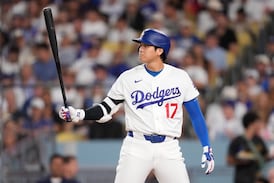
Gonzalez: It’s always special when the Yankees and Dodgers get together, and immediately after the All-Star break, the two will square off in the Bronx for what will be billed as a World Series preview. The Dodgers own the best record and run differential in the sport. The Yankees have faded a bit since Aaron Judge went down, but in a watered-down AL, they remain heavy favorites to capture another pennant -- and seek revenge for 2024.
Olney: Many executives expect some potential trade deadline dealers to declare themselves in the first week after the All-Star break, which means that the results of the first six or seven games after the break could go a long way to shaping strategy. This is the time of year when small sample size matters the most. The Baltimore Orioles will play three games against the Red Sox at Fenway Park from July 20-22, and by then, either or both teams could be on the precipice. Two teams will enter this series, and only one team might survive.
Rogers: Let’s go all the way to the end of the month, leading into the trade deadline: Yankees versus Chicago Cubs at Wrigley Field, Friday, July 31, to Sunday, Aug. 2. Both iconic teams fighting for the playoffs. Both teams likely to be active at the deadline. It’s a World Series preview ... OK, slow down. But it’ll still be fun.