COOPERSTOWN, N.Y. -- Walking down Main Street in Cooperstown during Hall of Fame induction weekend, you get the sense that you have become immersed in a timeless ritual.
This is especially true if you go year after year, as every induction involves the same beats -- the parade, the golf tournament, the speeches. The same shops line the street, and even some of the temporary merchandisers are familiar -- people you would see over and over, such as former Negro League player Pedro Sierra on the corner of Main and Pioneer, or, down the street, 30-game winner Denny McLain, a long-time fixture hawking his wares in the parking lot outside of Doubleday Field.
The faces and names change over time, but it all feels the same. For visitors, it's a quest for serendipity. One year it's Bill "The Spaceman" Lee holding court across from Sierra with a beer in his hand. The autograph barker might be touting Pete Rose's signing time -- if you have a ticket. This year, you would have seen Bert Blyleven walking down Main Street, or Dusty Baker signing autographs on the corner or Shane Spencer in the Doubleday Field lot. If they were a part of baseball, or just loved it, they might find their way to Cooperstown.
When you look close, though, you can see that the crowds have different attributes from July to July. The mix of hats is different, so too are the T-shirts and the jerseys worn as homage. Increasingly, the flags you see have diversified, folding in more and more colors from baseball's great international community.
Jeff Kent, Carlos Beltran and Andruw Jones make up the 2026 Hall of Fame class. The trio represent three different nations and territories, more if you want to include Jones' play for the Netherlands in the World Baseball Classic and his two years playing in Japan. They also combine to represent a dozen different major league organizations: Beltran played for seven teams, Kent for six and Jones for five.
This last part is increasingly the new normal for most Hall of Famers, and it's a feature, not a bug.
"It was part of the evolution of my game," Kent said. "Learning how to deal with changes, deal with different ballparks, being able to adjust, and being able to replace some of the best players in the game."
Once, the prototypical Hall of Famer was someone who raced to the majors and starred for an entire career for one team, even if they perhaps spent a career-end season or two elsewhere -- Walter Johnson, Ty Cobb, Sandy Koufax, Lou Gehrig, Christy Mathewson, Bob Gibson, Joe DiMaggio, Mickey Mantle, Willie Mays, Hank Aaron ... those were Hall of Famers, and their biggest fans were those of the teams with which they were synonymous.
The prevalence of that kind of player has been declining over the last half-century, since the advent of free agency. The players aren't less great, though, and as movement between teams -- and baseball nations -- has sped up, the changes have helped spread baseball into the global sports community, establishing the game's roots anywhere that will allow them to grow.
For Beltran, at least, that's what it's all about.
"There's no doubt that every generation has the responsibility not only to play the game, but also to promote the game and try to impact the community that you come from," Beltran said.
The Hall of Fame has changed in subtle ways over the past 20 years, as it has weathered the storm and the ongoing aftermath of the steroid era. The Hall might never fully escape the specter of that most controversial of times. Not as long as its leading characters remain outside the Hall doors despite on-field performance that should have marked them as part of the institution's inner sanctum.
These changes have allowed the Hall, and Cooperstown, to turn an era of uncertainty and potential contraction into one of sustainability. It has done so by keeping its membership growing, thus sprouting new tentacles that reach into new or forgotten corners. They've helped the Hall of Fame, as an institution, to remain a mecca for players and fans alike. Since the inevitable drop in attendance during and after the COVID-19 pandemic, the Hall's visitor counts have risen for five straight years, the first time that has happened since the 1980s.
This has happened because we keep finding new Hall of Famers even as statistical no-brainers are shunned. The newest Hall of Famers didn't really see themselves in the Cooperstown light for most of their careers, but, eventually, even they realized their careers were adding up to something significant.
"The Hall of Fame came to my mind when I was maybe around my 16th year in the big leagues," Beltran said. "Where you're playing the game, and let's say you hit a double, and the reporters come to you after the game and say, 'Hey, man, how do you feel about passing X and Y in doubles?' I'm like, 'Wow! I'm passing these legends? They are Hall of Fame legends!"
Beltran, Kent and Jones all played during much of the steroid era, a time of epic offensive numbers. None of them really ranked as the best player in the game at any given time, though Kent was the 2000 NL MVP and Beltran and Jones both had top-five finishes in MVP balloting. They were teammates with some of the elite figures at the center of PED-related turmoil: Beltran and Kent with Roger Clemens on the Houston Astros, Jones alongside Alex Rodriguez on the New York Yankees.
Most famously, Kent was batting behind Barry Bonds while the latter was laying siege to pitchers at a level no one else has ever reached. Kent was great in his own right, though it's not hard to argue that hitting behind Bonds helped smooth his way to Cooperstown. Kent's five best seasons by bWAR all came with the San Francisco Giants, batting behind Bonds who, when he wasn't going deep at a historic rate, was constantly on base.
"I can say that [Bonds] was a teammate that helped me," Kent said after his election by a Hall era committee. "I believe I helped him. And I believe he was one of the best baseball players I ever saw."
Despite the omission of most of the steroid-tainted greats, the Hall has continued to welcome as many new members as ever. Over the 10-year span through 2025, 35 new members were added to the Hall's roster as players, more than any period since the mid-1970s.
There has never been a clear answer as to how many players should find their way to Cooperstown, but the rate of admission has been remarkably stable, even as the sport has expanded in teams and players. If you slice the induction counts for players into 20-year measurements, between 60 and 62 new members were added in each two-decade increment, ending in 2015.
That means the start of the next 20-year period, the fifth since the Hall was founded, was 2016 -- and a little over halfway there, we're on pace to see 69 players during the period between that year and 2035. If that keeps up, the post-steroid period won't have seen a stunted Hall membership, but one of record growth.
Have the standards lowered? Maybe, but only a little on average. The average career bWAR total over the last decade for new Hall of Famers (60.5) is higher than the decade before (54.8), but lower than any decade going back to the mid-1970s.
The effect is minor. There has always been a sub-tier of players whose Hall candidacies stirred hot debate, players in the tier below the absolute no-brainers. That the averages have remained this high despite not being fueled by the bWAR totals of Bonds, Clemens and A-Rod suggest a narrower band of candidate quality. To put in the parlance of prospect talk, the classes have had a lower ceiling but just-as-high of a floor.
Whether or not you endorse this level of acceptance for baseball's highest honor is really a question of whether you come to the subject with a big Hall or small Hall mentality.
The small Hall constituency consists of those who want the Hall of Fame to be reserved for the elite of the elite, the Ruths and the Cobbs and the Mathewsons, and not the Baineses and the Walkers and the Rolens. The big Hall types set the bar lower than that, though every individual case is bound to stir passionate argument and deep-dive analysis.
If the premise is that the Hall has kept numbers up by being more inclusive when it comes to borderline cases, whether those are being evaluated by the BBWAA or an era committee, one reason is the erosion of an old bias against players not necessarily associated with one particular team.
To be sure, this is a byproduct of baseball's free agent era, something that has only been around since 1976. But it is a bias that has been illustrated by, among others, GOAT baseball analyst and historian Bill James.
Writing at his defunct website in 2022, James determined that for players who were below the no-brainer level, yet had defensible Hall resumes, their chances were as much as 50% higher if they were mostly associated with one particular team.
For illustration, consider two players who ended up with similar bWAR totals. Both were primarily centerfielders. Player A is in the Hall; Player B is not.
Player A: 64.3 bWAR, 2574 hits, 29 homers, 234 steals, 111 OPS+, 77 fielding runs
Player B: 68.4 bWAR, 2428 hits, 130 homers, 622 steals, 107 OPS+, 108 fielding runs
Richie Asburn, Player A here, had to wait more than three decades to get in via a committee, but he made it -- and his association with the Whiz Kids teams in Philadelphia was part of what made his case distinctive. All but 4.8 of his bWAR came with the Phillies. Kenny Lofton, Player B, did his best work with Cleveland but also bounced around 11 different clubs. He remains in Cooperstown limbo, waiting for just the right combination of advocates on an era committee.
You can see this dynamic at work in other ways of approaching the question. For most players, though there are exceptions, their Hall of Fame die is cast by age 30. The 123 Hall of Famers who had compiled at least 40 bWAR by age 30 played for an average of 1.63 teams up to that time. The 58 non-Hall of Famers to reach that level by 30 played for an average of two teams. In a vacuum, that shouldn't really matter, but until the last few years, it clearly did.
That this bias against team-hopping is changing is demonstrated by recent selections such as Kent, Beltran, Dick Allen, Adrian Beltre, Fred McGriff and Scott Rolen. If this is something that helps keep the Hall's doors open, big Hall partisans will be satisfied. More importantly, having a larger Hall has important consequences for not just the Hall of Fame as a hallowed institution, but for the growth and the reach of the game itself.
Baseball's tentacles only grow longer, stronger and more plentiful with a robust Hall of Fame membership. And that manifests in a few crucial ways.
Every team, town, city, league and nation a Hall of Famer has known becomes a permanent source of pride for that player. You see that in Cooperstown.
One of the most striking aspects about the crowd drawn to this year's class was that the most common constituency represented in hats, T-shirts, jerseys and flags was not any of the 12 teams the class had ties to, but to Beltran's homeland -- Puerto Rico.
You could see Beltran's early career being honored by at least a few fans, walking around in Kansas City Royals hats, fans who remember the promise he flashed as a Rookie of the Year and that he manifested as a star player later as one of the few bright spots of a long, dismal era in Kansas City baseball, one that ended in heartbreak when the Royals traded Beltran in advance of his free agency in 2004.
"That's where everything started," Beltran said. "Drafted by that organization, and was able to work through all the way to the big leagues. And I was very lucky to be around one of the greatest, George Brett. I had him as a coach."
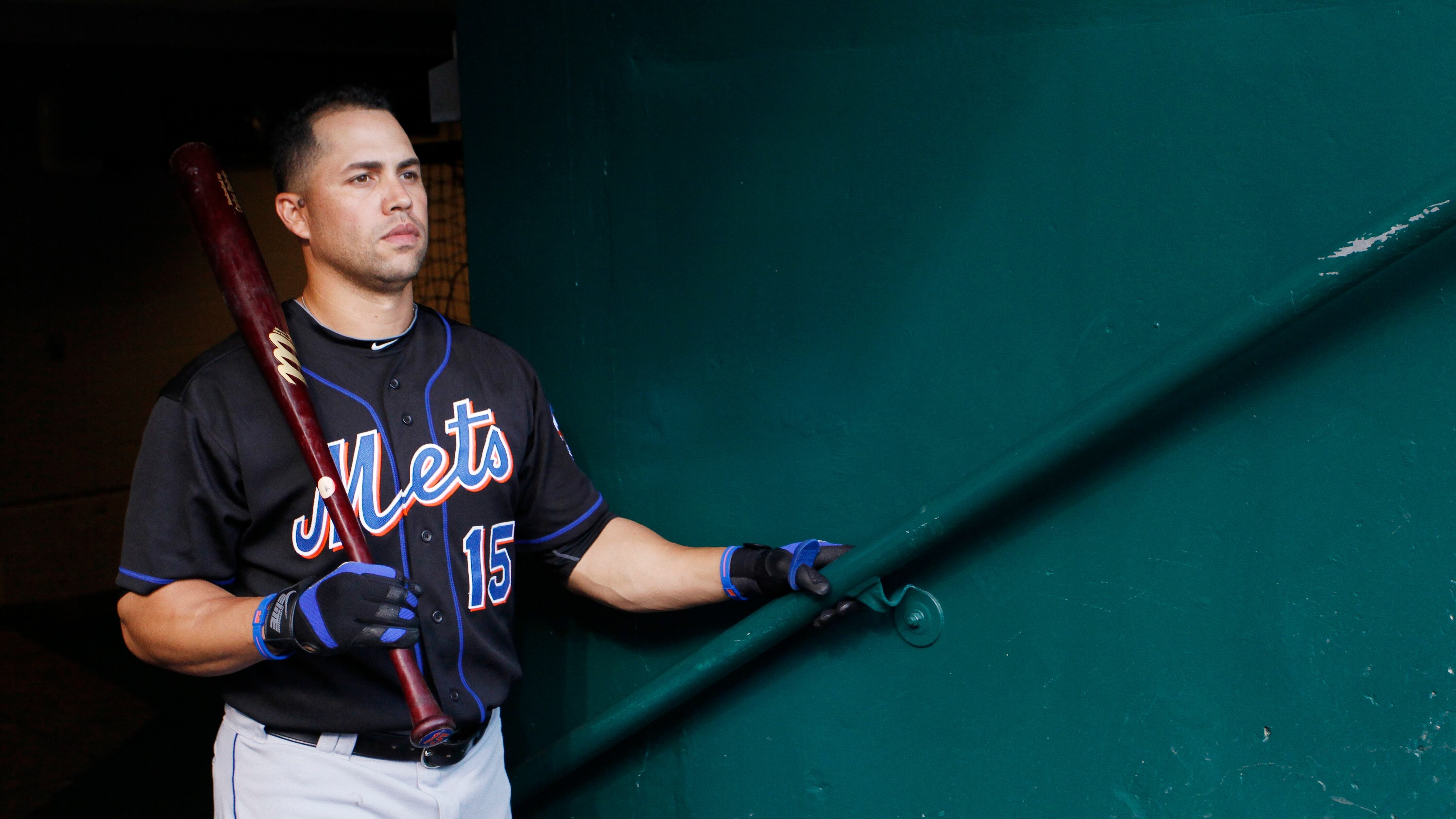
And you see other fan constituencies showing up for Beltran, who made his marks in St. Louis, Houston, San Francisco and for both teams in New York -- and is wearing a Mets hat on his Hall of Fame plaque. Astros fans proudly claim him despite his association with the 2017 championship club later damned for a sign-stealing scandal, something Beltran has not hidden from since his election.
"Some of the people that didn't vote for me when the Astros situation happened, for the first couple of years," Beltran said. "They voted for me after two years. So the question will be: What changed for them?"
That, too, is a tentacle that needs to grow: Forgiveness.
Beltran chose to go in as a Met because while his overall production was similar in New York and Kansas City, he felt that his greatest amount of growth on and off the field came during his time in New York. He still works with the team and indeed is often rumored to become the next permanent manager there, a job he held briefly before losing it because of the scandal. While Beltran could've gone in without any logo on his plaque at all, he chose New York because he thought it was important to represent an organization.
"I felt like I also had [some] of my biggest moments in New York, but also my biggest challenges," Beltran said. "So I feel like as a person, where the place I grew the most I felt was in New York."
But Beltran doesn't just represent New York and Kansas City and Houston and St. Louis. He also represents Puerto Rico, as just the sixth player from the island to make his way to Cooperstown. Beltran has remained active in promoting and developing young players in his homeland via the Carlos Beltran Baseball Academy, his foundation in which he emphasizes education as much as baseball. His acceptance to Cooperstown only enhances that project, as he becomes what Roberto Alomar and Roberto Clemente were to him: A hero.
This too, represents one of baseball's tentacles, the international tentacle, and it's growing like it never has before.
Jones is the first player from Curacao to make the Hall of Fame. There have been other good players to come from there since -- Ozzie Albies, Kenley Jansen, Ceddanne Rafaela among them -- and they invariably cite Jones as their inspiration growing up. Now that he's in Cooperstown, the game becomes only that much more embedded in Curacao, nearby Aruba and other locales in that part of the hemisphere.
"I think I kind of opened the door to a lot of kids when I made it that young in the [1996] World Series," said Jones, whose debut in the Fall Classic came when he was 19. "I'm very proud of everyone that's made it [since] and we've got a lot of kids on the way."
That's also a kind of generational tentacle, as Hall of Famers lead the way for those who aspire to follow in their wake. That works in reverse, too, as earning a spot in Cooperstown ties the player to his past.
For Kent, who seldom came across as the cuddly type when he played, he tends to melt when talking about some of the tangible objects he kept close to him during his career. One was his trademark mustache, which was a reminder of his police officer father; the other was a necklace he wore beneath his jersey that was a gift from his mother. He admits that becoming a Hall of Famer has forced him to be more open in a public-facing way.
"I'm a deflector," Kent said, considering his past approach with the media. "Maybe it's not wanting to deal with it, but it's 'go find somebody else to talk to because I'm OK.' Now I can't deflect, because here I am."
We've seen players from populous regions get into the Hall of Fame, such as DiMaggio, from San Francisco, and Phil Rizzuto, one of countless players from the New York area. We've seen players such as Rolen, from Jasper, Indiana, and Bob Feller, a farm kid from Van Meter, Iowa. Increasingly, we've seen new nations recognized, and their entire baseball fandom becomes absorbed into the extended Hall of Fame family.
With Jones adding Curacao to the list, this marks the second straight year we've added a Hall of Famer who was the first from a nation, as last year Ichiro Suzuki was the first Japanese-born player to be inducted. It's a growing trend.
Since 2017, 11 players born outside of the United States who later played in the existing major leagues have been inducted, doubling the total prior to that. That count doesn't include Edgar Martinez, who was born in New York City but moved to Puerto Rico when he was two and was raised there. Beltran is the sixth player raised in Puerto Rico to make it to Cooperstown.
When these players are inducted, the usually sleepy little village of Cooperstown lights up in ways it never used to, as representatives of these proud new global partners arrive by literal busloads for induction ceremonies.
During the Legends Parade, just about every Hall of Famer who rolled down Main Street was cheered by at least a few fans donning merchandise from one of their old clubs, but the single star, red-white-and-blue of the Puerto Rican flag was sprinkled up and down the route. One couple standing on a bench was wearing Beltran Mets jerseys but also waved small Puerto Rican flags. Another fan waved a big version of the flag right at the heart of the parade route, in the open area of Pioneer and Main, where Brian Kenney was emceeing the proceedings. Roberto Clemente jerseys were everywhere, not unusual for Cooperstown, but perhaps a little more common this year.
In past years, we've seen waves of Montreal Expos fans coming down from Canada to honor Larry Walker and Vladimir Guerrero, who also brought Dominican fans out in full force, as did David Ortiz. There were Cuban fans to honor Minnie Minoso and Tony Oliva. Last year a tremendous influx of Japanese baseball fans were on hand for Ichiro.
If you want to question the Hall of Fame selections of the last decade, you should bear this in mind: When the Hall of Fame grows, it grows the game itself. You see it increasingly in Cooperstown in late July, every year.
And all you have to do is look at baseball's rosters in 2026 to know that trend is only going to continue.
And all you have to do is look at baseball's rosters in 2026 to know that trend is only going to continue. According to MLB, 247 players representing 16 different countries and territories outside of the 50 United States made Opening Day rosters -- more than a quarter of all players.
Once a Hall of Famer is inducted, he becomes heavily incentivized to return to Cooperstown every year, and the institution goes to great lengths to get as many living members back as possible each summer. Their efforts are working: This year, a record 60 Hall of Famers were scheduled to be on hand, a group that ranged from the longest tenured Hall of Famer, Sandy Koufax, to those inducted just last year, CC Sabathia and Suzuki.
When you talk about baseball tentacles, this too has an effect, because it's not just a Hall of Famer who comes back, but their families. The families get to know the other Hall of Fame families, and they carry those relationships back to wherever they come from. Every Hall of Famer is a beacon for a number of different kinds of groups of people, and their families help keep those reverberations echoing.
That's what you see when you look out on the grounds of the Clark Sports Center on one special Sunday afternoon near the end of every July. You see the bounty from baseball's mighty reaper and what it has harvested. So many hats, jerseys, flags, together creating a comprehensive immersion into national and international culture alike. And you see that group of 60 Hall of Famers up on stage, those responsible for bringing them all together.
Reflecting on the gathering before his speech, Kent told his wife, "I'm more worried about the 60 [people] that are going to be sitting behind me than I am the 15,000 that are going to be sitting in front of me."
Indeed, it's a lot, but the ritual is a marker of continued relevance for the game, the institution of the Hall of Fame, and the greatest practitioners of the art of baseball, so many of them gathered over the weekend in this tiny, idyllic village of upstate New York.
A big Hall is a healthy Hall, and a healthy Hall feeds the game itself, which has been flourishing in so many ways and yet, at this moment, is seemingly searching for a way to curb its own momentum.
It has been a rocky era for the Hall of Fame. The controversies of the past two decades aren't going to go silent, completely, perhaps ever. But rather than becoming a place of scarcity, by keeping the Hall of Fame's plaque room growing, it's become a place of abundance.
All that and, if you love baseball and its history, there is still no better place to be.
Maybe the best illustration of that was at the The Otesaga Resort Hotel, where the Hall of Famers reside for the weekend. Out on the back lawn on Friday evening, with the lake shimmering beyond under the crepuscular sky, a group of kids with wiffle balls and bats were playing an impromptu game -- pitching and swinging and chasing each other and laughing.
It could have been any backyard anywhere, but this was Cooperstown and there greats inside those walls. Perhaps some of them were watching from their windows, thinking about how, once, they were just like those kids by Lake Otsego, frolicking in the open spaces from wherever they came, engaged with joy in something truly outside the boundaries of time.