All week, TSN will be rebroadcasting memorable games from the Montreal Expos 1981 playoff run, including the very first Major League Baseball postseason game played outside of the United States.
You can catch Game 1 of the 1981 National League Divisional Series between the Philadelphia Phillies and Montreal Expos on Monday at 8pm et/5pm pt on TSN5, the TSN app, streaming on TSN Direct and on TSN.ca.
The 1981 Major League Baseball season was not one of your run-of-the-mill campaigns and its postseason ended up being decided in a unique manner that has not been used since.
The explanation for the distinct way the season went is a straightforward one - from June 12 to August 9, the players went on strike and wiped out nearly one-third of the schedule. Rather than simply continue on the season from where things stood, the league came up with a novel idea: the creation of the Divisional Series. Now with the advent of the wild card in 1995, there have been Divisional Series every year since, but the format is unlike the one used in 1981. The teams that were leading their respective divisions prior to the work stoppage were automatically given playoff spots. Four more teams would qualify for the playoffs by having the best records in each division for the remainder of the season and for the first time ever, Major League Baseball would have a five-game divisional series to determine who would advance to the respective League Championship Series.
In the American League, the New York Yankees had the best record in the East prior to the strike, while the Milwaukee Brewers earned the second-half berth in the division. Out in the West, the Oakland Athletics had a hefty lead atop the division at the time of the strike and earned their first trip to the postseason in six years. The Kansas City Royals, as second-half winners, joined them in the AL West Divisional Series.
The Los Angeles Dodgers had just a half-game lead over the Cincinnati Reds in the National League West as the strike started, but that was enough to earn themselves a playoff berth. Their opponents in the NL West Divisional Series would be the Houston Astros, returning to the playoffs for a second straight season. In the East, the reigning World Series champion Philadelphia Phillies would have the chance to defend their title by virtue of their lead at the top of the division before the strike. Their opponents in the NL East Divisional Series would be the postseason debutant Montreal Expos.
In their 13th season of existence, the Expos would play October baseball for the first time thanks to a 30-23 second half to finish ahead of the St. Louis Cardinals by a half-game. (An aside - While the whole purpose of instituting the Divisional Series was to be equitable, the Cardinals and Reds both missed the playoffs despite finishing with the best records in their respective divisions over both halves of the year.)
Though nobody knew it at the time, this would mark the only playoff appearance for the Expos in their history.
That the Expos even made the playoffs was remarkable in itself. On Sept. 8, in the midst of a stretch where the team would win just two of nine games, the club fired manager Dick Williams looking to shake things up and right the ship before it was too late.
"One of the reasons for my decision was we didn't feel we could win the way were playing, with the lack of direction and discipline and the questionable tactics," president John McHale said of the firing at the time.
In Williams's stead came Jim Fanning, the team's vice president of player development. Under Fanning, the team would finish the season 16-10 to pip the Cards for the playoff spot.
Offensively in 1981, the Expos were led by the Hall of Fame duo of "The Hawk" and "The Kid." Andre Dawson (runner-up) and Gary Carter (sixth) would finish in the top six of National League Most Valuable Player voting that season (Phillies third baseman Mike Schmidt won the award). Dawson hit .302 with 24 home runs, 64 runs batted in and an OPS of .918. For his part, Carter batted .251 with 16 jacks, 68 RBI and a .756 OPS.
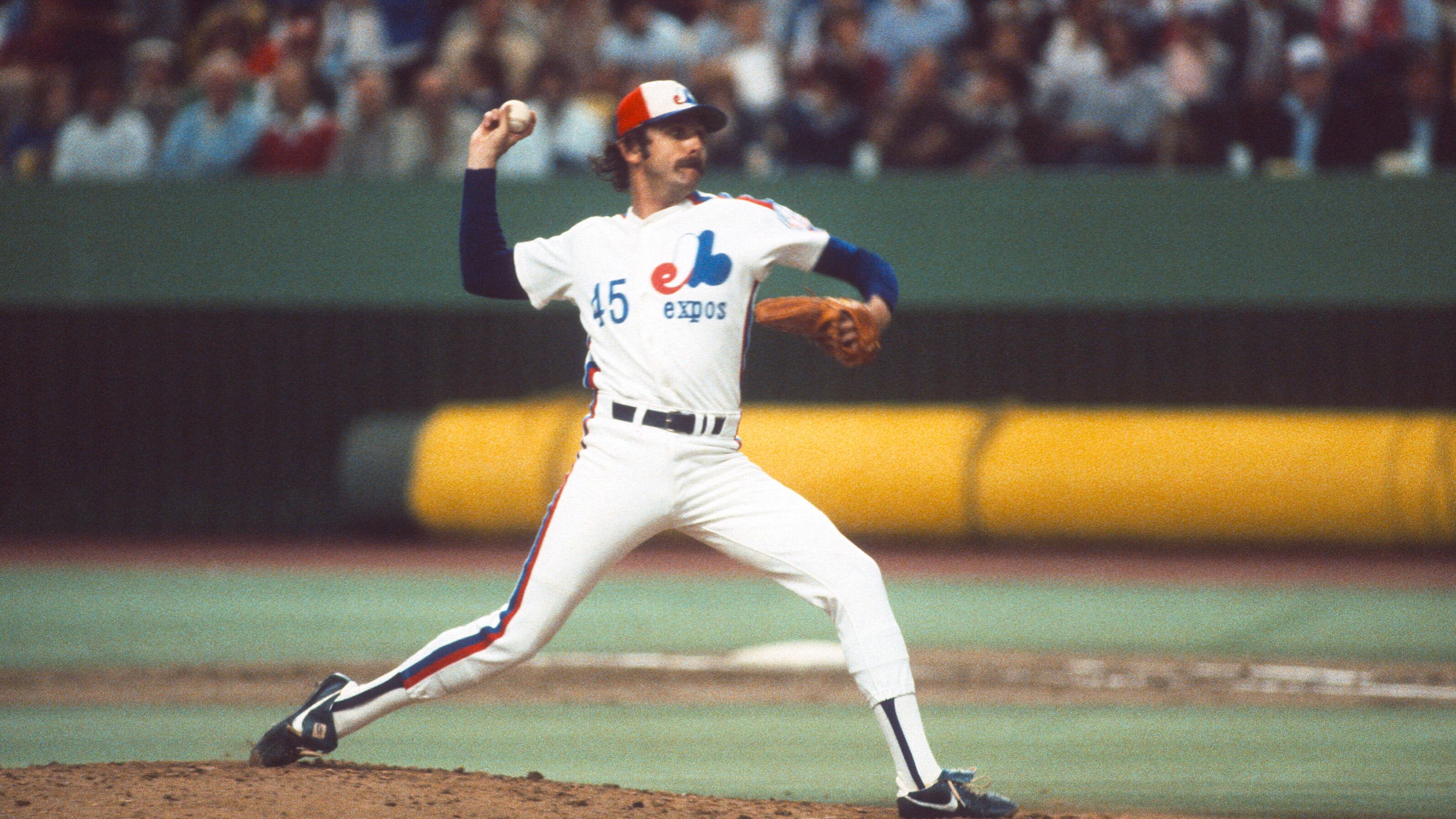
On the mound, Steve Rogers (12-8 with an earned run average of 3.42 and WHIP of 1.183 over 160.2 innings pitched) anchored the rotation, while hard-throwing reliever Jeff Reardon, acquired in a midseason trade with the New York Mets, became indispensible out of the bullpen, allowing just six earned runs over 41.2 innings of work.
Dallas Green's Phillies would represent a monumental task for the Expos. Along with MVP Schmidt, the lineup boasted the still-potent future Expo Pete Rose and productive outfielder Gary Matthews. The Phils' rotation was led by legendary southpaw Steve Carlton, the man tasked with taking the mound in Game 1 of the NLDS against the Expos.
So it would be ace vs. ace with Carlton facing Rogers at Olympic Stadium in the first-ever Major League Baseball postseason game played outside of the United States. With it only being a five-game series, getting off to a good start would be crucial, so could the Expos overcome their jitters or would the World Series champions begin their march towards another Fall Classic?