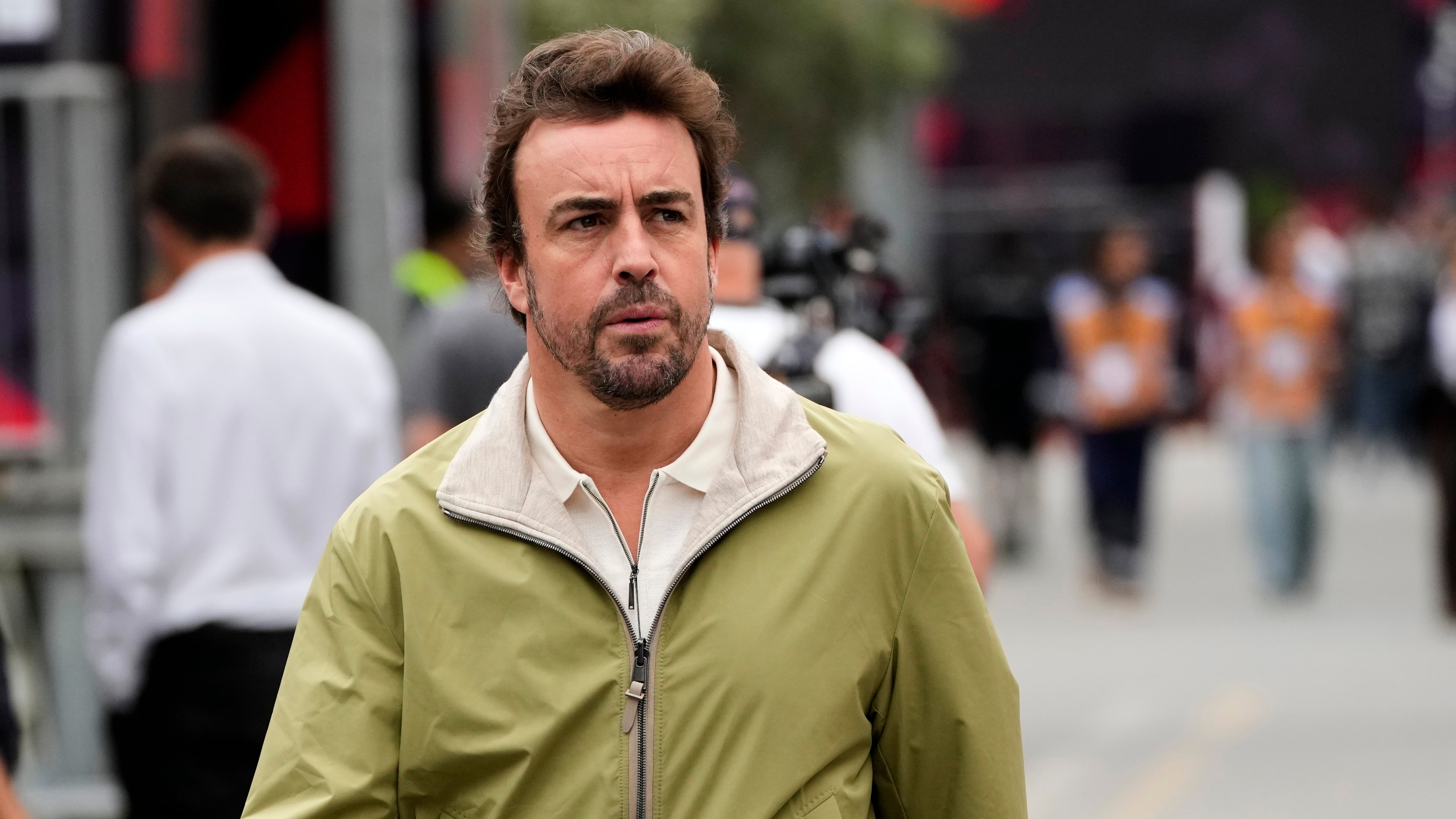
Fernando Alonso doubts changes made to Formula 1's controversial regulations ahead of this weekend's Miami Grand Prix will have a meaningful impact, saying the current power units will always reward driving beneath the potential of the car in corners.
F1 returns to action after a monthlong break due to the cancellation of the Bahrain and Saudi Arabian Grands Prix.
During the break, the sport's rule makers reviewed the opening three races of the season and have made tweaks to the regulations to promote flat-out qualifying laps and reduce the risk of high-speed collisions.
But Alonso -- the most experienced driver on the grid, who has been critical of the new regulations since their introduction -- believes the changes will not alter the way drivers go racing.
"I don't think it will change completely what we saw in the first three races, to be honest," he said.
"This power unit and this regulation will always reward going slower in the corners because you have more energy."
The regulation changes have limited the amount of electric energy drivers can recover during a qualifying lap in an attempt to reduce unpopular harvesting methods such as lifting and coasting before braking zones.
Meanwhile, the limit for super clipping -- a harvesting method that diverts energy generated by the engine to the battery while the driver is on full throttle -- has been increased from 250 kW to 350 kW.
"Small tweaks can improve a little bit the clipping," Alonso acknowledged.
"But again, I'm not sure if we go back to Suzuka and race with the current rules, we will have more clipping from what I read in the last few weeks and what I heard today.
"That's why I need to see on track how it feels," he said.
After testing an Aston Martin Valkyrie Le Mans car during the break, Alonso said it was a relief to return to a car that promotes late braking and bravery in corners.
"It was nice to be back in a prototype and to brake in the last moment," he said. "You don't need to lift and coast or anything like that, and to go on the back straight and in the highest-speed corners at maximum speed.
"Risking how brave you are to decide if you go faster or slower in the corners and not have it dictated by the power unit -- it was nice to go."
- F1's 2026 rule tweaks: What's changed after driver criticism, and will it make a difference?
- Miami GP: What we learned before F1's break -- and why Kimi Antonelli, Mercedes face U.S. test
- Miami Grand Prix 2026: Race and F1 sprint start times, how to watch, full schedule, predictions
Formula 1 CEO Stefano Domenicali has defended the regulations in a series of interviews during April, saying the sport has "no problems" despite a considerable backlash among fans.
Alonso's Aston Martin teammate, Lance Stroll, said it was no surprise that F1 had disregarded concerns raised by drivers and fans.
"F1 is a business, and they want to protect their business -- we're drivers, and we know who it feels like to drive a good car, so there's two different perspectives on it," Stroll said.
"People are watching the sport no matter what, so F1 is happy.
"But for the drivers, the fans, the people that really know about racing," he said.
"[They] know what it was like before, the drivers that know what it's like to drive really good, proper cars ... there's no hiding behind the fact that right now it's not as good as it could be, it's far from good as it could be."