The NFL is urging the Supreme Court to rule on the regulation of prediction markets after the league accounted for $1.8 billion in trading volume on the first Sunday of this season alone, arguing that states are better positioned to oversee sports-related contracts “given the current landscape.”
The NFL filed a brief Thursday in support of New Jersey's request for a high court decision on the governing authority for prediction markets, which provide an opportunity to trade — or wager — on the result of future events.
The U.S. Commodity Futures Trading Commission has maintained it has exclusive jurisdiction, while states have argued that the array of typically yes-or-no questions is akin to gambling and falls under their purview.
“Absent the clarity that only this Court can provide, (prediction market) operators will continue exploiting the gap between state and federal regulation, endangering consumers and the integrity of sports events across the country,” lawyers for the NFL wrote.
According to the NFL's brief, on the first Sunday of this season, more than half of the trading volume on prediction markets — $1.8 billion out of $3.3 billion total — was connected to the league.
"Any delay from the Court will result in increasing consumer harm and risk to game integrity,” the NFL wrote in its brief.
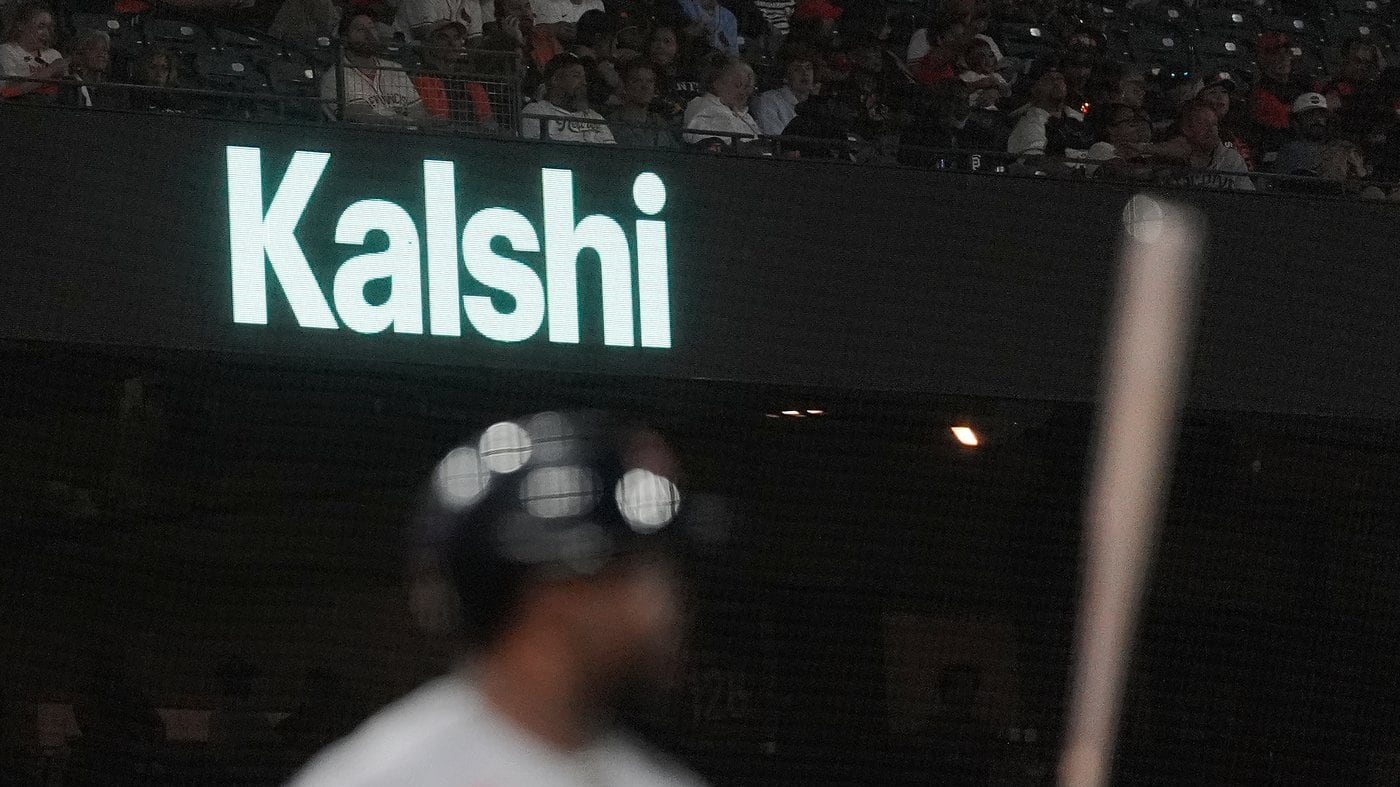
Kalshi spokeswoman Elisabeth Diana said its top priority is market integrity, and she pointed to its partnerships with the NHL, Major League Baseball and other sports organizations as evidence.
“Contrary to the NFL’s statements, the CFTC is actively policing sports-related markets, which are now listed on nearly every U.S. commodities exchange,” Diana said. "The CFTC’s ongoing rulemaking addresses many of the NFL’s supposed concerns. And those rules sit atop the same comprehensive system of federal enforcement that protects trillions of dollars of transactions in U.S. markets.”
A Polymarket spokesperson said the operator “shares the NFL’s commitment to preserving the integrity of the game,” and it is working on "a harmonized federal framework that delivers a stronger, more consistent form of integrity compared to a patchwork of disconnected state laws built for a bygone era.”
Ohio filed a brief on Wednesday urging the high court to side with New Jersey and preserve the power of all states to regulate prediction markets, as they do casino gambling and sports betting. The filing was backed by 38 states, including Republican and Democratic attorneys general from states including Arkansas, California, Illinois, Missouri, New York, South Carolina and Pennsylvania.
Roughly 20 states are involved in litigation over prediction markets, and a split has formed between appeals courts, making it more likely that the Supreme Court will take up the issue. The 6th and 9th U.S. Circuit Courts of Appeals have ruled in favor of states seeking to regulate prediction markets, while the 3rd U.S. Circuit Court of Appeals agreed with Kalshi in a ruling earlier this year.
“As between the two approaches, the NFL believes the Sixth and Ninth Circuits got it right, given the current landscape,” lawyers for the league wrote in their brief.
The NFL also is questioning the CFTC's enforcement capabilities. While some states like Nevada and Pennsylvania have hundreds of employees overseeing their gambling industries, according to the NFL filing, the commission has 543 employees, and their responsibilities include a range of derivatives beyond event contracts.
“Without adequate staff engaged in oversight and enforcement, even the best regulations cannot meaningfully ensure game integrity and consumer protection,” lawyers wrote in the NFL brief.
CFTC spokeswoman Brooke Nethercott said the commission has engaged with the league regarding the agency’s rulemaking agenda and policy priorities.
"It’s unfortunate the NFL declined to sign (a memorandum of understanding) with the CFTC which would’ve provided the league the ability to better discuss, cooperate, and exchange information with us to promote the integrity and resilience of prediction markets,” Nethercott said.
The NFL also has urged the CFTC and prediction markets to adopt a list of prohibited wagers that it feels pose the greatest threats to game integrity, according to the brief, but they have declined thus far. It also has asked the commission to adopt an age limit of 21 for trading on prediction markets, up from the current 18.
Diana said Kalshi has tried to collaborate with the NFL on market integrity, but it has received no response.
___
Associated Press writer Marc Levy contributed.
___
See AP’s full sports coverage here
Jay Cohen, The Associated Press