ASHBURN, Va. -- The Washington Commanders had one big question on offense: Who would be the No. 2 receiver? They answered it Wednesday.
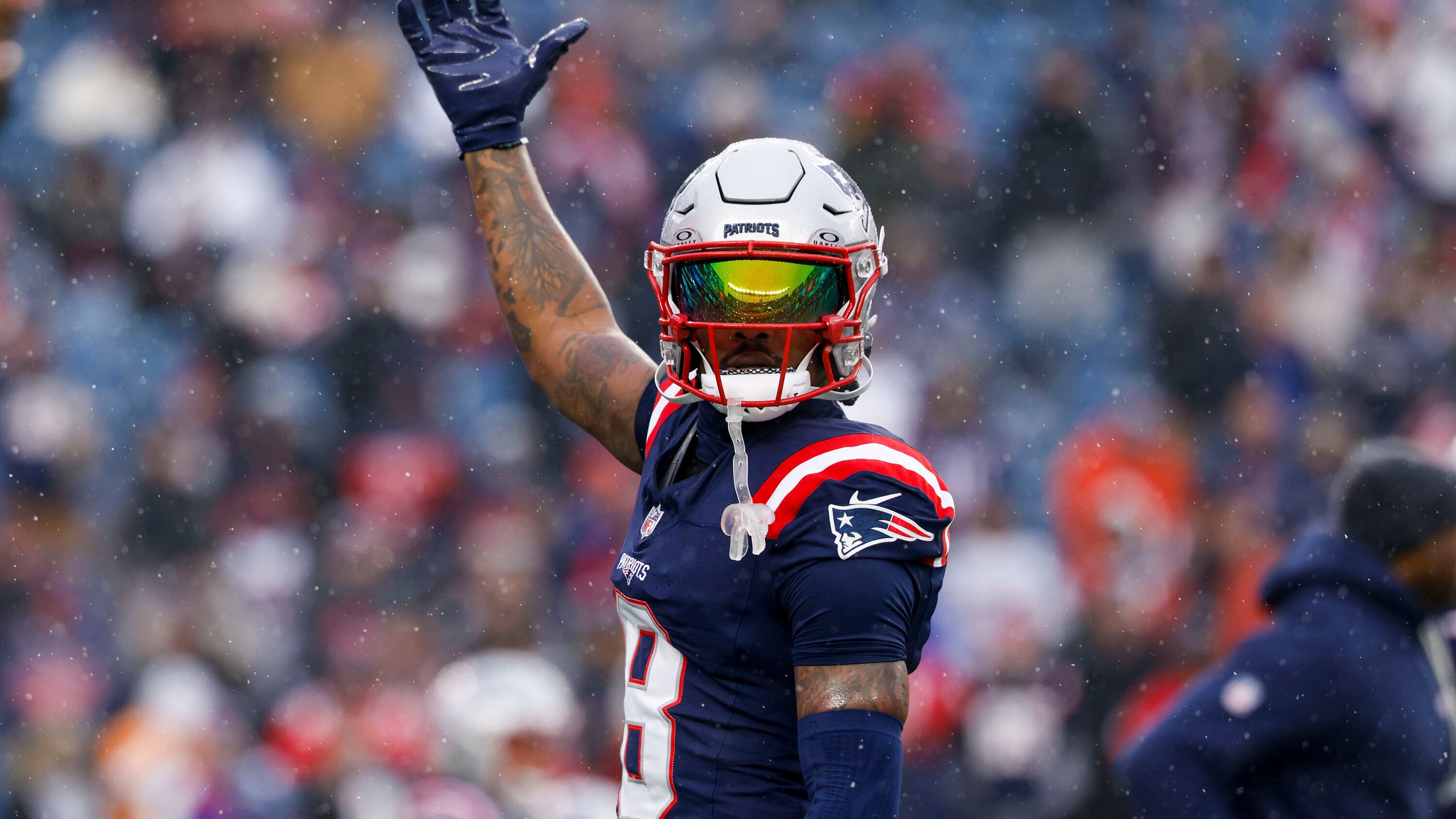
It's Stefon Diggs.
The Commanders signed him to a one-year deal worth up to $12 million Wednesday, filling a spot on the depth chart that had remained a topic of conversation since they started practicing again in the spring.
Diggs will slide into the receiver spot opposite Terry McLaurin, giving quarterback Jayden Daniels another proven target. The sides had been talking for some time, so there had been mutual interest in getting a deal done with someone who grew up in Maryland -- and then played collegiately at Maryland -- as Diggs had.
But this wasn't about a homecoming -- it was about getting another target for Daniels and the offense. Washington has changed coordinators, promoting David Blough after parting ways with Kliff Kingsbury, who had spent the past two seasons in Washington. The Commanders drafted wide receiver Antonio Williams in the third round and have been pleased with his progress.
However, another piece was needed, and Washington added him Wednesday.
ESPN Commanders reporter John Keim and analytics writer Seth Walder break down what it means for Diggs and Washington, and grade the deal.
Why Diggs and not other WR options?
It was either Diggs or bust for Washington -- nobody used those words, but one team source said he was the only free agent they were interested in signing at this time.
They had Deebo Samuel last season, but he's best used in the slot -- and they drafted someone for that role who excites them in Williams. So Samuel wasn't an option before he signed with San Francisco.
Keenan Allen is also a free agent, but he averaged only 9.6 yards on 81 receptions, and only 7.4% of his catches were for 20 yards or more. That ranked 46th among receivers with at least 45 receptions last season -- and it happened to be the lowest of his career. In other words, they wanted someone who could add explosiveness, and Allen's game didn't offer that ability.
Tyreek Hill suffered a dislocated left knee and tore multiple ligaments and said in a video posted on X that "I have no power in my left leg at all, so I'm trying to regain all the power back in my left leg."
Another veteran, Brandin Cooks, has averaged 2.2 yards after the catch the past three seasons combined with only 17.3% of his catches in that span going for 20-plus yards.
But Diggs has remained productive and can play inside and outside. He also averaged a career-best 2.77 yards per route run and 4.2 yards after the catch, his best total since 2019. He has surpassed 1,000 yards in the last seven seasons in which he played at least 10 games. And Patriots players and coaches praised his leadership last season en route to a Super Bowl appearance.
Washington lost out on other possibilities in the offseason. It had wanted to sign Alec Pierce, but he opted to re-sign with Indianapolis before free agency; one league source said Pierce would have signed with the Commanders -- had he come free.
They also tried, but failed, to sign Romeo Doubs. And Carnell Tate would have been an option had he been available with the seventh pick. In other words, they had kept searching for more at the position. -- Keim
What does this do for the Commanders' offense?
Washington improved its receiver depth compared to a year ago, but that didn't mean it had built a strong, proven group. The Commanders had more viable players, but needed another option alongside McLaurin.
This move might not transform the offense but it does make it better for sure. Diggs gives them an immediate boost as a second receiving target, someone who can play in the slot or the Z -- also known as flanker -- position. With New England last season, he ran 171 routes when aligned wide and 191 when in the slot.
In 21 games last season, Diggs had five games with more than 100 yards, but those were the only games in which he topped 70. In his last five games, including the postseason, he managed 153 receiving yards.
With the Patriots, Diggs was the primary target. He should benefit from not being the No. 1 option in Washington.
Diggs just needs to be a solid target who can be productive -- and have a big game on occasion. Washington has McLaurin to provide explosiveness. The Commanders have been pleased with Williams, particularly on underneath routes. The Commanders also signed tight end Chig Okonkwo to provide more dynamic play as well.
Diggs adds insurance, too, in case McLaurin has another year like 2025, when he missed seven games with a quad injury. -- Keim
Why did the Commanders wait so long to sign him? And does his delayed start hurt his chances to make an early impact?
There were multiple reasons. At one point, Brandon Aiyuk appeared to be a possibility -- Washington was just waiting for him to be released from the 49ers. The Commanders would have been interested, according to multiple team sources. But he has yet to be cut.
So that likelihood diminished this summer, putting them more on a path to Diggs, who was always going to be the more expensive option.
Also, with Diggs not in camp, others -- notably rookie Williams -- have gotten more reps -- and a better chance for Washington to see what it had in its receiving corps. Williams in particular will play a key role, and there are similarities in how he'd be used along with Diggs.
It's also possible that Diggs wanted to see what other opportunities arose -- or the money just wasn't right. But he had made it known that he would like to play in Washington.
Two years ago, Washington signed Noah Brown a week before the season began. In 12 games played, he caught 35 passes. Diggs is a far more accomplished receiver, but that season Brown had been in Houston's camp until being cut.
But, Quinn said, "the veteran player will know how to practice, what to do." The key will be where he's at physically, but they won't know that until they have a chance to assess him.
"Once you get that assessment, you can add more [for them]," Quinn said. -- Keim
Does this mean Brandon Aiyuk isn't going to Washington?
That possibility had diminished before this signing, in part because Aiyuk remains with the 49ers on the reserve/did not report list. He has yet to apply for reinstatement. The 49ers can keep him on this list when the season begins and he won't count against their salary cap.
But Aiyuk also made a series of Instagram posts this summer, including some that targeted Daniels, with whom he had been close since playing together one season at Arizona State.
As one team source said, "you never say never," but even if Diggs had not signed with Washington, the Commanders at best would be wary of bringing in Aiyuk.
But the Commanders do have the cap space. If he's ever free, they could always meet with him and revisit the situation. Aiyuk hasn't played since October 2024, but he is only 28 and averaged 14.6 yards per catch in his first five seasons with 25 touchdowns -- and a 1,342-yard season three years ago.
How would you grade the signing?
By signing Diggs, the Commanders filled one of the most glaring holes across the entire league. Prior to this acquisition, the team's second outside wide receiver options were essentially noncompetitive. Diggs changes that.
At 32 years old, he isn't the player he once was, but he showed last season in New England that he can still be a productive part of an efficient offense. He recorded an impressive 2.8 yards per route run, and ESPN's player-tracking based receiver scores loved him, as he posted an 82 open score, 98 catch score and 40 YAC score. He was more quiet in the playoffs, with just 1.0 yards per route run and one touchdown over those four games.
Even with projected further decline given his age, Diggs is certainly a huge upgrade over Treylon Burks, Dyami Brown or Van Jefferson. At up to $12 million, he's easily worth it. The Commanders needed to fill this hole, and considering that, for example, Jalen Nailor signed a free agency deal for almost $12 million per year this offseason, that's a nice contract for Diggs.
Grade: A- -- Walder