Canada’s run through CONCACAF qualifying to the 2022 FIFA World Cup quickly became stuff of legend in the national sports consciousness.
People who never paid attention to soccer before in their lives were gripped by this team, living and dying with every result in the fall of 2021 through the spring of 2022. And as the goal of reaching a World Cup got more and more tangible, so did the fervour with which fans embraced a squad of underdogs that ended up finishing atop the regional standings.
That improbable run left some indelible memories: Jonathan Osorio’s goal at the Azteca to earn a point against Mexico. Alphonso Davies’ sensational solo effort against Costa Rica at BMO Field. Cyle Larin poking home past Memo Ochoa at a frigid Commonwealth Stadium in Edmonton, followed by Sam Adekugbe throwing himself into a snowbank in celebration in the win over El Tri. Adekugbe’s stoppage-time goal in Hamilton to bury the United States and put Canada on the precipice of qualification.
All of those moments helped forge the CanMNT’s identity and endear themselves to a fan base desperate for success on the way to a first World Cup appearance in 36 years.
As Canada prepares to open play at consecutive men’s World Cups for the first time ever on Friday, what led to this moment was very different than the path to Qatar four years ago. To reach the 2026 edition of world sport’s most prestigious tournament, Canada had to do, well, nothing really. Canada, alongside CONCACAF rivals Mexico and the United States, automatically qualified for the tournament as co-hosts.
There are two very different ways to look at automatic qualification. That kind of gruelling 19-match trek that led to Qatar in 2022 was avoided entirely. There would be no long trips to hostile environments in Central America. There would be no scoreboard-watching. There would be no months-long campaign that would have a nation biting its nails with anxiety. That is an unequivocal win.
But there were other things that Canada would miss out on. There would be no high-stakes matches against the confederation’s best teams. There would be no opportunities for the squad to fight tooth and nail for the right to play against the world’s best. There would be no chance to build the kind of bonds amongst teammates that only come from being tested in battle. The 2022 qualifying campaign helped immeasurably in Canada’s growth as a team.
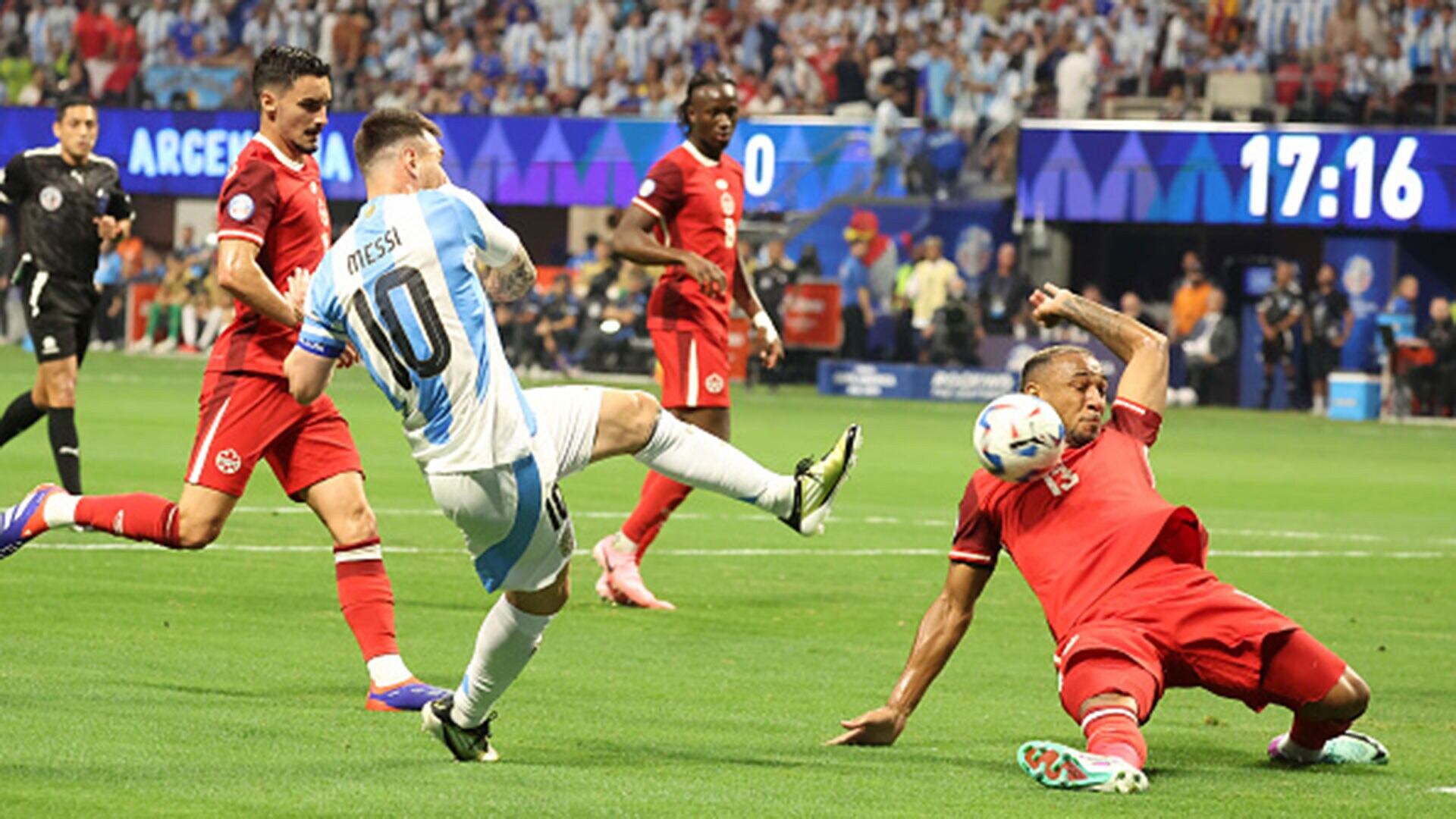
Knowing then that the work of a World Cup berth had already been done, manager Jesse Marsch and Canada did their best to replicate the level of intensity brought about by qualifiers with a slate of friendlies against squads from all over the globe over the course of the past year. That, coupled with participation in both the 2024 Copa America and the 2025 Gold Cup, was the best recipe to keep pace with squads fighting for their World Cup lives in other confederations.
To really get a feel for actual competition, Canada decided to make “friendly” a misnomer. These would be friendlies in name only. The matches were battles, with Canada looking to make a statement in all 10 of them.
“We treat every match as a final,” program veteran David “Junior” Hoilett, a member of the team who went through 2022 qualifying, said. “We go in to perform and win games. It doesn’t matter if it’s a friendly or a competition, we treat every game the same with the same intensity and we train with that same intensity. Once you train that way, the game comes easy when you bring that intensity into all aspects.”
That intensity, Derek Cornelius says, comes from the top down. The Marseille defender credits Marsch for imparting that mindset into the squad. The message was simple: play for keeps.
“Whether it’s a friendly match or the semifinal of Copa America, Jesse puts the same level of intensity into the group, whether that’s in training on the pitch or how he communicates with the team,” Cornelius said. “We don’t really look at these games as friendlies; these are solid preparation games that we need to be ready for a World Cup. Again, it comes down to the mentality of the coaches and the players, the group. We want to win every game that we play, so we put that pressure on ourselves, whether it’s a friendly game or a more high-stakes qualifying game. We try to put that same pressure, same expectations, same professionalism on ourselves and continue taking steps in the right direction.”
The selection of opponents was also of utmost importance. Canada took on teams from Europe (Romania, Wales, Iceland and Ireland), Africa (Tunisia), Asia (Uzbekistan), South America (Colombia and Venezuela) and Australia. This was by design.
“In the World Cup, you’re gonna play teams from all over the world,” Niko Sigur said. “Okay, you play CONCACAF, you play regionally, you know these teams and you’re familiar with them, but when you play on the world stage, you might play against an African team who has an entirely different way of playing compared to a European team or a South American team or an Asian team. So I think it was important that we had some variety in the opponents we played and they each brought different things that we analyzed and then tried to improve on going into the tournament.”
What worked against Canada, though, for much of the year was that the squad was ravaged by injuries at virtually every position group. Marsch wasn’t able to really get a feel for a first-choice XI because so many key players were unavailable at the various camps.
But Sigur believes they found a silver lining in that disadvantage that actually aided in Canada’s tournament preparation.
“I think what’s helped us the most is that a lot of guys have been injured, so other players have had to step up,” Sigur explained. “Obviously, going into these friendly games, for me personally, I’m not looking at it as a fun time to be out there and joke around. I’m fighting for a spot. I think that’s helped up and, obviously, the quality of opponents. Because if you go into these games against Colombia or Ecuador, even Romania and Wales and these types of teams, and you’re not trying to win, you’re going to get punished. We took these games extremely seriously and, with the World Cup on the horizon, it was just added motivation.”
For Marsch, part of the process meant trying to find the light at the end of the tunnel. The injury crisis that saw the likes of Cornelius, Alphonso Davies, Promise David, Alistair Johnston, Moïse Bombito, Luc de Fougerolles, Stephen Eustáquio and Jacob Shaffelburg among others rendered unavailable for extended periods would eventually abate. It was all a matter of making it there.
“We were just trying to manage,” Marsch said. “I say I’m very solutions-based when it comes to injuries and just trying to figure out what else we can do and how to push the envelope and how to make sure that we’re giving each guy the best opportunity to be at 100 per cent.”
With the tournament now only hours away, the injuries haven’t gone away entirely, but Canada is in a position significantly more comfortable than where it was only a few weeks ago.
Playing in a World Cup at home is firmly in focus. The final training sessions ahead of the World Cup come with added importance, but there’s a kind of stillness to them in knowing the time has finally come.
“The guys are clear on that,” Marsch said of the stakes. “I think they’re excited about it, but they’re calm and ready, you know? There’s really no anxiousness. It was just wanting to get to that point and get there fit and healthy and not being injured. So either with the guys who are [still] injured, it’s really getting [them] back to 100 per cent, or the guys who are healthy, making sure they don’t pick up any little things that would prevent them from [playing] at the tournament.”
For the men who have been in the program for years, taking on the world at home marks the next step in the evolution of Canadian soccer.
“Throughout this whole journey we’ve been able to kinda tick boxes in terms of like in Qatar, there was the first goal at a World Cup,” Cornelius said. “We ticked that box, but now we want our first point, we want our first win, we want to get out of the group, we want to keep ticking these boxes that will ultimately push the bar higher and higher because that’s what we’ve been doing.”