Players on the Canadian men’s national soccer team are calling on social media companies and the federal government to do more to hold users accountable for racist abuse, death threats and hateful messages sent to athletes online.
With Canada co-hosting the 2026 FIFA World Cup, several national team players say abuse from social media accounts, often from people who keep their identities hidden, has become a routine part of representing the country. They say social media platforms have failed to respond adequately when racist messages are reported, and that Ottawa should consider whether stronger rules are needed to compel companies to identify and sanction users who target players with hate.
For the players, the abuse often begins within minutes of a game ending. Sometimes it follows a missed chance, a hard tackle, or even an opposing player’s red card. It arrives in direct messages, comment sections and replies.
Some messages are racist. Others include death threats.
Moïse Bombito, the Canada defender who now plays club soccer in France for Nice, said he received 1,000 to 2,000 hateful comments after a hard tackle on Lionel Messi during Canada’s 2024 Copa America opener against Argentina.
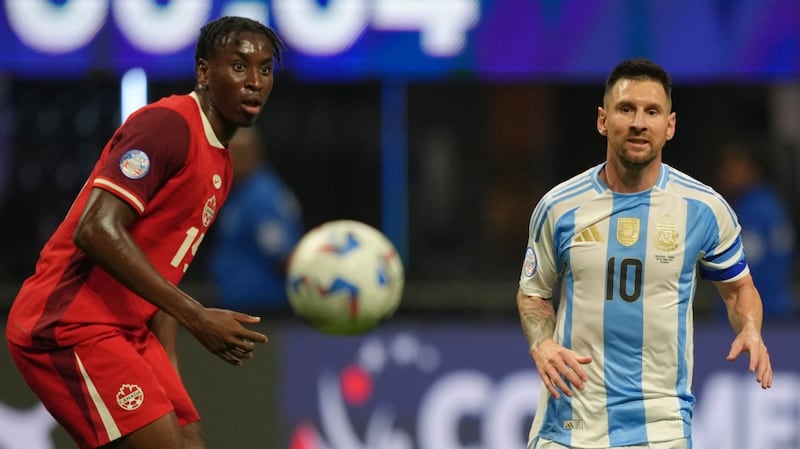
“I went through my comments and I was like, ‘Wow,’” Bombito said in an interview with TSN. “It just confirmed that it’s still out there. Racism is there and you can’t really hide from it.”
Bombito said he still routinely receives racist messages.
“I felt like all those people, if they were in front of me one-on-one, they’ll never dare to say that,” he said.
A day after Canada’s match against Argentina, Bombito’s marketing agent, Nadia Ali, contacted Meta, the parent company of Instagram and Facebook, to report hundreds of racist comments about the fullback.
Ali said that the company responded within 24 hours to say that the messages, many of them featuring the N-word and emojis of monkeys and bananas, did not violate the company’s terms of service.
In January of 2025, Meta eliminated a number of restrictions on topics that can be discussed and shared on Instagram, CBC reported. The network quoted a company spokesperson who said it was important to note there are differences between offensive speech and speech that can lead to violence, and that the company did not believe its role is to regulate what is offensive.
“Racist abuse is unacceptable and has no place on our platforms. We’ve developed several tools to help protect people from having to see abuse, including Hidden Words, which filters offensive comments and message requests,” Meta spokesperson Julia Perreira wrote in an email to TSN. “No one thing will stop racist behaviour overnight, but we’ll continue working to protect our community from abuse.”
Canada coach Jesse Marsch said the abuse directed at Bombito left him devastated.
“Anyone who’s met Moïse Bombito can’t help but be incredibly impressed with his magnetism, his positivity, the energy of who he is,” Marsch said. “It infuriated me. I cried. I was back in my hotel room, crying when I heard about it.”
Several Canadian players say they are not asking to be shielded from criticism. They say they understand that poor performances and mistakes invite scrutiny.
But they say direct racist abuse and death threats should not be treated as an unavoidable part of elite sport.
Midfielder Liam Millar said his phone “was going crazy” after he missed a penalty against Venezuela during Copa America. Millar said he received similar abuse after missing a chance against Jamaica during World Cup qualifying in 2021.
“Those are probably the worst,” he said. “Obviously, I got a lot of, ‘You’re useless, you’re terrible.’ I got a couple death threats, like, ‘You should die,’ and all this stuff, which, for me, is obviously too far.”
Millar said people are entitled to opinions about players and performances, but threats and racist messages should carry consequences.
“Everyone has a right to their own opinion,” he said. “Obviously, when it becomes death threats or racial or anything, it’s obviously not acceptable whatsoever. I think that deserves a punishment, because for me, it’s unacceptable to treat anybody in this way.”
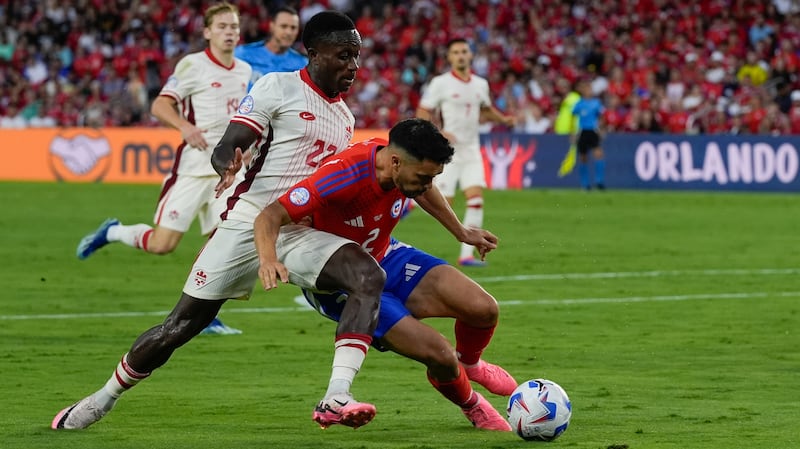
Toronto FC defender Richie Laryea said he was targeted after Canada’s 2024 Copa America match against Chile, when a Chilean player was sent off after a challenge on him.
Canada advanced, but Laryea said that when he opened Instagram afterward, his notifications had been overwhelmed by racist messages and comments.
His wife, Melanie, said the attacks regularly include monkey emojis and other racist messages. She said many are posted under photos of their son.
“It’s heartbreaking,” she said. “It’s a feeling you get in your gut as soon as you open up your social media and you see it. Most of the comments are on pictures of my son, which are even worse.”
Melanie said she has reported racist posts to Meta but has been told repeatedly that the company has not concluded the content violates its rules.
“You get a message back saying it’s under review, and then about a week later they say, ‘We didn’t find anything wrong with this,’” she said.
That response, players say, is part of the problem. They argue platforms have built global communication systems that allow abuse to reach athletes instantly, but haven’t created sufficient accountability for the people who send it.
Laryea said many users hide behind burner accounts with no profile picture, no followers and no obvious connection to their real identity.
“They’re cowards,” he said. “If you want to act like that, then have your picture up. Say it like a man, versus hiding behind a screen with zero followers.”
Midfielder Stephen Eustaquio said social media companies may be trying to limit abuse, but users can easily return after an account is deleted.
“If an account is deleted, obviously the same person… can create a different account, put a picture on that profile that’s not theirs, and just harm whoever they want,” Eustaquio said. “They can be whatever age, which for me, it’s concerning.”
Several players also said the rise of online sports gambling has intensified the abuse.
Eustaquio said players often receive threats from bettors when results go against them.
“That comes with betting,” he said. “It’s unfortunate, but it’s something that’s out there.”
Other countries have taken more aggressive steps to confront online hate directed at soccer players.
In the United Kingdom, police created a special unit to address online abuse of professional footballers after several of England’s Black players were targeted with racist messages following the team’s loss in the Euro 2020 final.
Sam Baker, hate crime lead with the United Kingdom Football Policing Unit, said his department has worked on nearly 1,200 cases since 2022, more than 80 per cent of them involving racism.
“People have to realize they can’t just go around saying what they want,” Baker said.
Baker said British police can ask social media companies, including Meta and X, for information such as IP addresses linked to offensive posts. Cases can be difficult to prove, particularly when accounts are overseas or when multiple people share one IP address.
But some have resulted in prosecutions, public identification, stadium bans, fines and prison sentences.
“Not only are you getting a ban order,” Baker said. “You then get named and shamed. People have lost their jobs because of this. Friends and family think of them differently.”
Unlike in the U.K., where police can approach social media companies directly, Canadian police must first obtain a judicial warrant before pursuing IP address information.
On June 10, the federal government tabled Bill C-34, its latest version of an Online Harms Bill. If the bill passes, it would impose new regulatory obligations on operators of social media and AI chatbots in Canada. The legislation would require companies to mitigate harmful contact on their services, assess user reports of harmful content within 24 hours, and disclose each report made.
If the bill passes, companies would also be required to disclose reports of harmful content, their circumstances, and how they were addressed.
Hermine Landry, press secretary for Canadian Minister of Canadian Identity and Culture Marc Miller, wrote in a statement to TSN that there has been a “horrifying rise in hate crimes in our communities.”
“No one, including athletes, should feel unsafe because of who they are, how they worship, or where they gather,” Landry wrote. “We encourage Canadians to reach out directly to online platforms to learn more about their safety rules and measures they have in place to protect users and address harmful content.”
Several Canadian players say they’d like to see more consequences in Canada for those who post racist messages and threats.
“If you’re going to be held accountable, then you’re not going to do it,” midfielder Ismaël Koné said. “You’re going to think twice before doing it.”
Promise David, a Canadian forward who plays club soccer in Belgium for Union SG, said he receives racist messages online every day. He, too, said publicly identifying people who send racist abuse would likely reduce the number of attacks.
“The element of people being named publicly and held accountable for their actions would definitely lower the cases,” David said.
Bombito said stronger accountability could also protect players who are more deeply affected by abuse.
“By holding them accountable, it’s just going to be like, ‘Okay, yeah, I can’t do that stuff. It’s not right,’” he said. “Some other people are not as strong-minded as me and can be really affected by what happened. I feel like it’s something that can be really prevented.”
Marsch said any response must balance the need to confront hate speech with freedom of expression. But he said the current environment, in which people can send hateful messages with little apparent consequence, is unacceptable.
“I don’t want anyone to be able to put hate speech out there, but you have to be careful as well, because I still do believe in freedom of speech,” Marsch said. “I don’t want to be social police. I don’t want to create that. But I do want to create pressure for people to behave in a way that creates decorum and respectfulness in our society.”