MADRID, Spain -- The Spanish Grand Prix is done and dusted and drivers got their first taste of the brand-new Madring.
Teams, drivers and fans were predicting chaos with safety cars and red flags, but it ended up being one of the less dramatic races on the calendar.
Here are the biggest takeaways from the last European race of the season.
No one can stop Kimi Antonelli
Kimi Antonelli has been by far and away the dominant force of the 2026 season, and the Spanish Grand Prix provided another example of why he is becoming so difficult to stop.
Sometimes Antonelli has simply been the fastest driver. Other times, fortune has fallen his way. In Spain, it was a bit of both.
The 20-year-old looked like the man to beat for much of qualifying, putting his Mercedes on provisional pole before Lando Norris stole it from him late on. Norris appeared to have the upper hand again in the race, only for the Virtual Safety Car to give Mercedes the opportunity to pit Antonelli immediately and switch onto hard tyres to run the finish.
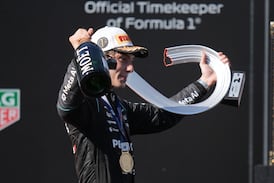
Antonelli admitted afterwards that “Lando deserved the win,” but there is something increasingly ominous about the way this championship is unfolding. When Antonelli has the quickest car, he wins. And when he doesn’t, he keeps putting himself in a position to capitalise when something goes wrong for his rivals.
It is not the first time this season that circumstances have played into his hands, but Antonelli has been virtually faultless in taking advantage of them. It’s no wonder Lewis Hamilton said: “There’s no stopping him and Mercedes this year.”
At this rate, the question is becoming less about whether Antonelli can become Formula 1’s youngest world champion and more about what, or who, can possibly stop him.
Norris left wondering what might have been
The reigning world champion has been on fire in the last few races. He took back-to-back wins in Hungary and Zandvoort and has squeezed everything out of McLaren’s upgrade package, introduced before Hungary.
He arrived in Madrid as F1’s form driver and left wondering how a weekend in which he did so much right ended without another victory.
Norris came from nowhere and managed to find over seven-tenths on his final lap to stun Antonelli to the line in qualifying with what he described as “one of the best laps” of his career.
But if Antonelli has had a habit of being in the right place at the right time this season, Norris experienced the opposite in Madrid.
He passed the pit entry at the same time the VSC was being deployed, and because he had enough of an advantage out in front, his rivals were able to benefit. Antonelli and Max Verstappen were two of many to come in -- saving 11 seconds in the process under the slower conditions. His misfortune was compounded when the VSC ended just before he completed the next lap. Norris pitted anyway, but the damage was done. He emerged 15 seconds behind Antonelli, and more than nine behind Verstappen.
Should the rule change, as Norris has suggested? It could create more problems than answers. Either way, it was a cruel end to a weekend in which Norris had again shown why he is becoming an increasing threat to Mercedes. He may not have got the result to show for it, but his pace -- and that of the upgraded McLaren -- suggests there will be more opportunities to come.
Madrid has an overtaking problem
The highly anticipated newly-branded Spanish GP was a race everyone was curious about as teams and drivers had no historic data available to help them build strategies and predict performances heading into the weekend.
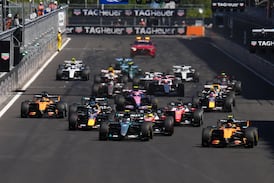
Drivers described the track as one of the most “challenging” on the calendar and a “car-killer,” and after several crashes in both F2 and F3, everyone was strapping in for a chaotic race.
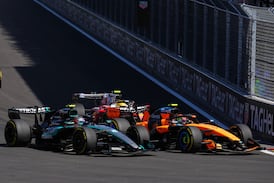
It ended up being a fairly stagnant race with not much movement in the top five, and despite a battle unfolding between Norris and Verstappen for second over the final 10 laps, nothing ended up materialising.
Part of the problem was the lack of overtaking opportunities.
Several circuits on the calendar have tight, heavy-braking corners which are attached to long straights, providing the perfect opportunity for overtaking.
But at the Madring, there were no slow-speed corners to get any kind of move done. The main opportunity to overtake was Turn 5, but that didn’t provide much action.
The feeling in the paddock is that F1 perhaps needs to come up with modifications for future races to allow overtaking to happen, which could then lead to a more exciting race.
Race winner Antonelli said: “It definitely doesn’t create overtaking opportunities and it doesn’t push you to try and make a move because 80% of the time you might have a contact.”
Haas driver Oliver Bearman added: “It’s been a bit of a disappointment, but hopefully next year it will be a bit more interesting. When you arrive and you see that layout and you are like, ‘what do you expect us to do’, it’s a bit disappointing ... Basically from Turn 5, all the way from 17, there was a bit of free reign, let’s say. I don’t think that free reign was used to the best of its potential.”
“I think what F1, we’d like to review, is that there’s some modifications required at the circuit in order to introduce an overtaking possibility,” McLaren team principal Andrea Stella added.
“Because at the moment, the fact is that the straight may be long enough, but there’s absolutely no way the two cars can enter the corner fine together. So, let’s say, it’s basically impossible an attempt of overtaking.”
Championship running away from Hamilton
It was another heartbreaking weekend for Lewis Hamilton after he retired from the Spanish Grand Prix.
The Ferrari driver celebrated a historic first victory for the team at the Barcelona-Catalunya Grand Prix in June, and it would have been fitting to add another win to his tally while racing in Spain.
But he suffered a brake issue on the very first lap and while the team tried to find a solution the issue from the pit wall, nobody could help him.
Hamilton’s DNF, his first mechanical failure at Ferrari, puts him 101 points behind race winner Antonelli.
Before the summer break, the seven-time world champion was very much in the title fight and was only 32 points adrift from Antonelli at the start of July.
But as the season unravels, it is looking like that incredible title race that could have been, has perhaps been lost.