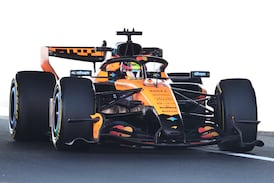
Oscar Piastri has said Formula 1 grids are now being decided by “computers behaving or misbehaving,” adding that they have produced “a pretty c--p way of going racing.”
Power deployment was a recurring theme at the Belgian Grand Prix, the most sensitive track of the year for F1’s new cars, which feature an unprecedented focus on battery harvesting.
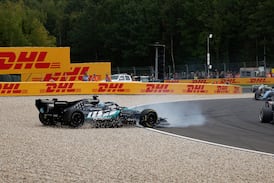
George Russell blamed Mercedes for a crash on the opening lap when he found his car was drained of battery almost immediately at the start of the race.
Russell was not the only one with complaints. McLaren driver Piastri was also left rueing the odd quirks of the new engine formula after qualifying seventh and seeing teammate Lando Norris in third.
Piastri complained about a significant lack of power down the straights compared to his teammate, despite making changes to try and fix the issue.
“It sucks. I can’t really say it any other way than that,” Piastri said about how much the electrical part of the new engines dictate results this season. “When you’ve got qualifying grids decided by computers behaving or misbehaving, it’s a pretty c--p way of going racing.”
Four-time world champion Max Verstappen has been the outspoken critic of the new engines this year and he could not help taking another dig after finishing third on Sunday.
“Welcome to F1 2026,” Verstappen joked. “Sometimes it can be a jungle.”
In Piastri’s case, he was upset by not understanding what the problem is, saying computers now dictate far too much from a competitive standpoint.
“I certainly wouldn’t have been the only person,” he added. “I know George has had a lot issues with that this weekend, and maybe the last couple of weekends. And speaking to some others, it’s a similar story.
“Here it’s obviously exaggerated a lot and made worse, but yeah, when you come in from a qualifying session, you look at all the corners and go, ‘I’m on par with my teammate and yet I’m two tenths behind at the end of it.’ It’s not a very nice feeling.”
The software in F1’s new engines can effectively self-teach itself in real time, adapting power output lap to lap based on information gathered on previous completions of the circuit.
This can sometimes happen if the wind changes direction on one lap compared to a previous one, and a handful of other things outside the driver’s control.
This means drivers can find themselves with vastly differing power outputs without really knowing why.
Charles Leclerc, who finished second, said he had spent practice sessions ahead of qualifying struggling to understand the behaviour of his Ferrari power unit.
“These power units are so complex that there are some days when you scratch your head trying to understand why you are losing so much on the straights. That was a bit the case for me on Friday and in FP3.
“Then, in qualifying, things went well again by slightly fine-tuning things. It’s just very difficult, but also very frustrating sometimes for a driver because, even when you are doing your best, there are things in the background that change constantly, and that’s not so nice.”