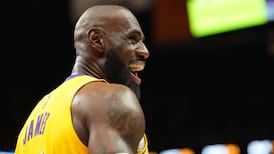
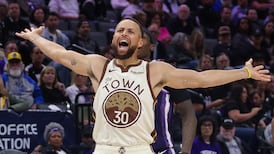
The NBA offseason is already almost over. Not in terms of the calendar, as it’s still July, but in terms of its activity -- LeBron James’ latest decision awaits, but most of the moves that will affect the 2026-27 season have already been made.
So, it’s time to grade how each team did with its overall set of trades, free agent signings and extensions this summer. Picks in the 2026 draft are not considered for this exercise; read Ben Golliver’s draft grades for a comprehensive review there.
Note that I’m treating a “C” grade as neutral; grades better than a C suggest a team met its offseason goals to at least some extent, while the few grades lower than a C suggest the opposite. These grades are in order of best to worst, with ties at each grade in alphabetical order:
San Antonio Spurs
Grade: A
You could quibble with how the Spurs built out the end of their bench even after a lack of depth hurt them in the playoffs, although Tobias Harris’ two-year deal fills a big hole on the roster. But the Spurs receive a top grade because of one major move: They locked Victor Wembanyama into a 25% maximum extension rather than a potential 30% supermax, which could save them more than $50 million over half a decade.
That decision could have significant repercussions not only for the Spurs (as they build and maintain a championship-caliber roster around Wembanyama) but also for the NBA as a whole, as the owners and the players’ union consider and eventually negotiate over the current financial landscape.
Utah Jazz
Grade: A
Losing Walker Kessler makes the Jazz a less compelling dark horse contender next season, and it will be interesting to see how much coach Will Hardy uses Jaren Jackson Jr. as a center in Kessler’s stead, because neither Jusuf Nurkic nor free agent addition Jaxson Hayes is a top-level starter.
But the Jazz made arguably the best trade of the summer when they landed two unprotected first-round picks and two swaps for a good but not star-level player in Kessler. It’s hard to fault them for taking another temporary step back when the Lakers were offering so much future value.
Atlanta Hawks
Grade: A-
Depending on how coach Quin Snyder structures his rotation, the Hawks might not have added a single starter this offseason -- although they did well to re-sign CJ McCollum to a solid one-year deal -- so their short-term ceiling still relies on Jalen Johnson’s development into a star.
They made fairly dramatic upgrades to their bench, however, to meaningfully raise their floor. They acquired Luguentz Dort, Aaron Wiggins and Devin Carter in salary dump trades, as well as Ryan Nembhard to help stabilize the backcourt.
Charlotte Hornets
Grade: A-
The Hornets were the NBA’s hottest team for a large swath of last season, with the league’s best five-man lineup. But they weren’t sold on that group’s long-term potential. So they dealt 28-year-old Miles Bridges and 24-year-old LaMelo Ball to build up one of the league’s largest stashes of draft picks and reorient around the younger duo of Brandon Miller and Kon Knueppel.
Charlotte probably won’t be as good next season because Ball’s playmaking was so central to the team’s success. But the Hornets doubled down on depth and shooting, and even their other moves -- from re-signing Coby White to trading for Dorian Finney-Smith and draft picks -- graded well. Charlotte took one step back to set up multiple steps forward down the line.
Philadelphia 76ers
Grade: A-
Regardless of Jaylen Brown’s precise value, turning 36-year-old Paul George into a 29-year-old All-NBA wing is a big win for Philadelphia. The forward positions have long been a concern for the 76ers, but they’re on much firmer ground now with Brown and Dean Wade, and Brown is specifically a strong fit next to Joel Embiid because of his reliability.
The 76ers’ roster isn’t perfect -- it lacks some shooting and is still too reliant on Embiid for its size -- but Philadelphia at least has a narrow path to the Finals now, when such a route didn’t exist before this summer.
Houston Rockets
Grade: B+
Some shine has come off the Rockets due to their dispiriting playoff defeat against the short-handed Lakers, but they enjoyed another solid offseason, nonetheless.
Losing three second-round picks to dump Finney-Smith’s contract hurts, but Houston doubled down on its defensive identity by adding Marcus Smart and re-signing Tari Eason on team-friendly deals; Eason’s five-year, $81.5 million deal as a restricted free agent is one of the best value contracts of the summer.
Memphis Grizzlies
Grade: B
Memphis shuffled its big man rotation, adding Isaiah Stewart and Quinten Post while trading away Santi Aldama, but the team’s biggest move this summer was finally trading Ja Morant. The Grizzlies didn’t get much in return -- Jerami Grant and Kris Murray, with no draft picks included -- but they shouldn’t have expected to, given how far Morant’s stock had fallen over the past few years.
It seems that letting Morant go at any cost and getting a clean slate to build around Cameron Boozer, Cedric Coward and Zach Edey was the primary goal.
Miami Heat
Grade: B
The Heat finally got their star. But even though Giannis Antetokounmpo is still a top-five player in the NBA, his arrival isn’t a slam dunk for Miami. As I wrote when grading the Antetokounmpo blockbuster, the 31-year-old is at the point where we should expect him to start declining from his impressive peak, and he already has shown a troubling penchant for injuries. Miami has an incentive to win a championship with him right now, as it’s unclear how many peak, healthy Giannis seasons are left.
But as presently constructed, the Heat don’t look like legitimate title contenders. That would change if LeBron James returned to Miami. But for now, the Heat project for one of the NBA’s worst backcourts, and they have few depth players or draft assets after the Antetokounmpo trade.
Tim Hardaway Jr. was a smart bench signing, but he’s not as dynamic offensively as Norman Powell, who proved too expensive to sign for Miami’s hard-capped price range. It’s difficult to give the Heat any better than a “B” grade, even with Giannis aboard, because they still seem like they’re a year away from reentering the title race.
Milwaukee Bucks
Grade: B
In their long-awaited trade of Giannis Antetokounmpo, the Bucks landed a strong haul of draft picks and decently intriguing young players from Miami. Could they have set themselves up even better for the future if they’d traded their all-time leading scorer a year earlier? Probably. But taking this offseason in a vacuum, Milwaukee got its biggest move mostly right.
However, the Bucks got a minor move very wrong: Their four-year, $64 million deal for Gary Trent Jr., coming off the worst season of his career, was so strange that it reportedly provoked an NBA investigation.
Brooklyn Nets
Grade: B-
The Nets mostly used their cap space on small-scale contracts: Josh Minott, Keon Ellis, Moritz Wagner and Day’Ron Sharpe -- the last of those quietly one of the best deals of the offseason. Their largest outlay came from trading Nic Claxton in a deal that brought back former All-NBA forward Julius Randle, which should improve the team next season -- because of Randle’s availability and floor-raising talent -- but doesn’t do much to aid the Nets’ murky longer-term outlook. Brooklyn doesn’t control its 2027 first-round pick, with Houston holding swap rights.
Dallas Mavericks
Grade: B-
Dallas loaded up on big forwards this summer. With Cooper Flagg and P.J. Washington already on the team, the Mavericks traded for Aldama and Zaccharie Risacher and drafted Morez Johnson Jr. in the lottery.
The Mavericks now have a glut in the frontcourt, where they kept Daniel Gafford and Dereck Lively II and matched the Knicks’ offer sheet for Moussa Cisse. But little backcourt depth remains, which makes Kyrie Irving’s return from an ACL tear even more important next season.
Indiana Pacers
Grade: B-
The Pacers embarked on their summer activity early, dealing a big package -- which included the eventual No. 5 pick -- for Ivica Zubac at the trade deadline in February.
Since the offseason began, they’ve focused exclusively on their bench, adding Kelly Oubre Jr. and Larry Nance Jr. on short-term deals. The next potential order of business is extension talks for Tyrese Haliburton and Pascal Siakam, though that’s not a pressing concern because both players are still under contract for multiple years.
New York Knicks
Grade: B-
The Knicks’ championship-winning roster remains mostly intact, and they signed Landry Shamet and Jose Alvarado to two of the best value contracts of the summer.
But second-apron concerns meant the champs’ backup center spot declined from Mitchell Robinson (with Ariel Hukporti at third string) to Andre Drummond. That downgrade could cost the Knicks a playoff game or two next spring.
Phoenix Suns
Grade: B-
The Suns handed out a bunch of smart contracts this summer, to Collin Gillespie, Jordan Goodwin, Mark Williams and Luke Kennard. If they’d stopped there, they would’ve had one of the best offseasons for any team.
But then they went one step further and traded an unprotected 2033 first-round pick for Miles Bridges, who has just one season left on his contract and is less impactful than his surface stats suggest. That deal was so questionable on its own that it knocked the Suns from a B-plus summer to a B-minus.
Portland Trail Blazers
Grade: B-
Portland re-signed Robert Williams III to a great extension, which both keeps the valuable role player on its roster and gives the team protection if the injury-prone center misses more time.
The Trail Blazers also traded for Ja Morant, which makes sense as a pure talent play but comes with serious fit questions, as new coach Micah Nori will now have to juggle a backcourt of Morant, Damian Lillard, Shaedon Sharpe, Scoot Henderson and Jrue Holiday, to say nothing of All-Star forward Deni Avdija, who was at his best playing on the ball last season.
Chicago Bulls
Grade: C+
Chicago filled its tremendous amount of cap space with Nic Claxton, Norman Powell and Zach Collins (re-signed after an injury-plagued season). Claxton and Powell are certainly talent upgrades from the roster that ended last season, and they’ll help Chicago avoid the new “relegation zone” in the 2027 draft lottery.
But it’s fair to wonder whether this straightforward approach was the best for the Bulls’ long-term future, or if a more imaginative course of action could have instead landed draft assets or younger prospects in Chicago.
Los Angeles Lakers
Grade: C+
The Lakers might have been the busiest team of the summer. But did all that activity make them better, or were they merely running in place?
In came Walker Kessler, Sandro Mamukelashvili, Quentin Grimes, Collin Sexton, Kevon Looney, Jaden Hardy, Matisse Thybulle and Ziaire Williams. Out went LeBron James, Rui Hachimura, Marcus Smart, Luke Kennard, Deandre Ayton and Jaxson Hayes.
Put another way: Of the top seven Lakers in playoff minutes this spring, the newly extended Austin Reaves is the only player still on the roster. He, Luka Doncic and Kessler form a strong three-man core. But the Lakers now have one of the NBA’s weakest forward groups, a glaring hole at backup center and almost no remaining draft assets to trade after giving up a haul for Kessler, who has never really played a meaningful NBA game.
The Lakers mostly did well with depth signings such as Thybulle and Williams. But it’s hard to overcome not replacing James’ production, even in his 40s. They have less flexibility now, and it’s hard to say with confidence they’re any closer to title contention.
Golden State Warriors
Grade: C+
Unless the Warriors are able to land LeBron James in free agency, this will prove to be an underwhelming offseason. The new deals for Al Horford, De’Anthony Melton and Kristaps Porzingis are all fine on their own, but they don’t move the needle for a team stuck in the middle, with no clear avenue toward true contention despite Stephen Curry still producing at an All-NBA level.
The admittedly injury-ravaged Warriors went 37-45 last season, and they haven’t added any non-rookies this summer.
Minnesota Timberwolves
Grade: C+
Last summer, the Timberwolves prioritized size, as they gave Julius Randle and Naz Reid new contracts and let guard Nickeil Alexander-Walker walk in free agency. But they reversed course this summer by trading away Randle and Reid, re-signing Ayo Dosunmu and bringing in LaMelo Ball. That strategic shift is a big gamble, and the Timberwolves have almost no flexibility left to make further adjustments after they dealt an unprotected first-round pick and three swaps for Ball.
I understand the rationale for Minnesota’s big swing -- particularly the team’s desire to ensure Anthony Edwards’ happiness -- but I’m skeptical it will prove successful. Last season was Ball’s first with more than 47 games played since 2021-22, and Minnesota now has no reliable forwards on its roster beyond Jaden McDaniels.
Oklahoma City Thunder
Grade: C+
Oklahoma City’s new deal with Isaiah Hartenstein -- $75 million over three years, replacing a $28.5 million team option for 2026-27 -- was sneakily one of the best of the offseason, given the high-priced contracts for other centers.
But the Thunder’s other roster maneuvers were all about cost savings, as they dipped below the second apron after trading Luguentz Dort, Aaron Wiggins and Isaiah Joe for a combined seven second-round picks. That’s an understandable course of action -- but just because it makes sense doesn’t mean it’s right. The Thunder will be a bit worse, with considerably less depth, as a result.
Cleveland Cavaliers
Grade: C
Given that Cleveland’s entire offseason to date has consisted of losing Dean Wade and inking Donovan Mitchell to an understandable but daunting extension, it’s hard to argue that the Cavaliers are better positioned to win the 2026-27 title than they were in 2025-26. That could change if LeBron James returns home again, but it means Cleveland’s offseason plans rest on nostalgia more than anything.
Denver Nuggets
Grade: C
Here is every Nuggets offseason transaction thus far: They waived backup center Jonas Valanciunas and his partially guaranteed deal, re-signed backup guard Tyus Jones and signed backup center Marvin Bagley III. Yawn.
It seems like they’re in a holding pattern until they resolve Peyton Watson’s restricted free agency, as most potential suitors have already used up their cap space on other players. It remains to be seen, however, whether Denver’s ownership is willing to give Watson a raise without also trading either Cameron Johnson or Christian Braun to avoid going into the second apron.
Sacramento Kings
Grade: C
The Kings saved some money by trading recent lottery pick Devin Carter and waiving DeMar DeRozan, who had a partially guaranteed 2026-27 deal. But they’ve otherwise been inactive this summer.
At least they’ll have more financial flexibility in future offseasons, with Zach LaVine ($49.0 million) and De’Andre Hunter ($24.9 million) coming off the books next summer and Domantas Sabonis ($94.1 million over the next two seasons) set to reach free agency in 2028.
Boston Celtics
Grade: C-
The Celtics undercut the Knicks with their addition of Robinson and signed Neemias Queta to a great extension. But their offseason will be defined by the stunning Jaylen Brown trade, which shocked the basketball world not because it happened but because it brought back such a light return from the 76ers (Paul George, two first-round picks and two second-round picks) for the player who finished sixth in MVP voting last season.
So many aspects of the Brown trade -- from his fit in Philadelphia to the value of George’s contract to what the trade says about analytics and the NBA’s financial landscape -- will continue to be debated for months, if not years, to come.
President of basketball operations Brad Stevens might prove right in the long run. But right now, it seems like the Celtics reduced their 2026-27 championship equity without saving all that much money, so they receive one of my worst offseason grades.
Detroit Pistons
Grade: C-
All-NBA center Jalen Duren seems likely to return in restricted free agency, but Detroit traded away Isaiah Stewart -- its longest-tenured player -- and effectively exchanged Tobias Harris and Caris LeVert for John Collins and Isaiah Joe, respectively. That seems like a moderate downgrade, all things considered, and the Pistons didn’t acquire significant scoring and playmaking help for Cade Cunningham.
Despite coming off a 60-win season, they’ll need further internal improvements from Duren and Ausar Thompson to pose a greater playoff threat next spring.
Orlando Magic
Grade: D+
Former franchise center Nikola Vucevic is returning on a minimum contract, but the Magic have otherwise sat out the offseason since hiring Sean Sweeney as their new coach. Once again, it seems, they’re hoping for better health and internal development to fix their problems and vault them out of the middle of the Eastern Conference standings next season.
Washington Wizards
Grade: D+
The Wizards’ best move of the offseason -- drafting AJ Dybantsa No. 1 -- doesn’t count for this grade, so the focus shifts to their other two notable moves of the summer: re-signing Trae Young to a four-year, $212 million deal and trading for Deandre Ayton.
I gave the Young contract a “D” grade because it seemed like such an overpay given Young’s defensive issues and offensive decline, and I gave the Ayton trade a “C” grade because of his odd fit on a team with Anthony Davis, Alex Sarr and Tristan Vukcevic.
New Orleans Pelicans
Grade: D
Does New Orleans know it has been able to make moves over the past few weeks? The Pelicans seem content to run it back with the same roster that went 26-56, as their only transactions of the summer have been declining Kevon Looney’s team option and re-signing veteran mentor DeAndre Jordan, who played just 12 games last season, to a two-year deal.
New Orleans didn’t even have rising sophomores Jeremiah Fears and Derik Queen play at summer league, despite most other players in their draft range appearing in Las Vegas.
LA Clippers
Grade: Incomplete
Until the Aspiration investigation concludes, the Clippers and Raptors can’t complete their Kawhi Leonard trade. And until the Clippers and Raptors can complete their Leonard trade, both teams will receive an “Incomplete” offseason grade. As initially reported, the deal made sense for both sides -- but as of this writing, we don’t know when, or whether, it will actually go through.
Toronto Raptors
Grade: Incomplete
As with the Clippers above, it’s impossible to grade the Raptors’ offseason until they leave Leonard limbo. If they can acquire the two-time Finals MVP, then they’ll enter next season as Finals contenders because Leonard is such a perfect fit in Toronto, able to support Scottie Barnes and Collin Murray-Boyles on defense and supply the star shotmaking that the Raptors lacked on offense. If not, they’ll have gone the whole offseason with one major move: downgrading from Sandro Mamukelashvili to Kyle Anderson on the bench unit.