EDITOR'S NOTE: This story originally ran on July 7, 2026. It has been updated ahead of Week 1 of the 2026 season.
FOUR PIECES OF paper from a district courthouse in West Texas were all it took to set the college football world ablaze.
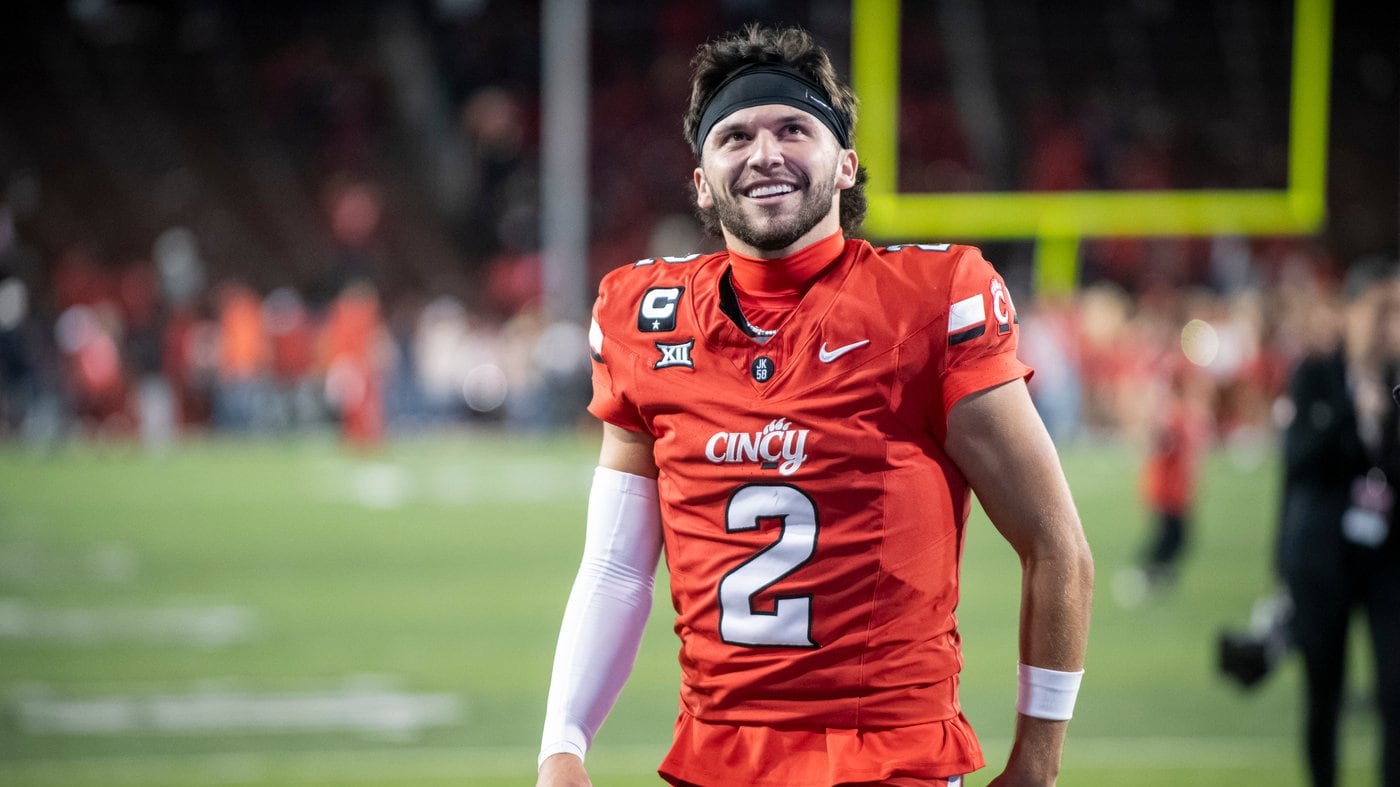
The gambling addiction that quarterback Brendan Sorsby privately dealt with throughout his four years in college, while impermissibly wagering at least $90,000, had finally come to light in April. The NCAA uncovered Sorsby's violation of one of its most fundamental rules in placing thousands of bets on college and professional sports during his time at Indiana, Cincinnati and now Texas Tech.
While Sorsby was away for a 35-day treatment program in Arizona, Texas Tech's administration worked through the standard NCAA processes for reinstatement from permanent ineligibility. Based on the rulebook and recent precedent, the severity of Sorsby's violations, including 40 bets placed on Indiana football as a freshman in 2022, would be practically impossible to overcome.
So Sorsby's legal team attempted what many viewed as a Hail Mary, suing the NCAA in district court May 18 in the hopes an injunction could buy him enough time to chase a College Football Playoff national championship with the Red Raiders this fall.
And when it actually worked, as so many courtroom challenges of the NCAA have in recent years, with a retired Texas judge signing off on a four-page temporary injunction on the morning of June 8, that's when the real battles began.
"For whatever reason," Ron Slavin, Sorsby's agent, said, "the world melted down like college football was ruined forever."
The two-month drama over Sorsby's eligibility triggered a series of disputes: Texas Tech vs. the NCAA, Sorsby vs. the NCAA, the Big 12 vs. Texas Tech and eventually Sorsby vs. the NFL. Emotions within the Big 12 were high, and sources told ESPN that the league athletic directors wanted to hold Texas Tech accountable in some way if the school ultimately played Sorsby. It was a fight over critical moral, ethical and legal issues, as the Big 12 later described it in a court filing, and it came with a significant toll.
As Texas Tech readies for the 2026 season, its reputation as a football program and institution has taken an undeniable hit. The Big 12's relationship with its new powerhouse has, too. NCAA president Charlie Baker called the district court loss "a new low" for these turbulent times. The incident further exposed the NCAA's inability to enforce its own rules but also showed a blueprint for how a conference might legally flex when needed. Sorsby is out millions of dollars, and his playing career is on hold. There were few winners to be found by the end of this affair.
ESPN pieced together the inside story of how the Sorsby saga threatened to start a war within a conference, and the public posturing, private phone calls and surprise lawsuits that ultimately blocked the prized QB from playing and kept the peace ... for now. ESPN spoke to multiple sources, including Big 12 athletic directors, university presidents and chancellors, NCAA staff, and sources at Texas Tech. Sorsby could not be reached for comment.
Now that it's finally over, Texas Tech officials said they don't believe they did anything wrong. Cody Campbell, their billionaire board chair, said this is one of those moments that people don't forgive and forget.
"This thing was not tried in court," Campbell said. "I mean, it was. But it was tried in the court of public opinion."
JUDGE KEN CURRY surprised almost everyone when he granted Sorsby's temporary injunction June 8. Multiple Texas Tech sources told ESPN they were preparing for that outcome but weren't expecting it.
One official who sat in Lubbock County Court a week earlier believed Sorsby had a chance after witnessing what he described as a "superstar" performance from Jeffrey Kessler, Sorsby's lead attorney, in making his case against the NCAA over the course of a two-hour hearing.
"He's the Harlem Globetrotters. He doesn't lose," Slavin later said of Kessler. "And the NCAA, unfortunately, is the Washington Generals."
Curry, a retired judge from Fort Worth, granted an injunction but offered little rationale for his decision. Mark Hicks, the NCAA's managing director of enforcement, called the ruling "disappointing" from an integrity standpoint.
"Betting on your own games, betting on your own teams is a line that we had been clear that we just, even as a membership in national office, we're just not going to cross," Hicks said. "And it felt undermining to have that rule and everything behind that rule stripped away pretty quickly with a state court judge."
Curry's ruling called for Sorsby to serve a two-game suspension -- a punishment Sorsby's legal team had initially offered to the NCAA as a concession -- and to continue treatment for his diagnosed gambling and anxiety disorders. Texas Tech installed apps on the quarterback's devices to block any future betting and put a plan in place for his continued recovery.
Outrage was expected and arrived immediately. Kansas State athletic director Gene Taylor called the injunction "f---ing bulls---." His peers in the Big 12 were just as stunned and offended. Georgia AD Josh Brooks and Nebraska AD Troy Dannen informed their coaching staffs they were not allowed to schedule games against Texas Tech. Michigan canceled a volleyball match scheduled for September, while the rest of the Big Ten considered taking a similar stand.
"It wasn't about the kid," Taylor told ESPN. "It was about the issue. That's the one thing we all know you can't do in this business."
Texas Tech had stuck to a careful public relations strategy up to that point, focusing its message on extending its full support to Sorsby. When the NCAA officially rejected his request for reinstatement in late May and the school chose to appeal, Texas Tech president Lawrence Schovanec penned a 900-word letter to the campus community explaining the school's rationale.
"Brendan himself has been open about his struggle with severe gambling addiction," Schovanec wrote, "and we believe his vulnerability deserves to be met with the full weight of this institution's support."
The intense criticism of Texas Tech throughout college athletics got noisy enough that Texas Tech officials sat down the day after the injunction was granted to record a message to Red Raiders supporters that laid out all the facts. When they were done filming, school officials agreed the segment came across as too scripted, according to sources briefed on the discussions. They scrapped that plan.
But the anonymous quotes from rivals and other schools talking of boycotting Texas Tech offended Campbell, whose wealth and position as the chair of the school's board of regents have made him a powerful but polarizing figure throughout college athletics. In an interview with Dan Dakich on June 10, Campbell fired back at the detractors, telling them, "Don't hate the player, hate the game."
"If this had happened at LSU, people would say, 'Ah, it's LSU,'" Campbell said. "They're always going to do what they do. But it happened at Texas Tech, and people don't want to compete with us."
That same day, amid what sources described as mounting pressure from Texas Tech's office of the chancellor, school leadership agreed to re-record the message. Athletic director Kirby Hocutt, Schovanec, coach Joey McGuire, and senior associate ADs Grant Stovall and Robert Giovanetti reconvened for their second attempt. The final cut was 21 minutes long and published on the night of June 11.
The group cared only about their message getting to Texas Tech fans, and the initial feedback from their target audience was positive. But once rival fanbases found it and derided it, the video got nearly 6 million views on X.
This was Texas Tech's impossible challenge following the injunction: There were no magic words that could make everyone OK with Sorsby playing this season.
The criticism of the 21-minute video was negative enough, not just from the public but also from some Texas Tech stakeholders, that sources said Schovanec had second thoughts the next day about whether Texas Tech could stay the course.
Texas Tech's athletic council called a Sunday meeting on June 14 at Jones AT&T Stadium. Campbell and fellow regents Dusty Womble, Clay Cash and Tim Culp sat down with Schovanec, Hocutt, McGuire and Texas Tech's general counsel. Sorsby joined the group for a portion of the three-hour session, Campbell told ESPN.
The topic: How much further was Texas Tech willing to go? Campbell and others were motivated to keep fighting. Others were feeling more apprehensive as they talked through strategy. The greatest fear at that time, according to multiple people who attended the meeting, was of the uncertainties beyond their control.
If continuing to back Sorsby and playing him in games could potentially result in the Red Raiders being deemed ineligible for the Big 12 championship game and the College Football Playoff, Campbell said all parties -- including Sorsby -- agreed that would be too unfair of a burden for the other 106 players in the program.
During that Sunday meeting in Lubbock, Schovanec stepped out to take a phone call from Big 12 commissioner Brett Yormark. Two sources told ESPN that Yormark asked to set up a meeting with the Big 12 presidents in the hopes of working things out before the situation escalated any further.
Meanwhile, Yormark was convening his own private meetings with the rest of his Big 12 members and preparing what would be a course-altering legal maneuver.
THE NEWS OF Sorsby's temporary injunction broke a little after 7 a.m. in Las Vegas as college athletic directors gathered at the Mandalay Bay Resort for the annual National Association of Collegiate Directors of Athletics conference. A handful of Big 12 athletic directors huddled soon after.
"We were just beside ourselves," one AD told ESPN. "Like, how can this happen?"
In the first conference call between Big 12 athletic directors the following day, Hocutt participated and, sources said, four ADs -- Kansas State's Taylor, TCU's Mike Buddie, Iowa State's Jamie Pollard and Utah's Mark Harlan -- were most outspoken on the subject.
"I would say it was cordial but very direct," a source on the call said. "Like, this is wrong on a lot of levels."
Hocutt repeated what he had stated publicly, expressing the school's desire to continue supporting Sorsby. His colleagues on the call pushed back, reminding him Iowa State had not fought this in 2023 when quarterback Hunter Dekkers and several other starters lost their eligibility over sports wagering. They argued that Texas Tech could continue to support Sorsby and his recovery without playing the quarterback.
"You can shut this down right away," one person said.
According to a source, the Big Ten did not have formal talks about boycotting Texas Tech from its athletics schedules but did discuss the issue on a weekly call with athletic directors.
"It kind of felt like it was a low point in a way," one Big Ten AD said. "Just very frustrated. I don't know if I've ever seen a more emotional response to anything. It almost felt like, gosh, now we lose that, it's like, can you have rules around anything? If you can't have a rule on that, then what are we doing?"
Yormark took a measured approach internally with his initial response, sources said, encouraging his athletic directors to "take a step back" on their first call and not overreact while the conference worked with its legal counsel to determine potential options.
Following the call, Big 12 ADs privately discussed what steps the conference ought to take. While Buddie told ESPN he anticipated Big 12 schools would have conversations about refusing to play Texas Tech this season, those talks never went far.
"I don't know how serious that was," a Big 12 AD said. "I think people knew that was a bit of a stretch. But I think we were very serious that if Brendan played in games, those games should not count towards the conference championship and we should hold them out of the conference championship. At a minimum, if he played, they were going to forfeit those games and they couldn't qualify for the Big 12 championship.
"I think it was very clear, 15-1, that we were going to do something as a conference, or needed to do something as a conference."
But could the Big 12 take preemptive action against Texas Tech when Sorsby hadn't played in a game with his new team? The conference received a letter from Texas attorney general Ken Paxton on June 11, warning that sanctioning Texas Tech for complying with the court order would be unlawful and expose the Big 12 to "substantial liability" for antitrust issues, breach of contract and tortious interference. Paxton, who is running for U.S. Senate, wrote that the total exposure for the conference and its members would be "substantially more than $200 million."
The Oklahoma, Kansas and Utah attorneys general responded within 24 hours, publicly rejecting Paxton's threats and backing the Big 12's right to sanction its members. Oklahoma AG Gentner Drummond called on the Big 12 to suspend Sorsby, decrying Texas Tech's actions as a "shameful chapter in the story of college football."
By Friday, the Big 12 was discussing taking this matter to federal court with the league's outside counsel, Sidley Austin. Its league bylaws permit the conference to sanction members who engage in actions "materially averse to the best interests" of the Big 12, including restrictions on revenue distributions and postseason bans. But was Yormark willing to take it that far?
"Throughout, it was like, 'Hey guys, this is really a family dispute, but it's a family dispute with national consequences,'" a Big 12 source said. "[Yormark] was trying to figure out how to leave Texas Tech some outs, how to create some alternative pathways for them. He didn't want to blow the conference up over this."
Yormark called what a Big 12 AD described as an "emergency meeting" Sunday night with Big 12 presidents, chancellors and general counsel, excluding Schovanec, and explained the federal lawsuit the conference would bring against Texas Tech and Paxton in the Northern District of Texas. The board supported the maneuver, and the 47-page suit was filed around midnight CT.
"It was a left hook," one Big 12 AD said, "that I don't think anybody saw coming."
The lawsuit sought declaratory judgments and injunctive relief affirming the Big 12's authority to enforce its bylaws and sanction Texas Tech if Sorsby played in any conference games. On that same Monday, the NCAA filed its appeal in Lubbock County District Court seeking an expedited resolution by Aug. 28, one day before the start of the college football season.
Campbell said Texas Tech leaders met once again Monday and arrived at the conclusion that, even if they believed they were on solid legal ground, there was no way to resolve these cases and guarantee Sorsby's eligibility before his June 22 deadline to apply for the NFL's supplemental draft.
"There was no way for Brendan to do what was right for Brendan, and it was going to be hanging over the team's heads all summer and maybe into the season," Campbell said. "We just couldn't do that."
That Monday night, Campbell posted a three-page letter announcing Sorsby's departure and McGuire called a 7:45 p.m. team meeting to inform his players they would move forward without him.
After an intense week, one Big 12 athletic director described the sudden resolution as "a little bit anticlimactic." The Big 12 was just grateful the ordeal was over.
"Collectively, there was a big sigh of relief," a Big 12 source said.
SORSBY AND HIS camp believed all along that they had the exit ramp of the NFL supplemental draft as a potential option. His reps contacted the league in early May to inquire about applying and were told the deadline was June 22.
The quarterback contemplated entering the draft last December, according to Slavin, and the agent preferred that option over entering the transfer portal. On New Year's Eve, an NFL general manager contacted Slavin asking whether Sorsby was serious about staying in school. One AFC executive told ESPN's Jeremy Fowler that Sorsby would've been a late first-round pick. But after another winless run through November with the Bearcats, Sorsby wanted to compete for the Heisman Trophy and chase a national championship as a senior.
In the days after Texas Tech parted ways with Sorsby, his legal team dropped its lawsuit against the NCAA and applied for the supplemental draft. A source familiar with the situation said Texas Tech's coaching staff talked with roughly 65-70 NFL personnel people who sought more information on Sorsby, and they were working to get Red Raiders receivers cleared to catch passes for him at a July pro day in Dallas.
Slavin attempted to make the case for Sorsby in several public interviews, framing the bets the quarterback placed on Indiana football as mistakes made by an 18-year-old and emphasizing that he never bet on games he played in.
That argument might've been good enough for a judge in Texas, but the NFL wasn't convinced. One day after the deadline passed, the NFL sent a scathing letter informing Sorsby it would not accommodate him and hold a supplemental draft.
A player hasn't been selected in a supplemental draft since 2019, and the NFL wasn't compelled to grant Sorsby that privilege. The letter penned by Larry Ferazani, general counsel for the NFL's management council, said Sorsby's issues were too significant and "too closely tied to the League's core integrity interests" to be meaningfully reviewed in just a few days.
Ferazani's letter offered perhaps the harshest assessment of Sorsby's actions to date, calling out his repeated NCAA violations at three universities, his efforts to avoid detection by funding others betting on his behalf and the possibility he violated state criminal law.
"Your Petition does not address these matters," Ferazani wrote. "Nor does it demonstrate accountability for your conduct or indicate whether, or how, you would adhere to the League's rules and policies governing the integrity of competition. Instead, even after receiving notice of the NCAA's decision rescinding your college eligibility in May, you sought to avoid the consequences of that determination through litigation rather than accepting responsibility for your actions, and you pursued entry into the NFL only after abandoning those efforts."
The NFL's management council spent significant time reviewing Sorsby's case once the application was sent. A source with direct knowledge of the NFL's process described it as a "very comprehensive review." Commissioner Roger Goodell trusted the council with the process, the source said, adding that the league was confident in its position.
Among the many concerns the council identified: Sorsby's gambling history over four years, the short notice of requesting the supplemental draft and what the league felt was a flimsy case made by Sorsby's team.
"No defense, no supporting documents -- nothing came in," the source said. "[The NFL] didn't have the ability to look at what took place."
The league could've considered accepting Sorsby's application for a supplemental draft and then given him a suspension during his rookie season, much as it did with a five-game suspension for former Ohio State quarterback Terrelle Pryor in 2011 following his supplemental selection, matching the NCAA sanctions he was avoiding. But, per the source, the league never got to that point.
One AFC executive told ESPN he was somewhat surprised Sorsby's application was denied because his gambling preceded his dealings with the league. They wondered whether what they perceived as a lack of contrition from Sorsby was a factor.
"I think he underestimated the reaction," the executive said. "He should have been begging to get accepted."
Kessler called the rejection "a violation of the CBA and the law" and said he would immediately pursue the issue with the NFL Players Association. Others were skeptical the NFLPA would challenge the league's decision because Sorsby is not yet a member of the union. As the league source put it, "You'd essentially be taking a job from a union member."
The NFL informed teams in a memo last week that Sorsby has decided not to pursue litigation and will be eligible for the 2027 draft. He won't face discipline from the NFL for his past betting, but an NFL source told NFL Network's Ian Rapoport that the league is reserving the right to investigate his conduct and would factor it into discipline for any future violations.
After backing Sorsby as long as he did, Campbell said the news of the NFL's rejection was tough to take.
"We expected that he would be taken in the supplemental draft. Well, that didn't happen," he said. "That just compounds my kind of guilt around this. Should we have just faced the fire? But, man, it took a toll on everybody."
THE RELATIONSHIP BETWEEN Texas Tech and the Big 12 has been tumultuous over the past two years.
It began in 2024 with drama around headset communications. Texas Tech asked the Big 12 to investigate its losses to TCU and Baylor to ensure the integrity of the games was not compromised amid concerns its opponents could've accessed unencrypted coach-to-player communication. Within 24 hours, the Big 12 announced it had conducted a review and had found no concerns.
The Big 12 banned Texas Tech's fan tradition of throwing tortillas onto the field ahead of the 2025 season, then handed down a $25,000 fine after multiple violations during the school's win over Kansas. Jayhawks coach Lance Leipold alleged that a knife was thrown at his team's sideline during the game, then rescinded that claim days later.
In late March, Campbell protested the Big 12 and Fox moving Texas Tech's conference opener against Houston to a Friday night kickoff, calling the decision "absolutely absurd." Yormark responded in an interview with the Lubbock Avalanche-Journal.
"Cody Campbell does not run the Big 12," Yormark said.
But Campbell and Texas Tech did give the Big 12 a true title contender last season with the Red Raiders' dominant run to their first Big 12 championship and the No. 4 seed in the College Football Playoff.
The conference needs nationally relevant programs more than ever since Oklahoma and Texas departed for the SEC. No other conference member is investing in athletics and talent acquisition to the extent Texas Tech is right now. And even without Sorsby, the Red Raiders remain the clear favorites to win the Big 12 again this fall.
Texas Tech's leaders have been key allies for Yormark since his hiring in 2022. Schovanec was chairman of the Big 12 board of directors during Yormark's first year on the job as he negotiated a media rights extension and aggressively pursued conference expansion, and Hocutt quickly became a trusted confidant.
As Big 12 media days kick off Tuesday in Frisco, Texas, and the conference shifts its attention past the events of these past two months, there's work to be done in mending the relationship between conference and school. Some Texas Tech sources insisted they'll be fine and move forward. But ask Campbell where things stand with the Big 12 and it's clear some frustrations still linger.
"I feel like they did not handle this particular situation well, but I have some confidence they're going to be better in the future," Campbell said. "Look, if you have a disagreement in your family, you need to handle things as a family internally. You don't need to air it out publicly. I think that's what we're looking for in the future."
Yormark can argue that, given the undisputed facts of Sorsby's case, this particular issue would've been a 15-1 vote for conference members no matter the player or school. If Sorsby were still at Cincinnati this spring, would Texas Tech have supported his cause? After going through it, though, it's not easy for Campbell and others to step back and see it that way.
McGuire preaches to his players about having a "what's next" mentality. That favorite mantra will come in handy in the months ahead.
Campbell is still pushing for long-term reform and has been closely involved with the Protect College Sports Act as a member of the President's Council on Sports, Fitness and Nutrition as well as lobbying efforts on Capitol Hill. Texas Tech officials hope the Sorsby saga can spur real conversation on how these cases are handled and penalized after learning just how pervasive sports wagering has become.
Last year, an NCAA amendment passed that would have removed penalties for student-athletes who bet on pro sports before membership -- including Texas Tech -- voted to rescind the measure late in the process. Still, the potential of the NCAA relaxing its rules on sports betting drew concern from Congress.
Hicks, a 20-year NCAA veteran, said he couldn't recall anything like what played out over the six days after the injunction was granted.
"I think one big question that college sports has is, do we want to be governed?" Hicks said. "What you saw was a membership that really became vocal and in opposition and well beyond just what we do here at the national office. And I thought that was particularly telling. Now, whether that means that long term they want to be governed, I don't know."
What's next for Sorsby? For now, he's living in Dallas and intends to continue his training and counseling there. Texas Tech officials said he's still welcome in their facilities, and they remain committed to providing him the resources and support he needs to continue his recovery process.
No matter how anybody else felt about it, they hope they sent a message that Texas Tech will always stand behind its student-athletes.
On Saturday, the Red Raiders will take the field without Sorsby. It's a squad that, at least on paper, still looks too loaded to fail. Texas Tech is the Big 12's best candidate to make a deep College Football Playoff run. And if all goes according to plan, Yormark will be standing on a stage in AT&T Stadium in December, handing the defending champs their trophy.
In the meantime, can this uneasy truce endure?
"These things leave scars," one Texas Tech source said.