In mid-August, the three people trying to define how Canada’s national soccer teams should play the game gathered in an office in Toronto’s Liberty Village for meetings that stretched over two days.
Together they watched one video clip after another, tucking into sandwiches at lunch and a tasty curry as the first day of meetings stretched into the early evening.
They reviewed sequences from the men’s national team games against Qatar, Switzerland and Morocco at the 2026 World Cup. They studied clips from recent women’s team games showing defenders without the ball, debating how much space the Canadian players should leave between one another and at what moment they should attack the ball carrier.
The questions were painstakingly specific. Collectively, they pointed to a much larger one: What should Canadian soccer look like?
The people leading that conversation embody a curiosity. Jesse Marsch, the men’s national team coach, is American. Casey Stoney, the women’s national team coach, is English. Kenneth Heiner-Møller, Canada Soccer’s sporting director, is Danish.
“We highlighted the fact at the start of the meeting that one of us is Danish, one of us is American and one of us is English,” Marsch said in an interview. “All three of us are committed to doing the job here, but we’re also not Canadian.”
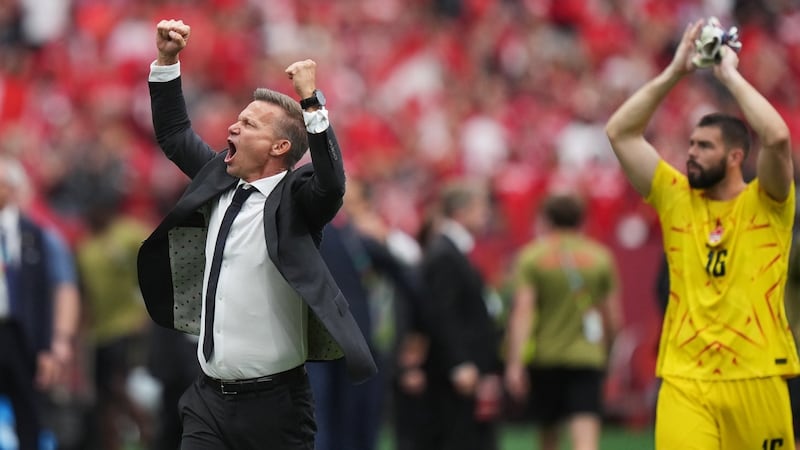
Marsch, Stoney and Heiner-Møller are developing a unified “Style of Play” principles document that is intended to reach across Canada’s national-team system, from the youth levels to the senior men’s and women’s teams. The aim is to give coaches and players a common language and an enduring idea of how Canadian teams should behave on the pitch, both with and without the ball.
The emerging vision emphasizes speed, aggression, vertical play and pressure. Canada should be able to control possession, the three officials said, but also attack quickly after winning the ball and swarm an opponent after losing it.
“It’s a guiding light when you have a philosophy,” Stoney said. “I think aligned language, aligned way of playing, style of play, it helps the players, it helps the coaches, it helps coach education.”
Heiner-Møller offered a practical measure of the plan’s success: An assistant coach working with Canada’s under-20 men should also be able to help coach the under-17 women because the teams share a vocabulary and divide the game into the same phases.
One principle was “optimal width.” When Canada has the ball, Heiner-Møller said, its players should be “as wide as needed, but as narrow as possible.” Remaining compact would leave them better positioned to win the ball back if an attack breaks down.
Some of the men’s clips Heiner-Møller said the group reviewed did not end in goals and that was partly the point. The document, he said, should help coaches recognize the intention of a play, not merely its outcome.
The group also examined footage Stoney brought from the women’s team during her time as national team coach. Passing across the back line while remaining far from an opponent may retain possession, but it does little to break down an opponent.
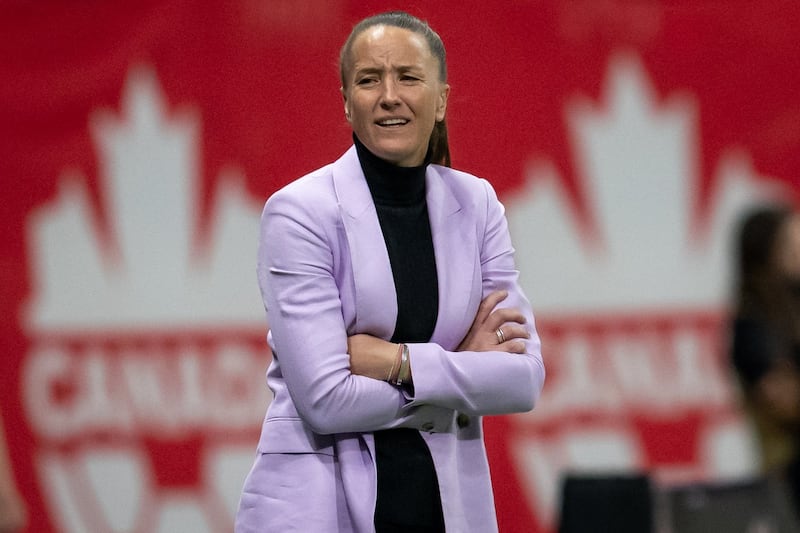
“We spoke about having teams that can play at high intensities, teams that can suffocate the opponent, teams that can win the ball back and counterattack quickly, but also teams that can be in control with the ball and score goals and hurt the opponent,” Stoney said. “There’s an aggression to the way we want to play.”
Stoney said that approach must also shape the way young players train. Coaches can be too easily satisfied by a practice that looks neat, she said, particularly when players are passing without meaningful pressure.
“It needs to look chaotic. It needs to look messy,” Stoney said. “We need to put players in situations where they’re stressed, where they’re under pressure, where they’ve got to solve it, and it’s intense.”
The challenge extends beyond training design. Canada’s winters restrict the time children can play casually outside, while its geography makes it difficult and expensive to regularly bring the best young players together. Indoor programs, Stoney said, must deliberately develop technical skill while preserving Canadian athletes’ physical strength and intensity.
Marsch spoke of tempo, pressing, directness and playing on the front foot. He described Canadians as hardworking, ethical and inclined to pursue a common goal.
He also reached toward the country’s dominant sport for a cultural touchstone.
“Hockey culture is a big part of what being a Canadian means,” Marsch said. “A big part for me of what hockey culture is, is a real togetherness and a kindness off the ice and a camaraderie, but then once you step on the ice, a desire to fight and grind and do whatever it takes to be better on the day.”
Canada cannot simply borrow the identity of an established soccer power, Marsch added.
“We don’t have the technical types of little athletes of Spain, and we don’t have all the grit and grind of being Argentinian and the edge of what that means,” he said. “But we do have a little bit of all those things.”
The same broad principles can guide Canada’s men and women, the three officials said, though the applications will differ.
Stoney wants her team to have greater control of the ball while playing with more intensity around it. Marsch wants Canada’s national teams to have “continuity at all levels and with both genders… Stylistically, I want to control every phase and aspect of the game. Whether through pressing and intensity, or through dynamic possession, or through quick reacting transition.”
The document is expected to be released publicly in late spring. Before then, Heiner-Møller plans to consult former Canadian players, youth coaches and coach-education officials. Christine Sinclair, Bob Lenarduzzi, Melissa Tancredi and Tosaint Ricketts are among the former players expected to be invited into the process.
The final product cannot be a collection of ideas imported by three outsiders, Heiner-Møller said.
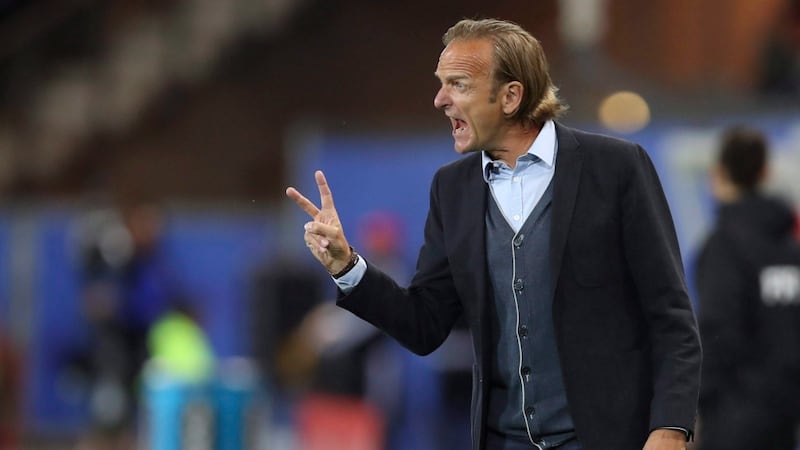
“We want to make a Canadian style of play that also has an impact on the international game,” Heiner-Møller said. “That’s where we need some input from Canadian people.”
Within Canada Soccer, the philosophy will be more than a recommendation. Youth national-team coaches will be expected to teach its principles and use its vocabulary. Heiner-Møller said future national-team coaches who reject the approach will have to look for work elsewhere.
Professional clubs and local academies will remain free to play however they choose, but the philosophy will exert pressure beyond Canada Soccer. Clubs will know what selectors value, and Marsch said its principles would be “strongly suggested” in the broader soccer community.
That distinction may become contentious. Canadian coaches and clubs have their own histories and successes. Marsch previously drew pushback by urging Canadian Premier League teams to give more minutes to young players. He now says the CPL should operate with a cap on minutes for players over the age of 21, an idea its teams are under no obligation to accept.
Heiner-Møller said Canada Soccer should concentrate on receptive partners instead of exhausting itself trying to persuade every dissenter. He called it the “popcorn effect”: focus on the kernels that pop, not those that do not.
Marsch, Stoney and Heiner-Møller have all considered the identities of the world’s top soccer nations. Heiner-Møller contrasted England, which he said sits deeper before attacking, with Spain’s possession-based approach.
“They were very gifted at travelling with the ball fast,” he said of England. Spain, by comparison, tries to keep the ball, take risks higher up the field and recover possession quickly.
Marsch cited the Netherlands, Belgium, Denmark and Colombia as more useful models for Canada than the sport’s largest powers. Colombia uses its athleticism in transition, he said, while Belgium has emphasized technical players and dynamic possession. Canada might borrow from both.
Stoney pointed to Japan for a different reason: patience.
“They have a 50-year process and goal that they’re working towards, to become world champions,” she said. “It shows you how long they think it’s going to take.”
Stoney estimated that Canada’s project may require two four-year cycles before players have experienced the same ideas through the under-15, under-17 and under-20 teams. Heiner-Møller said a recognizable identity must be maintained for eight to 12 years to become ingrained.
Some benefits could arrive sooner. Coaches may communicate more easily. Staff members may move between teams. Young players may enter national-team camps already understanding what will be asked of them.
The harder test will come after a poor result or a disappointing tournament, when pressure could build to change course. The model is supposed to evolve as the sport does. Its central principles, however, are meant to outlast the three foreign-born coaches now helping to write them.
“It doesn’t really matter, the identity you have,” Heiner-Møller said. “But the identity has to be consistent.”