Friday is the day that the dream becomes real.
Years of thinking about the moment, wondering what it would be like and how it would play out all leads up to this. When Canada takes to the pitch against Bosnia and Herzegovina on a hot June afternoon in Toronto, it will become just the 19th nation to play in a FIFA World Cup match on home soil. Not that long ago, this was unthinkable.
For so long, Canada Soccer was such an afterthought, the idea of hosting a World Cup was absurd. How could a program that was in disarray for decades hold itself up to the gold standard of world soccer? There’s no shame in dreaming big, but this seemed beyond pie in the sky.
And yet, here we are. With the women’s program leading the way for years (and hosting a World Cup in 2015), Canada’s men’s team has pushed itself into the international conversation over the past seven years, transforming itself into the kind of credible entity that Canadian fans have been crying out for – one that a country can truly embrace, rather than watch through their fingers over their eyes.
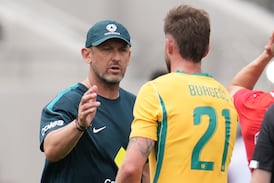
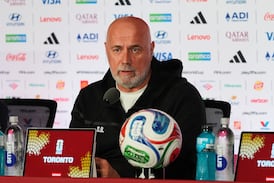
Manager Jesse Marsch says his team is ready to meet the moment.
“I just think that these players represent the best of Canada,” Marsch told TSN.ca. “Everything from, you know, their backgrounds and their multiculturalism, and the pride they have in being Canadian, to also the decency in the team in terms of the selflessness, the commitment to play for the national team, the commitment to be the best that they can possibly be represents, I think, so much of what Canada is.
“And so, regardless of the political climate, and everything that’s happening around the world, I think that Canada should be proud of these men, and I feel like my job is to give them the opportunity to show that.”
If the idea of Canada Soccer reaching the lofty heights it has felt unrealistic for fans, imagine what it was like for the men who are set to wear the national kit during the World Cup.
“My journey kinda started from watching World Cups and falling in love with the game from watching 2002 and 2006 when I was a kid, but at the time I never thought Canada would be able to participate in a World Cup, never mind host one 30 minutes down the street from me,” Ajax, Ont.’s Derek Cornelius said. “It’s definitely very special and something I don’t take for granted.”
Burnaby, B.C.’s Niko Sigur left Canada for Europe in 2021 and joined Croatian giants Hajduk Split the following year. Sigur remembers what it was like even a few short years ago to tell somebody he was from Canada.
“When I first got there, it was like, ‘Do you guys even play football? I thought you guys just built igloos,’” the 22-year-old Sigur said. “But I think through the years, seeing the success at the Copa America, that did a lot, and now it’s like, ‘Oh, you’re from Canada? They have some pretty good players.’ I feel like the narrative is changing. It’s still not where it should be, but it’s changing.”
What has helped drive this current crop of Canadian players is the ability to be the agents of change. They might not have had many countrymen to look up to plying their trades in Europe and on the biggest stages of world soccer when they were growing up, but now they’re ensuring younger generations of Canadian kids will. It’s a responsibility that they don’t take lightly.
“It’s a nice feeling,” Cornelius, 28, said. “Maybe it’s not something I think about so much when you’re doing this day in, day out – you forget about those kinda things, but they’re important because it’s a big motivation for myself and I know for a lot of guys in the group, to give the next generation something to look up to, something to strive towards as Canadians. You can do it as a Canadian. For a lot of us, we didn’t have that hope because we didn’t see it on TV. We saw guys from England, France, Spain, Brazil playing at the highest levels, but never Canadians. But now we’ve been able to start breaking in and compete at the highest levels in football and we want to keep going in that direction to continue inspiring that next generation.”
Sigur stresses the importance of representation to help convert aspirations into something tangible for kids watching at home.
“What was very difficult was that Canadian players didn’t have too many big names to look at, at big clubs,” Sigur said. “I think that was the struggle. You could say, ‘Okay, I believe in myself, but who did it before me?’ Obviously now, you see guys like Alphonso [Davies], Jonathan David or Tajon [Buchanan] playing at some of the best clubs in the world and you say, ‘Okay, these guys are doing it. I can definitely do it.’”
Playing at consecutive men’s World Cups for the first time ever, Canada wants this to be a regular occurrence. Every four years, you should expect to see Canada playing against the giants of soccer. This is the next evolution of the program.
“I just think our level has gone up so much,” Cornelius, one of 13 players returning from Qatar 2022, said. “The standard and expectations that we put on ourselves have risen so much. I recall coming into Canada [camp] for the first time [in 2018] and we wanted to try to become one of the better teams in CONCACAF. I think we’ve done that. We’ve established ourselves as a real competitor in our region, but now we’re aiming for bigger and better things, to be respected on the world stage. That’s what we’re working towards and hoping to show at the World Cup.”
Regardless of what happens on the pitch over these next few weeks, Canada has the opportunity to build a legacy while hosting the world in what could be a once-in-a-lifetime event. The memories that will be made and the eyes that will be opened could very well pay dividends down the road for a country on the rise. While staging the World Cup itself is the culmination of years of work, it can also act as a springboard for what’s next.
“What do you have with these young kids?” Sigur said. “You need them to feel inspired. You need them to feel hungry and that, if they’re going to work, there’s an end goal. I’m going to play for a good national team against the best teams in the world…and, as for the national team, what we can control is going out, giving it our all and trying to get results and inspiring that next generation that they can get to levels that we even haven’t.”