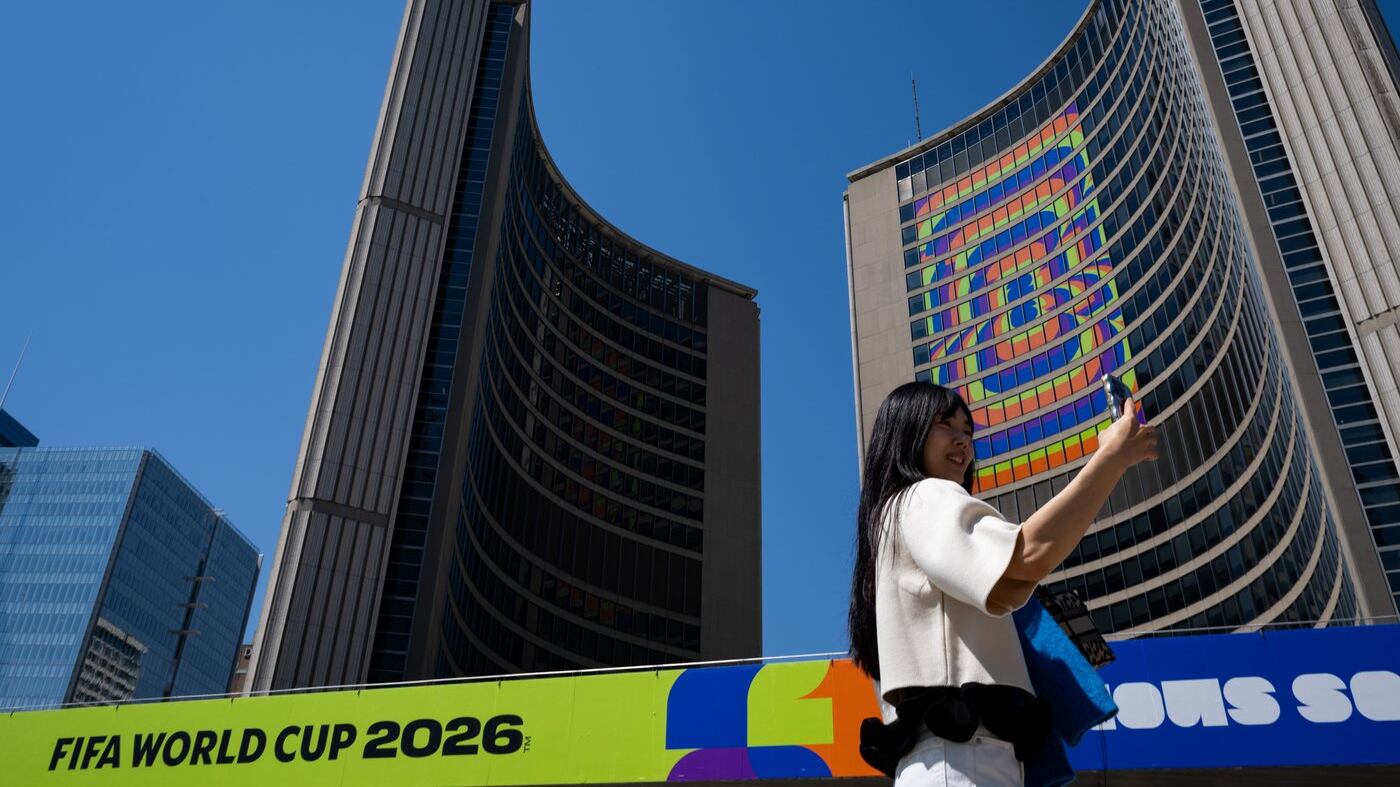
TORONTO — For soccer fan Marticia Fargiorgio, the atmosphere in Toronto has been unmatched since the World Cup began, watching neighbours come together to support the men’s team and connect with visitors from around the world.
It’s a sentiment shared by many fans who spoke of the energy that spilled out onto the street from matches, watch parties and sports bars as Toronto hosted six World Cup games.
“The connection, the togetherness, we really needed this,” Fargiorgio said.
The tournament is far from over, but festivities in the city are winding down with Canada’s team eliminated and Toronto’s host duties completed.
The social impact of the tournament and the boon to Canadian soccer have been undeniable, but early data on the World Cup’s economic impact tell a more muted story.
And though the tournament catalyzed investments into better public transit service and new sporting facilities, experts question if the upfront cost of hosting was worth it, and what kind of legacy the tournament will leave once the glow of soccer fever wears off.
The city says $380 million was spent by the municipality, province and federal government to host six matches in Toronto over four weeks. And it projected more than 300,000 international travellers would visit the city.
Despite the influx of visitors, Toronto hotels said occupancy rates were down during the first two weeks of the World Cup.
Credit card data released by payment processing company Moneris shows spending in the city saw a modest boost from June 12 to 26, but wasn’t as significant as the impact of Taylor Swift’s six sold-out Eras Tour shows in 2024.
Total spending on hotels was up 18 per cent during the first two weeks of the World Cup compared with the same period last year, but restaurants and bars only saw a three per cent bump. Big box store sales and groceries were up four and six per cent, respectively, and spending on apparel declined by five per cent.
Foreign spending -- transactions on foreign-issued credit cards -- was substantially higher – up 34 per cent at restaurants and bars, 19 per cent on groceries and seven per cent at hotels.
But compared to the Eras Tour, the World Cup didn’t make as large a splash. All totalled, Swift’s concerts brought a 12 per cent boost to restaurants and 49 per cent on apparel, with average spending across all categories up 45 per cent.
Sean McCormick, vice-president of business development at Moneris, says it’s hard to compare the Eras Tour to anything, even an event as internationally significant as the World Cup.
“That Eras Tour was a phenomenon like no other,” he said. “Both domestic visitors and foreign visitors were just willing to open their wallets like nothing we’d ever seen before and maybe anything we’d ever see again.”
On the World Cup’s economic impact, McCormick said even modest bumps to spending is a feat in and of itself.
“It’s really hard to move the needle on spend two or three per cent in a city the size of Toronto because there is so much going on in this city at any given time,” he said. “Absent the World Cup, people would have been spending money on other things, other festivals, other events.”
Tyeshia Redden, a professor of urban planning at the University of Toronto, says the economic windfall so far is likely below expectations.
A study prepared for FIFA by Deloitte Canada estimated the World Cup could generate up to $940 million in economic output for the Greater Toronto Area. The city says a final accounting of revenue from the tournament will be provided after the World Cup wraps.
Redden, who researches mega-sporting events like the Olympics, questions the benefits of hosting the World Cup, but said Toronto is in a better position than most.
“Typically cities lose money. So if we break even, we’re actually doing a lot better than 90 per cent of mega-sporting events,” she said.
In some worst-case examples, the 2004 Athens Olympics were blamed for contributing to Greece’s debt crisis and the 2016 Rio Games prompted the city’s governor to declare a state of financial emergency, Redden said.
The World Cup budget of $380 million in Toronto is much lower than what most cities spend to bring an international sporting tournament to town, Redden said, in part because hosting duties were spread out and Toronto didn’t need to build any new infrastructure.
“We’ve seen in the last decade a lot of intense scrutiny about the economic outcomes associated with these mega-sporting events,” she said. “So that has put a lot of pressure on FIFA and the International Olympic Committee to actually loosen these regulations and not require so much upfront builds and expenditures on infrastructure.”
In Toronto, the city invested over $120 million to upgrade BMO Field and turn it into Toronto Stadium for the World Cup. Temporary seats were added, but some permanent changes were also made, including four new videoboards and upgrades to locker rooms and broadcast infrastructure.
The city says it also invested in facility upgrades at Centennial Park, where World Cup training sessions were held, as well as free soccer programming for the next five years in some communities and four new soccer mini-pitches at city parks.
U of T kinesiology professor Simon Darnell says he welcomes the investment into sports and recreation but questioned why the city needed to host the World Cup to do it. The same goes for the upgrades made to the city’s transit network to accommodate World Cup crowds.
The TTC says ridership was up 40 to 47 per cent on five key streetcar lines connecting crowds to Toronto Stadium and Fan Fest on match days. To get the network ready, the city designated transit priority lanes on Bathurst and Dufferin streets and the TTC says it revitalized tracks, overhead wires and power supplies so streetcars could handle the extra service
“Why do we have to have these sports events in order to have a better transit system? If we want to have better transit, let’s just invest in transit,” said Darnell, who researches the social impact of sports.
Darnell says the sporting legacy of the tournament will be a huge benefit to elite Canadian soccer moving forward, but he remains unconvinced the $380 million price tag was worth it.
He says governments should be focused on making Toronto a more livable city and worries about what impact the tournament had on vulnerable people as the World Cup brought an influx of police officers to the city.
Ahead of the tournament, homeless advocates alleged people living in and around Union Station faced escalating violence at the hands of security guards, which U of T urban studies professor David Roberts said at the time was part of a long history of cities seeking to clean up their image before major events.
A City of Toronto spokesperson did not address the allegations at the time but said the municipality is committed to respectful conduct and people can submit complaints via the city’s website.
Redden said mega-sporting events are linked to higher foreign investment, which can drive up housing prices and trigger redevelopment that makes cities unaffordable for residents.
It remains to be seen if that will play out in Toronto, but she agrees with Darnell that the city didn’t need to host the World Cup to secure better transit service and investments in recreation.
“It would be great to start seeing leaders of other cities or even at the provincial or federal government level promoting policies and programs that don’t require these third-party interlopers like FIFA in order to undertake what they espouse are economic stimulus policies,” she said.
This report by The Canadian Press was first published July 5, 2026.
Kathryn Mannie, The Canadian Press