The negotiations are over.
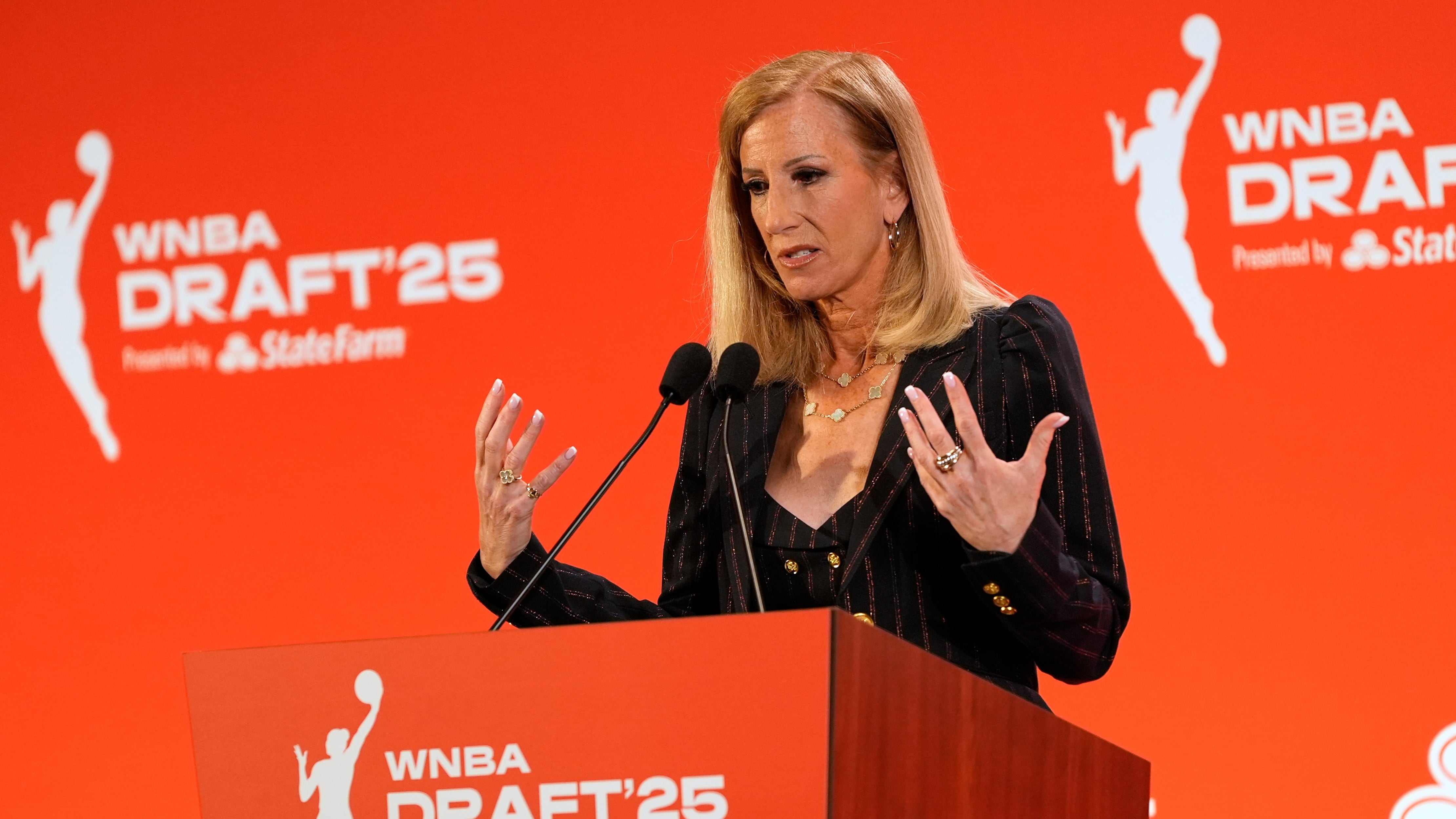
"We have aligned on key elements of a new collective bargaining agreement together," WNBA commissioner Cathy Engelbert told reporters in New York around 3 a.m. ET Wednesday.
The WNBA and the Women's National Basketball Players Association had met for eight consecutive days in midtown Manhattan, spending over 100 hours in the bargaining sessions. The two sides agreed in principle to a new CBA Wednesday morning, with the deal coming 51 days before the league's 30th season is scheduled to open and 17 months after the players opted out of their previous agreement.
Here's what we know about the deal.
March 18 updates
10:45 a.m. ET: Under the new CBA, sources told ESPN's Shams Charania, the salary cap will start at $7 million (up from $1.5 million in 2025) with the supermax starting at $1.4 million (was $249,244 in 2025). The average salary will be around $600,000 ($120,000 in 2025), with the minimum salary surpassing $300,000 ($66,079 in 2025), sources said.
Sources said the average revenue share would be nearly 20% across the length of the deal.
3:15 a.m. ET: Details of the agreement have yet to be shared. The agreement is pending ratification by the players as well as the WNBA and the NBA board of governors.
Both sides agreed early on that they were looking for a "transformational" deal. The new CBA is expected to offer the league's first $1 million salaries and, also for the first time in league history, tie the salary system to revenue growth. The agreement is anticipated to reflect the league's skyrocketing growth and popularity, with viewership, attendance and investment reaching historic levels over the past few years.
Training camp is slated to commence April 19, followed by preseason games beginning April 25 and the regular season starting May 8.
"The progress made in these discussions marks a transformative step forward for players and the league," WNBA commissioner Cathy Engelbert told reporters shortly before 3 a.m. ET, "and it's underscoring a shared commitment to the continued growth of the game.
"It's [been] a process, but we're very proud to be leading in women's sports, and these players are amazing, and we're going to have an amazing 30th season tipping off in May."
Terri Carmichael Jackson, the WNBPA executive director, said, "I think this can be summed up in two words: player empowerment ... players coming to the table and standing on business and being reminded of the collective voice and of what it means to be in a union and the power of this union. They never forgot it, and they have taken it, like they always do, to the next level."
March 14 updates
The league and union exchanged about 15 proposals between Tuesday and the early hours of Saturday morning.
Engelbert was asked Friday whether she thinks a deal will be done by Monday.
"In Cathy Engelbert's opinion," she said, "yes."
"We have to get it done by Monday," she continued. "I should say, we have to get it done without disrupting some part of the fact that we've got to run this two-team expansion [draft]. We've got to get expansion going. We've got to get free agency going. We've got to get the college draft, which is now a month from today."
Engelbert said there could be 24-48 hours of wiggle room, but not much.
WNBPA executive director Terri Carmichael Jackson, who spoke Friday before Engelbert's comments, said she thought the league's deadlines have often felt "quite arbitrary."
Nonetheless, she acknowledged "movement is still the word."
"I think the league, and particularly the commissioner and her team, have heard that transformational remains the goal," Jackson told reporters Friday. "As long as movement keeps us going in a forward direction, then I think we're good."
Both sides have worked through dozens of more ancillary issues over the past few days. Ogwumike said that the biggest things on the agenda Saturday are to nail down revenue share and housing.
Ogwumike and WNBPA vice president Breanna Stewart have been present for bargaining the entire week. Treasurer Brianna Turner and vice president Alysha Clark were on site until Friday, while vice president Napheesa Collier joined the fray Friday evening.
Rev sharing remains focus in latest proposals
Jackson reiterated Friday that a system "tied to revenue in a meaningful way" remains a priority for the players.
Throughout negotiations, the league and union have been offering different systems to determine player salaries. The WNBA has proposed that players receive, on average, over 70% of net revenue (revenue after deducting expenses), while the union's last known offer asked for 26% of gross revenue (revenue before expenses) over the lifetime of the agreement.
The league's latest known proposal featured a salary cap that would at $6.2 million (up from $1.5 million in 2025) and would continue to grow over the life of the deal. The average player compensation would be projected to reach $570,000 in Year 1 and $850,000 in Year 6, while the maximum compensation would come in at over $1.3 million in Year 1 and nearly $2 million in Year 6.
The union's last known Year 1 salary cap came in at about $9.5 million, but it is unknown where its current proposals stand.
"I think the continued conversations [this week] have helped us chip away at what the concerns are for both sides and how we meet them, how we address them," Jackson said on the revenue share discussion.
March 11 updates
The WNBA and union met at 5 p.m. ET at a hotel in Midtown Manhattan to continue negotiations. League personnel and WNBPA staff attended the meeting.
Four WNBPA executive committee members -- president Nneka Ogwumike, vice presidents Alysha Clark and Breanna Stewart and treasurer Brianna Turner -- attended the meeting as well. They left at 3 a.m. as the meeting continued.
The meeting lasted nearly 12 hours but ended without a new collective bargaining agreement.
WNBPA executive director Terri Jackson told reporters the bargaining session featured "a lot of conversation going in the right direction," while WNBA commissioner Cathy Engelbert added "we're working hard ... and still have work to do."
Players left the meeting just before 3 a.m. as negotiations continued between league and union staff members. The players declined to comment on the talks. The union and league wrapped up discussions about two hours later.
Engelbert briefly spoke with reporters but did not take questions, saying both sides are working hard on securing a win-win deal.
She called the talks "complex" and "complicated" and the pursuit of a transformational deal "really important to the future not just of the league, but of women's sports."
Asked whether there were indications a deal could be reached in the coming days Jackson responded that "conversations are continuing, and they need to be."
The two sides gathered again Wednesday, Thursday and Friday to continue negotiations.
March 10 updates
Where do things stand heading into Tuesday?
The two sides swapped proposals over the weekend, with the WNBA submitting a counterproposal Saturday evening, a day after the WNBPA submitted one of its own. That would mean the ball is in the union's court for the next response.
There's some interest in holding an in-person meeting, potentially including players, on Tuesday or as close to the deadline as possible. The possible benefits of such were brought up by players at USA Basketball camp over the weekend.
"I don't understand why we don't just get in a room and iron it out and shake hands," Indiana Fever star Caitlin Clark told reporters in Miami. "That's how business is. You look each other in the eye, you shake hands, you respect both sides. For me, that's what I would love to see."
WNBPA vice president Breanna Stewart agreed with Clark.
"I think that would be great for us all to sit in a room until we really get it done," Stewart said. "If that means sitting in there for hours and hours at a time, let's do it. That's for the better of the player. While a situation like that has never happened before, there's a first time for everything."
How far apart are both sides?
Notably, there haven't been any leaks on the contents of the proposals exchanged over the weekend -- perhaps a sign both sides recognize the high-stakes nature as the league's deadline approaches.
But in their previous proposals, the league and the WNBPA were still far apart on revenue sharing, with the WNBA proposing players receive on average over 70% of net revenue (revenue after deducting expenses). Their proposal includes a $5.75 million salary cap in 2026 (up from $1.5 million in 2026) that in subsequent years would grow in line with revenue growth.
The league's proposals featured maximum salaries, including revenue sharing payouts, amounting to nearly $1.3 million in 2026 and projected to approach $2 million in 2031. The supermax in 2025 came in at $249,000. The average player salary, including revenue sharing, was projected to reach $540,000 in 2026 and $780,000 by 2031, up from $120,000 in 2025.
In its previous proposal, the players' union asked for players to receive 26% of gross revenue (revenue before deducting expenses) over the lifetime of the agreement, with the salary cap in Year 1 of the deal at about $9.5 million.
The union has bristled at the league's proposal for amounting to less than 15% of gross revenue, while the league has called the union's proposals "unrealistic" and claimed they would result in hundreds of millions of dollars in losses.
Other issues the parties are still negotiating include housing, the future of the core designation and retired player benefits.
What happens if there's no agreement by March 10?
Sources initially described March 10 as more of a "target date" than a hard-and-fast deadline like three dates where the previous CBA was up for expiration. That said, the league is still pushing for this deal to get done sooner rather than later to avoid any schedule impacts and revenue losses.
Even when a term sheet is completed, it could take several weeks for a deal to be ratified. Then an expansion draft for the Toronto Tempo and Portland Fire must be conducted as well as free agency for 100-plus players -- all with the 2026 WNBA draft set for April 13.
And even if a deal were to be agreed upon on Tuesday, the league could still be looking at the expansion draft and free agency beginning in April. Training camp is slated to start April 19.
A strike has been on the table since December, when the WNBPA player body authorized the seven-player executive committee to authorize a strike "when necessary." But the popularity of a strike among the players at this moment remains unknown. First vice president Kelsey Plum said as recently as last week that "a strike would be the worst thing for both sides."
Jan. 9 updates
What does 'status quo' mean?
For one, not a work stoppage -- at least, not yet. Under the status quo, the working conditions of the current CBA would be maintained, and the league and union can continue negotiating. But because the CBA expired without a replacement, and the agreement prohibits either side from engaging in a work stoppage, status quo opens the door for a strike initiated by the players or a lockout instituted by the owners.
Sources told ESPN that the league has not been contemplating a lockout, but a strike has been considered for players. In mid-December, they voted to give the union's seven-player executive committee the right to call a strike "when necessary."
Both sides continue to be far apart as they work toward a new deal, particularly on the issue of revenue sharing and what such a system should look like. A source told ESPN that the league has yet to respond to a recent proposal from the union because it wasn't significantly different from the WNBPA's previous offer.
The longer both sides go without a deal, the greater the likelihood that the league will need to conduct a condensed offseason, where a two-team expansion draft, free agency and the college draft all must occur within a few weeks or months. (Last offseason, by contrast, an expansion draft was held in early December, free agency took place from Jan. 11 to Feb. 1 and the college draft was April 14.)
Despite the uncertainty, league sources believe both sides will get a deal done and there will be a 2026 season. -- Alexa Philippou
What are players at Unrivaled saying about CBA negotiations?
Revenue sharing and housing -- the latter emerged as a flashpoint in early December, when a proposal from the league no longer included provided housing -- remain the biggest priorities for WNBA players.
The WNBPA has proposed a revenue sharing system in which the players receive about 30% of gross revenue, whereas the league is offering for them to receive in excess of 50% of net revenue -- a fundamental difference that has held up negotiations.
"It's all about the systems, and it's hard to go anywhere when you can't even agree on that," one player told ESPN. "You want Applebee's and I want Chipotle. We can't even figure out what our order is ... that's a huge discrepancy in perspective."
The league's proposal to eliminate team-provided housing -- which has been required since the league's first CBA in 1999 -- is one issue, Brittney Sykes said, that has led players to feel "disrespected" throughout negotiations.
"They are trying to take something away from us in our CBA that is something that benefits everyone across the board," Sykes said. "They are trying to take away housing and cars ... if you try to take something away, what is in place of it? You up the money, but just because you gave us $100,000 more doesn't mean a housing complex is going to sublease for us, especially for four months.
"Is the contract guaranteed, where if a player gets traded, they still got to deal with the apartment?"
Some said that if the league reinstated team housing into the new CBA deal, there might be space for the union to give in on some other areas.
"They need to keep housing. That is a huge thing. They can't get rid of that," a player told ESPN. "But if they say OK, but then we're going to extend the season -- you need to play more games and it's going to take more months of the year, I would be OK with that, as an example."
Paige Bueckers added: "We've had those talks and we've sort of come up with an idea on just what we're not willing to bargain and go back and forth with. Once we think the other side has showed a little bit of compromise in meeting us halfway on what we deserve, I think that's when the negotiations are settled." -- Kendra Andrews
Jan. 2 updates
Where do negotiations stand?
The sides remain far apart on several key issues, including what a revenue sharing system should look like, what should be considered revenue and how to account for expenses.
Multiple sources familiar with the negotiations told ESPN this week that the WNBA is projecting that a recent proposal from the WNBPA -- which would give players about 30% of gross revenue and is believed to feature approximately a $10.5 million salary cap -- would result in $700 million in losses over the course of the agreement. Such losses would jeopardize the league's financial health, the sources said, and they would be more than the combined losses of the league and its teams in the WNBA's first 29 years of existence.
The projection, sources said, was determined based on previously audited league financial information.
But the union believes its revenue sharing model still puts the league in a "profitable position," a separate source close to the negotiations said, and calls the league's projected loss figure "absolutely false," citing a discrepancy in whether expansion fees are factored in. The union's proposal accounts for expansion fees in its projections, seeing them as real money that still contributes to owners' bottom lines. The league considers them transactions that generate zero net revenue: New teams are out the expansion fee but earn a fractional share of future league revenue, while preexisting teams get a portion of the fee but lose a fractional share of future league revenue.
Either way, the two sides remain divided on the nature of the next deal's revenue sharing model. The league has proposed a system in which players would receive in excess of 50% of net revenue, a source told ESPN, while the union is proposing a system in which the players would receive about 30% of gross revenue.
What's the difference between gross and net revenue?
In basic terms, net revenue is defined as revenue after subtracting expenses, whereas gross revenue is revenues before subtracting expenses.
The WNBA views gross revenue as an inaccurate reflection of the business as it doesn't incorporate the expenses needed to operate teams and the league, while the WNBPA believes players who provide the labor and have no control over expenses shouldn't essentially be paid last.
The league has previously said that in addition to substantially increasing salaries and other cost commitments, it wants to incentivize owners to continue to invest in operating the business. The WNBA's tremendous growth in recent years provides an opportunity for the business to go from operating at losses to building sustained profitability.
WNBPA president Nneka Ogwumike told ESPN in a Dec. 19 interview that the league's revenue share model is "not adequate." The WNBPA and its players have consistently stressed the importance of creating a new deal that "represents our value in a very meaningful way," as Ogwumike said, in response to what the union has called "the draconian provisions that have unfairly restricted players for nearly three decades."
What do we know about the players' proposed salary cap?
According to a document obtained by ESPN that was shared with players, the WNBPA proposed a compensation system last month with a projected salary cap of approximately $12.5 million in 2026, over eight times the 2025 cap. That Nov. 28 proposal also included approximately a $1 million average player salary and maximum player salary of $2.5 million. Multiple sources familiar with the negotiations told ESPN that in recent weeks the union has proposed a lower salary cap closer to $10.5 million.
These altogether mark the first reported salary figures from the players' side of the bargaining table. As previously reported, the league is proposing a $5 million salary cap in 2026 that in the years afterward would increase in line with revenue growth, and players would then receive separate revenue sharing payouts following each season. Still, there is clearly a long gap to bridge between the players' $10.5 million proposed cap and the league's offer.
What else is significant about the max salary numbers?
In the aforementioned document obtained by ESPN, the league and the union were proposing maximum salaries that made up 20% of the salary cap. In the last deal, that number, known as the supermax, made up 16.5% of the cap.
One player eligible to receive one-fifth of the cap -- and potentially two players accounting for 40% of it -- could make for some interesting roster construction decisions. Front offices might bristle at the supermax comprising such a high proportion of the cap, fearing such a number would make it more difficult to build a complete team.
Sure, several teams became contenders by paying their stars well below the supermax ($249,244 in 2025) -- four-time MVP A'ja Wilson, for example, made only $200,000 with the Aces last year. But would (or arguably should) stars still be willing to leave a sizable amount of money on the table, particularly if there are seven-figure salaries on the line? Or would income from other leagues, such as Unrivaled and Project B, make that notion more palatable?
The answer to those questions will have downstream effects on everyone else, and some industry insiders have concerns that these proposals could squeeze out the league's middle class.
"We have been at an average of 16.5% of the salary cap as a supermax in the past few years, and that has still been a big problem," one agent told ESPN. "Fifteen percent of the cap as a max salary doesn't make it easy, but it makes it doable, especially if we can get the cap up a bit. Otherwise, you must have almost every max player ready to take a 10-30% salary cut, just to form a competitive team or get real lucky with the quality of your minimum salary players.
"I'm trusting that the PA and the elite players on the executive committee have actually taken out their calculators and are considering this, which is quite important to 75% of the league." -- Alexa Philippou
Dec. 23 updates
Why did the players authorize a strike vote?
In an interview with ESPN last Friday, WNBPA president Nneka Ogwumike described the vote as a "symbol of our unity and the confidence that we have in each other to be able to give ourselves some level of authority in these negotiations." But she also deemed the move a way to "give ourselves as much leverage as possible to get a good deal done."
A decision on whether to strike is now not in the hands of the 150-plus players but up to the seven-player WNBPA executive committee.
"This means we could possibly strike if we need to, but it doesn't mean that we want that to happen," Ogwumike told ESPN. "But we have it in our arsenal in order for us to get exactly what we need, which is a fair deal that represents our value in a very meaningful way."
How and under what circumstances would the executive committee vote to strike?
Ogwumike told ESPN that she sees Thursday's vote as "an opportunity for [a strike] to be an option if negotiations don't progress," adding that she believes talks are still "a bit in their infancy." The WNBA, meanwhile, has repeatedly said in statements that the league "strongly disagree[s] with the WNBPA's characterization of the current state of negotiations."
When asked what factors would prompt the executive committee to consider pursuing a strike, Ogwumike responded, "It's kind of early to even say that, per se.
"That might be a question for something closer to Jan 9. I'm not entirely sure what factors, aside from what we're looking to get in revenue sharing, could potentially lead us to make a decision on this strike authorization vote."
The union declined to provide details on the voting procedures the executive committee would follow if voting on a strike.
What are the ramifications of a strike?
The 2026 season isn't expected to tip off until May, so the possibility of canceled games is still far off. But the players could opt to strike before then. The ramifications of a potential strike, or any work stoppage, in the offseason would include losing benefits and team housing for those who still remain in such accommodations.
Ogwumike said that players have been proactive in asking questions about what a potential work stoppage would entail and that union staff has worked to educate the player body on the realities of a work stoppage.
"You don't know what's going to happen, but you want to be prepared for anything that can happen," Ogwumike said.
What do onlookers think about a strike?
A vote to strike would be unprecedented for the WNBA; there has never been a work stoppage in the history of the league. Industry insiders have a range of opinions on the likelihood and merits of a potential strike -- particularly one so long before the season starts -- as well as the union's apparent strategy.
"If you're so far apart [as the union claims], and the negotiations have not gone well, and you have the right to strike at any point in time, why are you not striking?" one industry source said. "If it's all negative with no progress, what are you waiting for?"
"It's OK to strike, to me," one agent told ESPN. "In some cases, walking away, saying no, is a really good part of the strategy in negotiation."
But not everyone believes the league would be more willing to come closer to the players' demands with the threat of a strike looming.
"[NBA commissioner] Adam's [Silver] going to step in and say, 'Ladies, we're not moving on this and this and this, but we will do this and this and this,' and then we're going to get a deal done early January,'" another agent predicted.
Nonetheless, one common belief among insiders is that for all the potential strike talk, the players and the league understand the importance of having a 2026 season, so it is still unlikely that games will be missed.
"I think a work stoppage by technicality is possible," another league source added. "I'm not worried at this point about us missing any games." -- Alexa Philippou