The Blue Jays are currently 46-56 and six games out of the third wild-card spot in the American League. They are also 13.5 games behind the Tampa Bay Rays in the division. It’s not just the number of games the Jays are trailing in the playoff race that matters; the number of teams they have to leapfrog is important as well.
The Jays currently have the three division leaders in front of them in the standings, plus three wild-card teams and five other teams. In other words, the Jays have the 12th-best record in the American League. Only six teams will make the playoffs, so things don’t look good. The Jays are currently closer to the worst record in the AL than they are a playoff spot.
But today is not the day the Jays should set their plans for the trade deadline in stone. If this was the day, they would be sellers.
There are 10 games remaining before the 6 p.m. ET deadline on Aug. 3. It’s still possible that the Jays could get hot. The Chicago Cubs have had two 10-game winning streaks this season. The Boston Red Sox just had a 15-game winning streak. A season can change on a dime. If a team gets hot and stays hot, they can make up ground fairly quickly. The Red Sox went from well behind the Jays to now being the third wild-card team during their streak.
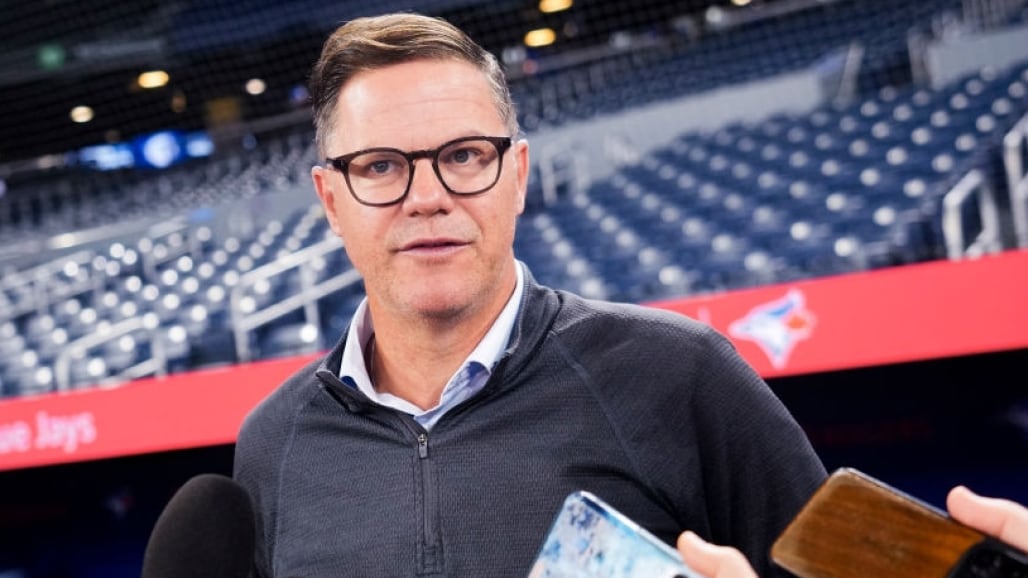
GM Ross Atkins knows that his team has underperformed. He won’t label his club as a buyer or seller just yet. In fact, he will be acting as a buyer and seller in his preparation of the deadline.
He’ll be on calls with other general managers, letting them know that, if he is a seller, Kevin Gausman, Shane Bieber, Jeff Hoffman, Patrick Corbin, Jesus Sanchez, Myles Straw, Daulton Varsho, and George Springer will be available.
Atkins will inform teams that, if he is a buyer, he will be looking to add a left-handed hitting outfielder as well as at least one starting pitcher – possibly two – and a reliever or two.
In the meantime, the Jays will have scouts evaluating the available major-league players they have targeted on the sellers who may be available, as well as players who are on the bubble teams. Plus, the Jays will have scouts looking at the farm systems and minor-league rosters of the teams who have expressed interest in their major-league talent.
Atkins will be in constant contact with his front-office staff, debating and discussing which direction they will head. A key at this time of the season is understanding the evaluations of their own players at the major-league and minor-league level. Whenever a team trades prospects there is a risk that the players traded can come back and haunt the club. That’s why it is critical to understand who you are agreeing to put into deals.
If the Jays are buyers, they will want players who have years of control beyond this season. It’s far more palatable to give up talent if the return includes players who aren’t rentals and who can impact 2027 and beyond. Thankfully, Louis Varland was that kind of acquisition last season for the Jays.
MLB’s uncertain year ahead
The Collective Bargaining Agreement is set to expire on Dec. 1 and it’s creating a lot of uncertainty around the 2027 season. Will there be a salary cap? How much time will teams have to get in alignment with the payroll ceiling? Will there be a full 162-game season?
Last time a salary cap was on the table in negotiations, the players played part of the 1994 season without an agreement. But the players and owners couldn’t make an agreement, so the players went on strike. We lost the end of the season and the playoffs and some part of the 1995 season. The parties finally made an agreement that did not include the cap.
Here we are again. The players won’t go on strike, but once the Dec. 1 deadline passes the owners will lock out the players, just as a matter of business. Teams can’t have players working out at their facilities without a deal and then face lawsuits if players get hurt under their roof or guidance. The players will be on their own to maintain their health and conditioning programs until an agreement is made.
Although the rules by which the game will be played in 2027 and beyond are unclear, it’s reasonable to assume that, if there is a dramatic shift in the system, the reset will be gradual. Teams can’t be expected to divest themselves of high-priced players to get under a prospective salary cap within one year.
I expect that Atkins can make decisions at this year’s trade deadline strictly based upon the needs of the team and wiggle room in his current budget if he becomes a buyer. The uncertainty for 2027 and beyond should not limit the decision making.
Atkins will have to give himself time to act once he decides which path the Jays are taking. It’s likely that he will need to give himself three days, so the Jays will declare to other teams whether they are buyers or sellers after the game on July 31. He will have everything lined up for whichever direction he heads.
The limbo position that the Jays are in could cost them deals. Teams that are clear buyers or sellers may move aggressively rather than wait for teams on the bubble to determine their direction. This would reduce the number of buyers and sellers and negatively impact the returns on deals closer to the deadline.
I believe that the Blue Jays will be sellers if they are four or more games out of the third wild-card spot. That will especially be the case if they still have more than three teams in front of them in the chase for the third wild-card spot.
If the Jays are within three games, it could be the worst spot possible. Three games behind in the standings feels doable but it could also be false hope, especially if there are four or five teams between them and the third wild-card spot.
I can’t imagine that the Jays have a big winning streak in them. There has been nothing about their play that would indicate that they have that kind of consistency available in the game.
All is not lost yet, with an emphasis on the yet.