NEW YORK -- These days there are endless YouTube videos that will show you how to solve a Rubik's Cube. The key is memorizing a handful of basic sequences and then just following a layer-by-layer method. Done correctly, it looks surprisingly easy -- like some sort of magic trick. But complicated problems always look easy in hindsight, once they've been solved. All the frustration and self-doubt and angst felt while working through it fades into memory.
Erno Rubik, the Hungarian architect who invented the puzzle, took a month to solve his own creation the first time.
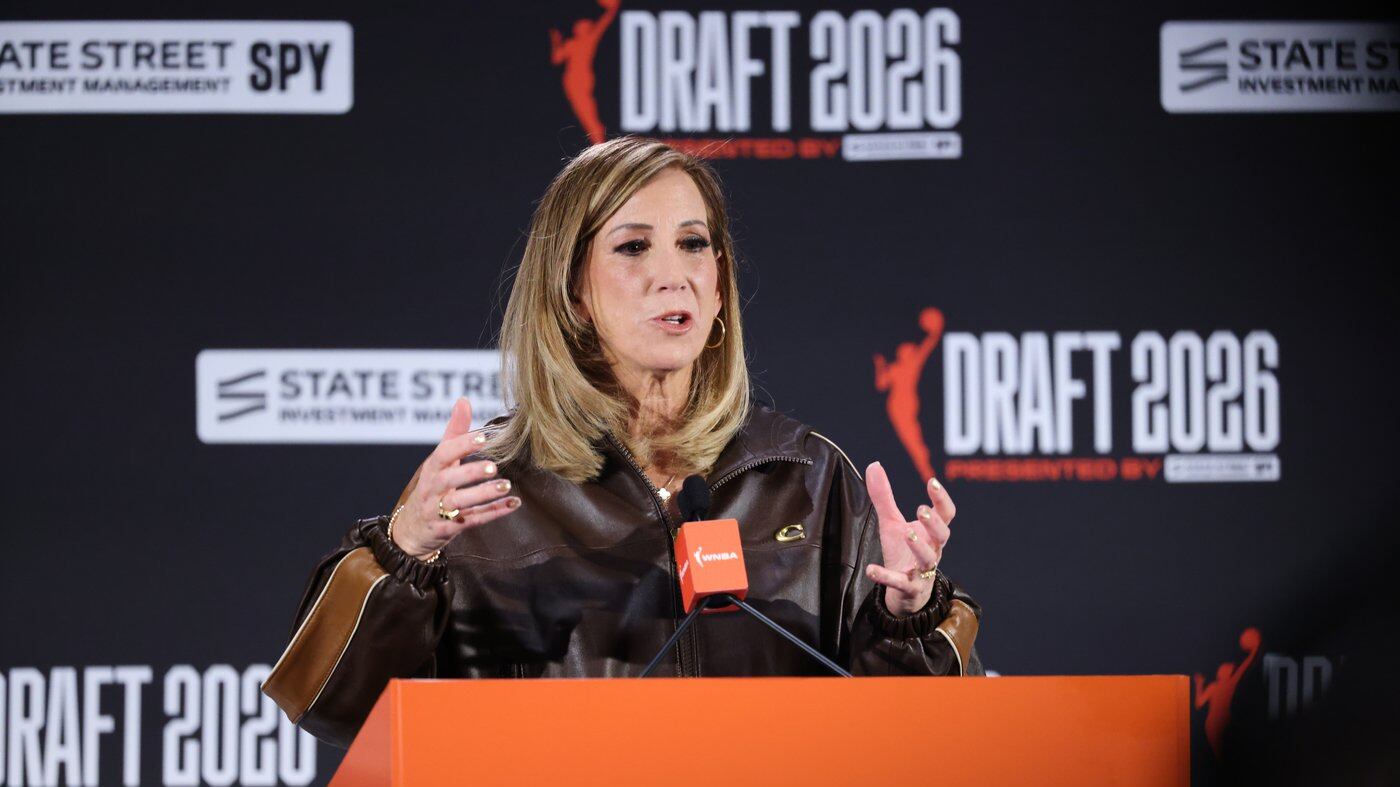
After 17 months of public squabbling -- from "Pay Us What You Owe Us" T-shirts at the All-Star Game to superstar Napheesa Collier going scorched earth on commissioner Cathy Engelbert -- two dozen or so lawyers, staffers and players spent eight marathon days in March solving the WNBA's version of a seemingly unsolvable problem by hammering out the 50 or so issues that divided them to reach what both sides regard as a landmark collective bargaining agreement.
"Not only was it a Rubik's Cube," Engelbert told ESPN in an extended interview this week, "but a lot of these issues were smaller in the context of the bigger issues, but important in the context of the whole package."
Layer by layer, the two sides worked to find common ground and acceptable language on consequential matters such as the first comprehensive revenue-sharing model in women's professional sports, guaranteed housing for players, and an expanded benefits package, all while ensuring a viable economic model that provides a path to profitability for owners.
It all clicked into place shortly before 2:30 a.m. on March 18. Both sides gathered in the central meeting room on the third floor of the Langham Hotel in midtown Manhattan, toasting with champagne that Engelbert's executive team had secured only an hour before, brought over in Connecticut Sun president Jennifer Rizzotti's car. Veteran guard Alysha Clark, a vice president of the union, took a heavy blade and sabered the matte black bottle. Collier, who had left New York a few days before after attending negotiations earlier in the week, was awakened back home in Minnesota with a celebratory video call from the other executive committee members.
After months of concern over a potential work stoppage and missed games, a deal was reached, and the league's 30th season will open on time Friday.
"[We're] just excited that we can tell our fans that we're going to be back," union vice president Breanna Stewart told reporters that night.
By that point, everyone on both sides had spent more time inside that hotel -- as well as the league and union offices, where negotiations were also held -- than they'd ever dreamed. Clark said she packed for four days when she first came to New York early in the week. "'If I need to pop over to Adidas, I'll do that,'" she told ESPN as a potential a backup plan -- "and I actually ended up having to do that one day."
Once the champagne had been poured, Engelbert, WNBPA president Nneka Ogwumike and Clark all gave toasts.
"I just felt really emotional about it, and for me personally to have been a part of it," said Clark, a second-round pick who had to supplement her WNBA salary for 10 years by playing overseas in France, Turkey, Israel and Poland.
"It's like, I just was a part of making history," Clark told ESPN. "Not only for the players who pioneered this league, doing something for them, but for players like me moving forward, who are going to be able to make significant impacts in their families with the salaries they're going to make over time.
"And for the future generations, they're not going to have to know any of what we've gone through. In that moment, it was like, 'This is what this is all about.'"
THE LANGHAM HOTEL, where the WNBA changed forever, sits on New York's iconic Fifth Avenue, boasting a multimillion-dollar art collection and rooms that can go for over $1,000 per night. A delegation of Argentine governmental officials stayed there earlier in the week of the negotiations, and musician Zayn Malik was seen leaving the building.
All of this -- the swanky hotel, the neutral sites, the marathon bargaining stretch, even the reporters staked outside the lobby -- marked a whole new world for WNBA labor talks. For the last agreement, the players' association and league officials had a handshake deal right before Christmas, and the news remained under wraps until the league announced the long-form agreement was completed three weeks later.
But with the WNBA's exponential growth over the past few years, everything was bound to be different. For months, the sides traded proposals that might as well have been in different languages, particularly on the issues of revenue sharing and the salary cap. Distrust grew as the parties blew past two deadlines. In mid-December, the players authorized the seven-member executive committee to call for a strike.
Then for six weeks, the league didn't respond to a union proposal submitted around the holidays. The league felt the proposal was too unrealistic to take seriously; the union considered that a stall tactic aimed at putting pressure on players to capitulate.
Even once negotiations ramped up, frustrations boiled over behind closed doors. In late February, a group of high-profile agents sent a letter to union executive director Terri Carmichael Jackson requesting "our collective preference for transparency and coordinated communication" moving forward in negotiations. Less than a week later, WNBPA vice presidents Kelsey Plum and Stewart sent a private letter, obtained by ESPN, that expressed their concerns over the handling of negotiations and the level of player involvement in the process.
Jackson has since insinuated to the Sports Business Journal that she believes the letter -- which was shared with the executive committee -- was written and leaked by Stewart's and Plum's respective agents, Lindsay Kagawa Colas and Zack Miller. But sources said the two players were blindsided by the letter getting outside that circle, while Colas and Miller have rejected Jackson's assertion, telling ESPN they did not leak the letter.
Collier, who is also a vice president on the union's executive committee, said in an interview this week that though it was "unfortunate" the letter leaked, "I think everyone's voice should be heard and their opinions. ... I support that they had a channel to share their voices.
"When you're dealing with 156 people, you're not going to agree on everything, but our job is, the EC, is to represent what the majority wants," Collier told ESPN. "I thought the EC did a really good job of putting aside personal opinions.
"I think it created really good discussion within our EC as well, and then we were able to move past it and stay strong for the CBA negotiations."
Still, the leak meant it was necessary for everyone to be aligned about a path forward, and fast. One week later, the league and union gathered for the first day of their marathon negotiations. And there was a greater urgency than before to get an agreement done.
"There's a lot of strategy with negotiating too: You're trying to get the best deal. Both sides are. With that, there's going to be tensions running high," Collier said. "But I do think it changed at the end where we both knew that a deal had to get done at the end of the day, so we were going to do what it took to make that happen."
AFTER THREE DAYS at the Langham, negotiations moved to the NBA building some 15 blocks north. And there, the physical manifestation of the Rubik's Cube became a large whiteboard that Phil Cook, the league's chief marketing officer, keeps in the WNBA offices. After over 40 hours of talks, everyone's eyes were strained. To more easily keep track of everything, Engelbert wheeled Cook's whiteboard into an elevator and up from their offices on the 11th floor to the 17th, where negotiations were happening. A member of the league's legal team wrote out the 50-something issues that still needed to be settled.
The process of shrinking the list felt slow, especially at first. The players would mostly be in one breakout room, huddled with their lawyers and advisers, while the league was in another room down the hall, huddled with its lawyers and finance personnel.
Maybe once a day, everyone would meet in a large central room to talk directly to one another. There were the occasional run-ins -- executive committee member Brianna Turner, the union's treasurer, saw Engelbert in the kitchen area late one night and joked that the league should order espresso martinis to keep everyone awake.
But the rest of the time was spent mostly separately, evaluating, trading and waiting for proposals.
Collier spoke up about the importance of getting second opinions on medical issues, something she experienced this offseason as she navigated a pair of ankle injuries. Under the previous CBA, players could get a second opinion at their own expense; players fought for it to be a team expense.
Clark, at 38 the league's oldest player, felt strongly about securing something for retired players -- an issue players had to leave on the table in the previous CBA talks. They ultimately adopted the league's proposed model for a one-time payment distributed to retired players based on years of service.
Turner brought up a litany of concerns over teams not providing housing, from safety to accessibility for international players to housing discrimination Black and brown people can face. Engelbert later acknowledged she did not realize how strongly players felt about the issue until deep into negotiations.
Turner became a crucial figure in the final days: She describes herself as "absolutely not into numbers," but her degree from Notre Dame in graphic design came in handy to make charts that compared salaries as a percentage of the cap in the past CBA with what was now being proposed.
The salary cap had to be at least $7 million, she realized, or the max salaries would take up too much of the cap for the midlevel and minimum players to fit under it. It looked so simple once she used graphics and spreadsheets to explain it to everyone -- but after months of crunching numbers it was hard to see anything as clearly as Turner finally did. Everyone started calling her "Hidden Figures," referencing the 2016 movie starring Taraji P. Henson, Octavia Spencer and Janelle Monáe as three Black female mathematicians who played key roles in the space race during the 1960s.
The final construction of the deal allowed both sides to claim victory. Players were awarded revenue sharing based on "basically" the union's model, per Engelbert -- a designated 20% share of a metric called Shared Basketball Revenue, or "SBR" -- and a salary cap starting at $7 million in 2026. In all, the players and league secured what was believed to be the largest salary increases from one CBA to the next in pro sports history. The owners agreed to a deal that allowed all teams to possibly reach profitability, and to not only stay in business but to reinvest and grow.
"I think it's a great starting point," Collier said. "Do we deserve more? Of course, but we also want the league to survive and to thrive and to work with them in that way. We want it to be successful as well. ... Just through all those conversations we had over many months, that is where we landed."
Jackson declined to be interviewed for this story, but in a statement provided to ESPN said, "The players were extraordinary. What people saw publicly was only a fraction of the work, discipline and leadership they brought to the table every day."
THE CIRCADIAN RHYTHM of negotiations, as Engelbert describes, meant the parties would cycle through moments in which they thought they were making progress and others when they'd taken a step back and thought something that was already decided was perhaps not. Engelbert thought Monday night was going to be the night for a deal -- before a disagreement sent both sides home.
It might have taken 17 months to get there, but at that point the league and players didn't need to wait much longer for the Rubik's Cube to finally be solved, the last item of Engelbert's whiteboard finally erased. In the wee hours of Wednesday, March 18, the energy shifted as both sides convened in the central meeting room at the Langham. WNBA general counsel Jamin Dershowitz, a longtime league lawyer some players said was intimidating earlier in negotiations, told Turner that she'd done "a really good job."
They all took a group photo -- league personnel on the left side of the table, union on the right -- that was later posted on social media as they shared the news with the world. Engelbert, Jackson and the players descended to the lobby to tell reporters that a verbal agreement on a new deal had been reached.
"Everyone just let their guard down and was being friendly with each other," Turner said, "instead of being like this enemy territory."
Said Collier: "I think tensions are a lot lower now. But at the end of the day. It was never personal. It was about the CBA, it was about business, getting it done. So honestly, I'm just glad that that has been accomplished."
For Engelbert, the process had been somewhat redemptive. She'd gone into the negotiations this fall with a Q rating that bordered on toxic. Collier wouldn't even talk to her after an ugly back-and-forth last October.
Owners privately speculated about whether NBA commissioner Adam Silver would have to replace her at some point or step in to do the deal directly. But while Silver stayed close to the negotiations, he let Engelbert manage the negotiations and the owners she served.
Over the final, long eight days, sources on both sides credited Engelbert for helping find compromises on several key issues and getting the owners on board with the final proposal.
"As I reflect on the whole thing, it's kind of like it had to happen the way it did ... to lead into something that became historic," Engelbert said. "I mean, to actually have a situation where 30-plus players in the first five days of free agency signed million dollar-plus contracts. I know everybody would have wanted more time, but it happened that way -- and was historic as a result."
When the season opens this weekend, 31 players making million-dollar salaries will take the court. Rookie and No. 1 pick Azzi Fudd will make $500,000 this season -- double last year's supermax. Two expansion teams will play their first games, with another three franchises on the way. A new $3.1 billion media rights deal will be in effect. The league's first team with a $1 billion valuation according to CNBC, the Golden State Valkyries, will launch its second season.
All eyes remain on the WNBA as it embarks on its next chapter and how effectively this new transformative deal can shift this rocket ship to turbo mode. The standard for what it takes to run a WNBA team has never been higher. The players are now facing more attention, more scrutiny and higher stakes than ever before.
But for now, there's excitement, relief and labor peace. For those two dozen who made history at the Langham, they are all still enjoying the magic moment when after eight days and 100 hours of bargaining, they solved the Rubik's Cube that shaped the league's future.
"'On the Eighth Day,'" Engelbert said. "I think that will be the name of a documentary someday."